Watch The Kitchen Table
Illustration · An imagined kitchen at 855 Ardmore Avenue on the day before Mother’s Day, 1935: a potted plant brought home as a present, a dropped hat, a chair pushed back and the telephone. Not drawn from a photograph.

Akron · May–June 1935

Bob is on the floor

Anne answered the phone the day Bill W. came looking for a drunk, and then she took him into her house.

“…as dear Anne well guessed, that first tendril was a fragile thing. Practical steps had better be taken.”

Bill W., remembering the summer of 1935 · “Dr. Bob: A Tribute,” AA Grapevine, January 1951

Practical steps

On Saturday, May 11, 1935, the day before Mother’s Day, Dr. Bob came home drunk, carrying a big potted plant for Anne, and passed out. That afternoon the telephone rang. It was Henrietta Seiberling, their friend from the Oxford Group. A sober alcoholic from New York, Bill W., was at her house. Could Bob and Anne come over and meet him?

What Anne said is the one part of the story nobody tells the same way twice. The tellings are set side by side below. Every telling agrees that the next day Bob and Anne went. He felt as bad as he could ever remember, but he was fond of Henrietta, and “Anne had said we would go over,” he recalled. On the way he made her promise they would stay fifteen minutes at most. They came at five and left at a quarter past eleven.

Bill stayed on in Akron, and within a few weeks Anne asked him to come and live with them. As Bill told it, she saw how fragile the new sobriety was, and decided he and Bob should keep an eye on each other. Every morning there was a quiet time in the living room. Anne read from the Bible in her chair in the corner and often ended with a line from the Book of James: “Faith without works is dead.”

A few weeks after Mother’s Day (about two by Good Oldtimers’ count, three or four by Bill’s), Bob wanted to go to the American Medical Association’s convention in Atlantic City, as he had for twenty years. “Very frightened, Anne said, ‘Oh, no, no!’” Bill wrote. Bill thought he should go, and she gave in. Five days went by without a word. Then his office nurse called: she and her husband had picked him up at the Akron railroad station.

He had an operation to perform in three days, Bill remembered, and he and Anne took turns around the clock, tapering him off. On the morning of the operation they drove him to the hospital, and just before he went in, Bill gave him a bottle of beer for the shakes. Then they went home to wait. It was his last drink. In his own story, Dr. Bob remembered it more simply: a few drinks the night he got home, and “one bottle of beer the next morning.” (The last drink, in I Just Work Here, tells that day.)
Listen Bob is on the floor About 1 minute

Compare the accounts

What did Anne tell Henrietta?

Only Anne and Henrietta heard that telephone call, and neither of them wrote it down. Here is how two men who weren’t on the line told it, in the order the accounts were printed.

By his own account Dr. Bob was upstairs, passed out. Bill was at Henrietta’s house and heard only her side. Lois W.’s memoir (1979) follows Bill’s 1957 telling (Anne is sorry, they can’t make it, and Bob has just brought her a plant), and adds that she “might have added” the rest. Where Bob was lying is compared in The gate lodge. Quotations are short excerpts, shown side by side for comparison.

1939

Dr. Bob

4 years after

“…a lady called up my wife one Saturday afternoon saying she wanted me to come over that evening to meet a friend of hers who might help me.”

He doesn’t say what Anne told her, only that “the next day she called again.”

His own story, “The Doctor’s Nightmare,” in Alcoholics Anonymous (1939), the Big Book.

1951

Bill W.

16 years after · Anne had died in 1949

“The pot is on the table but, alas, Bob is on the floor. Could we try to make it tomorrow?”

Bill gives Anne the joke, and the idea of trying again tomorrow. Henrietta answers with a dinner invitation.

“Dr. Bob: A Tribute,” his memorial to Dr. Bob in the AA Grapevine, January 1951, now in The Language of the Heart (1988).

1957

Bill W.

22 years after

“I’m sorry, Henrietta. I don’t think we can make it today. Bob always makes a great fuss over me on Mother’s Day.”

Now Anne keeps the joke to herself. “What Anne didn’t say,” Bill writes, was where Bob was. It is Henrietta who suggests tomorrow.

Alcoholics Anonymous Comes of Age (1957), Bill’s own history of AA.

1980

Dr. Bob, as he recalled it

Told in his lifetime · printed 45 years after

“Finally, Henri bore in to such an extent that Anne had to tell her I was very bagged…”

At first, he said, Anne “still didn’t think it very wise that we go over that day.” Henrietta called again on Sunday.

Dr. Bob’s own recollection, quoted in Dr. Bob and the Good Oldtimers (1980), AA’s history of Dr. Bob and the Akron pioneers.

Where they differ

Did Anne say he was drunk?

  • 1939 Not said
  • 1951 Yes, with a joke
  • 1957 No: she said he had brought her a plant
  • 1980 Not at first; then yes, when Henrietta pressed

Whose idea was the next day?

  • 1939 Henrietta’s: she called again
  • 1951 Anne’s
  • 1957 Henrietta’s
  • 1980 Henrietta’s: she called again

How many calls

  • 1939 Two, Saturday and Sunday
  • 1951 One
  • 1957 One
  • 1980 Two, Saturday and Sunday

Bill’s line

The words this page is named for are Bill’s, written sixteen years later, and six years after that he wrote that Anne hadn’t said them. In Dr. Bob’s memory she held out as long as she could and told the truth only when Henrietta pressed. Every telling agrees on what mattered: the next day they went, and in Dr. Bob’s memory it was because “Anne had said we would go over.”

For a closer look

Go deeper

The evening at Henrietta’s, the liquor Bill kept in Anne’s house, and the convention she didn’t want him to go to.

Dinner at five
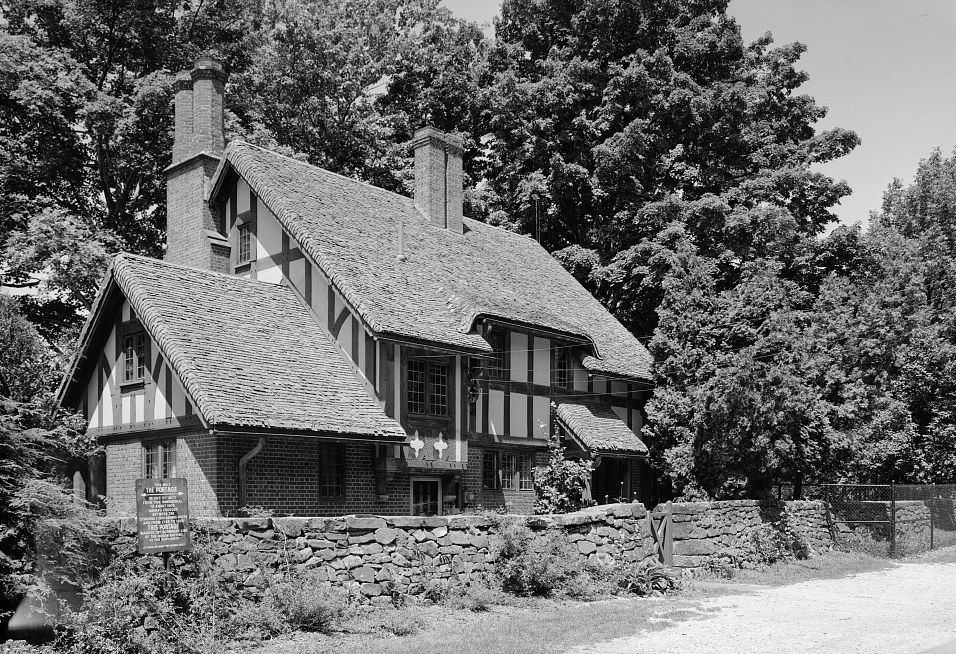
A Tudor-style cottage with steep shingled roofs, half-timbered upper walls, brick below and two tall chimneys, behind a low fieldstone wall under tall trees.
The gate lodge of the Seiberling estate, Henrietta Seiberling’s home in 1935, seen from the south in July 1982.Photo: Jack E. Boucher, Historic American Buildings Survey, Library of Congress

Henrietta asked them to dinner, and at five o’clock on Mother’s Day Bob and Anne stood at her door. Their son, Smitty, came along. Bob ate nothing, and after dinner (or at once, in Bill’s 1951 telling) Henrietta put the two men in her little library.

Smitty didn’t go in. “Mother wanted Dad to open up in front of Bill,” he said. What Anne and Henrietta did for the next six hours, nobody wrote down.

Bill liked Bob and Anne at once. They were “people 10 or 12 years older than ourselves,” he wrote to Lois W. in June. “You will like them immensely.”

Two bottles on the sideboard

Once he moved in, Bill wanted liquor kept in the house: he and Bob, he said, had to show they could stay sober with it in plain sight. “So I got two big bottles and put them right on the sideboard,” he remembered. “And that drove Anne about wild for a while.”

To Bill, Good Oldtimers suggests, the medical convention was the same experiment on a bigger scale: alcoholics had to learn to live in the real world. Anne knew better, and said so.

“Oh, no, no!”

Dr. Bob hadn’t missed the American Medical Association’s convention in twenty years, and Anne remembered the earlier ones. For all her faith, Good Oldtimers says, she “evidently had a practical side and some instinctive knowledge about alcoholic thinking.” She was against it, and in the end she gave in.

He started drinking on the train. Anne and Bill waited five days for news. Bob never went to another AMA convention.

Sources
  • Alcoholics Anonymous (the Big Book), first edition. Works Publishing, 1939. Dr. Bob’s story, “The Doctor’s Nightmare.”
  • The Language of the Heart. AA Grapevine, 1988. Bill W., “Dr. Bob: A Tribute” (January 1951), first printed in the AA Grapevine.
  • Alcoholics Anonymous Comes of Age. Alcoholics Anonymous Publishing, 1957. “Recovery: The First Legacy.”
  • Dr. Bob and the Good Oldtimers. AA World Services, 1980. Chapter VI, “Two alcoholics meet” (Dr. Bob’s account of the calls; Smitty; Bill’s letters to Lois; the bottles on the sideboard; the convention).
  • Pass It On. AA World Services, 1984. Chapter Six (the call) and Chapter Seven (Bill moves in; the convention).
  • Lois Remembers. Al-Anon Family Group Headquarters, 1979. Chapter 8.
  • Stan Hywet Hall, Gate House and Entrance Gates (HABS OH-50-C), photographs by Jack E. Boucher, 1982. Historic American Buildings Survey, Library of Congress.