“Never. Never any.”
Living around
The Big Book came out in April 1939, and it wasn’t selling. On April 26 the mortgage company sold 182 Clinton Street. Bill and Lois put their furniture and Lois’s grand piano into storage, and spent that night with friends. Lois wrote in her diary: “Left 182 for good.”
For two years they had no home. They lived in a borrowed bungalow at Green Pond, New Jersey, then in a room at Monsey, New York, so cold it was called “Upper Siberia,” then in friends’ spare rooms. Lois’s best guess was about 50 places. Bill’s version: “We were invited out to dinner a lot.” In February 1940, walking through Grand Central, Lois sat down in the middle of a flight of stairs and cried.
Sober, Bill wanted to be the breadwinner. He tried selling wire rope one summer, and hoped for a job raising money for medical aid to China that didn’t come through. In November 1939 more than 50 members signed a letter asking him to keep working for AA instead. From November 1940 he and Lois lived in a room upstairs at the new clubhouse on West 24th Street, a former stable. A dressing table was made out of an orange crate.
Late in 1940, on a night of sleet, a stranger climbed the stairs to that room on a cane. He was Father Ed Dowling, a Jesuit from St. Louis, who had noticed how much the Twelve Steps had in common with the spiritual exercises of his order. Bill poured out his hopes and his frustrations, and later called it the night he took his Fifth Step. When he asked whether there was never to be any satisfaction, the priest told him no, and called it a “divine dissatisfaction.” They were friends for twenty years.
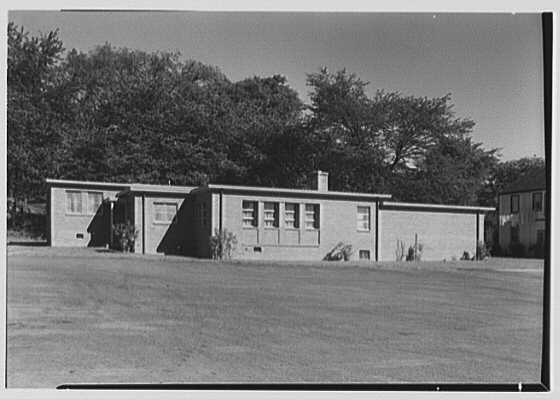
In January 1941, staying with friends nearby, they drove to see an empty house on a hilltop at Bedford Hills, and broke in, twice. The owner sold it to them for $6,500, with nothing down and $40 a month. On April 11, 1941, “for the first time in the 23 years of their marriage, Bill and Lois spent the night in their own home.” In 1944 they named it Stepping Stones, after a house they saw on Nantucket.
Rumors of money followed him. Probably in 1942, members in Cleveland heard that the book was a racket and that he and Dr. Bob had split $64,000. Bill showed them a certified audit. “My total income was $55 a week.” In March 1942, at 46, he tried to join the Army, and a physical turned him down, he wrote, “because of ulcers.”
And from 1941, on Saturdays, he and Lois held “spook sessions” in a downstairs bedroom. “It was not just a hobby,” said Tom P., who took part.
It’s April 1939. The Big Book is out, and hardly anyone is buying it. The mortgage company sells the house on Clinton Street, and Bill and Lois put their furniture in storage.
For two years they have no home. They sleep in friends’ spare rooms, a borrowed summer bungalow, a room so cold they call it Upper Siberia. Lois guesses about fifty places. One day in Grand Central she sits down on the stairs and cries.
Late in 1940, living in a room over an AA clubhouse, Bill is in bed feeling sorry for himself when a priest from St. Louis comes in out of the sleet and climbs the stairs on a cane. Bill tells him everything.
In 1941 they find an empty house on a hill at Bedford Hills, break in to look around, and buy it with nothing down.
It’s the first home of their own in twenty-three years of marriage.