“I salute you, and I thank you for your lives.”
The last two years
Bill had been trying to quit smoking since at least 1940, when Ruth Hock, AA’s secretary then, remembered him smoking her cigarettes while he was “quitting,” often two at a time. Dennis Manders, from AA’s office, remembered the edges of his desk scarred by cigarettes he had set down and forgotten. “He had turned 70 in 1965, and he was still smoking,” Pass It On says. By 1968 he was short of breath, and AA’s office newsletter later said, “He had been treated for emphysema since 1968.”
In February 1969 he climbed onto the low roof of his studio to look at the winter’s damage, slipped, and caught a branch as he slid off. From then on his health declined. “By April of that year, he had actually quit smoking, and this time, he stayed stopped.” Bob H., who managed AA’s office, put it plainly: “A good deal of damage was done by that time.”
At the General Service Conference dinner in April 1970 he stopped in the middle of a sentence. “I’m sorry. I can’t continue,” he said, and sat down. In July, at AA’s convention in Miami Beach, he was taken to the Miami Heart Institute the first night. On Sunday morning an ambulance brought him to the hall, a lift raised his wheelchair to the stage, and with oxygen tubes in place he spoke for four minutes, “and for the first two or three of those minutes, he was the old Bill,” Bob H. remembered. The film tells the convention.
Home again, he got pneumonia, and it never really went away. Soon he was never without oxygen. He had hallucinations so real that he described them to Lois and to Nell Wing, and sometimes, Pass It On says, they laughed despite themselves. By September he was bedridden, and after November he never came downstairs. Some mornings he woke saying, “Oh my God, I’ve got to go through all this again today.”
Susan Cheever read the notes kept by his night nurse for her 2004 biography. She reports that at 6:10 on Christmas morning, 1970, he asked for three shots of whiskey, and that he asked again on January 2, 8 and 14. He didn’t get them, and she writes that he was upset. Pass It On doesn’t mention it.
In January the Miami Heart Institute had a new breathing machine that might help him. An old friend chartered a Learjet, and Dr. Ed B., the institute’s director and a fellow AA member, flew up to bring him back, with Lois and Nell. On the way Bill described his parents, his grandparents and his old friend Mark Whalon, who all appeared to him in the cabin. “Hold fast,” Nell told him. They landed in the late afternoon, and Lois said good night at eight. It was January 24, their 53rd wedding anniversary, and “Bill died at eleven-thirty that night.” He had been sober 36 years.
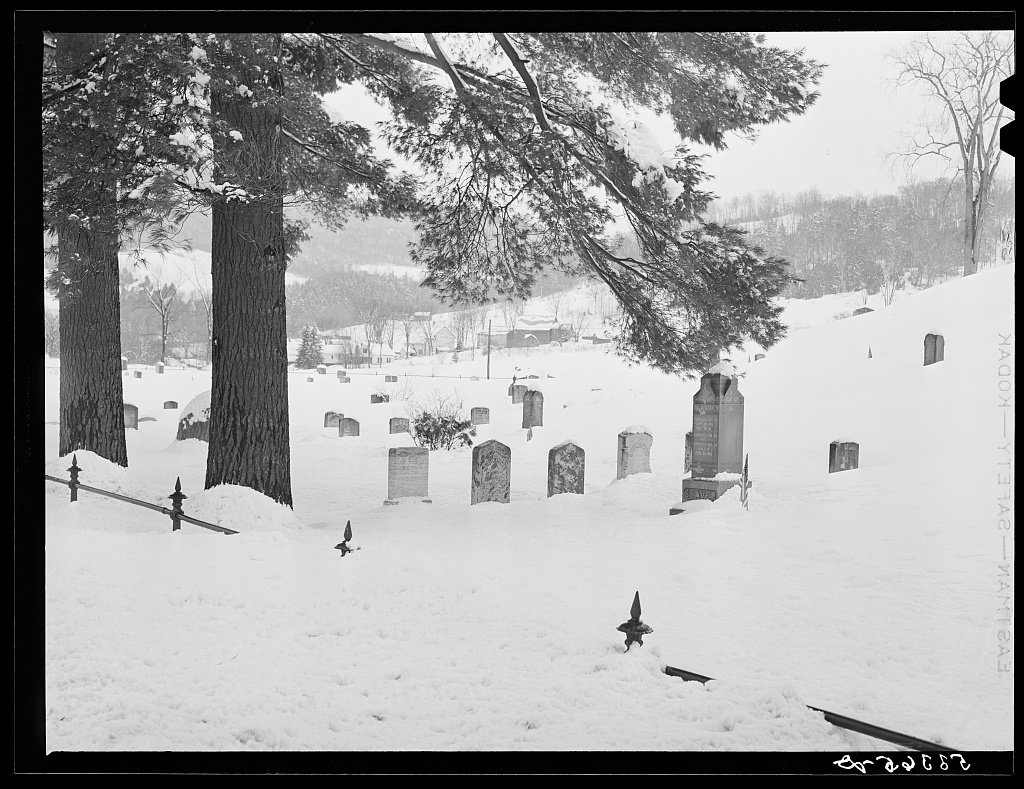
AA’s board gave his full name to the press for the first time, and the New York Times ran it on page one with his picture; he had agreed to it in a signed statement in 1966, the Times reported. On February 14, groups around the world held memorial meetings. On May 8, “when the Vermont ground had thawed,” he was buried in East Dorset. Lois lived until 1988.
It’s Christmas morning, 1970, at Stepping Stones. Bill W. is seventy-five. He’s on oxygen all the time, and he hasn’t been downstairs since November.
Before dawn, the night nurse’s notes say, he asks for three shots of whiskey. He doesn’t get them. In January he asks three more times.
A month after Christmas, a friend charters a small jet to fly him to Miami, where a hospital has a new machine that might help him breathe. On the way he talks about his parents and his grandparents, who he says are there in the cabin. Nell Wing, his secretary, tells him to hold fast.
He dies that night, January 24, 1971, at eleven-thirty. It’s his and Lois’s fifty-third wedding anniversary, and he has been sober thirty-six years.
In May, when the ground has thawed, he’s buried in East Dorset under white marble. The stone doesn’t mention AA.