Athlete
What he wanted
“I had to be an athlete because I was not an athlete.”
What he got
“I became pitcher, and I finally made captain.”
East Dorset and Manchester, Vermont · 1895–1913
A boy whose father left, who whittled for six months to prove his grandfather wrong, and who lost everything he’d won when the girl he loved died.
“I had to be first in everything because in my perverse heart I felt myself the least of God’s creatures.”
Bill W. was born at about three in the morning on November 26, 1895, in East Dorset, Vermont, “in a room behind a bar.” The bar was in the village hotel, which his widowed grandmother ran. His father, Gilman, managed a marble quarry near the village. Pass It On, AA’s biography of Bill, calls him “an immensely likable man,” a storyteller who at times drank hard on sprees with his quarry friends. His mother, Emily, was strict, and was often away for what the family called nervous breakdowns. In 1903 they moved to Rutland, where Gilman managed another quarry.
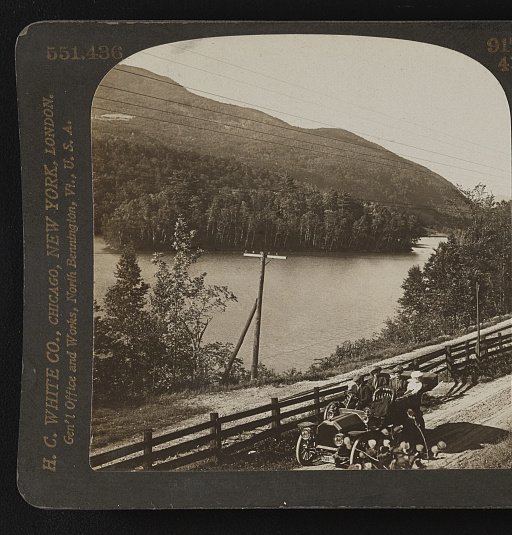
In 1906 Emily brought Bill and his sister, Dorothy, back to East Dorset, and took them on what they thought was a picnic at Emerald Lake. Under a shade tree on the shore, “Mother told us that Father had gone for good.” There was a divorce. Emily went to Boston to study osteopathy and left the children with her parents, Fayette and Ella. Bill was ten or eleven. He stayed depressed for almost a year, and “never talked about it with anybody, even my sister.” He didn’t see his father again until 1914.
His grandfather got in the habit of bringing him what the old man thought were “impossible projects.” One day Fayette came in with a book about Australia and said that nobody but an Australian bushman knew how to make and throw a boomerang. As he told it in 1955, he thought, “here’s my chance. I will be the first man in America to make and throw a boomerang.” He sawed the headboard out of his bed for the wood, and whittled in the old workshop by lantern light for six months. The one that finally flew swung around the churchyard and nearly hit his grandfather in the head on the way back. “I had become a Number One man.”
In 1909 he went to Burr and Burton Seminary in Manchester, boarding there during the week. On his first day on the school’s ball field, a fly ball hit him on the head, and when the other boys saw he wasn’t hurt, they laughed. “I jumped up and shook my fist and said, ‘I’ll show you! I’ll be captain of your baseball team.’” He threw rocks at telephone poles until he had “a deadly aim,” and became pitcher, then captain. He also became fullback, first violin in the orchestra, and president of the senior class. In 1911, playing ball in Manchester, he met Ebby T.
In his senior year he fell in love with Bertha Bamford, the daughter of Manchester’s Episcopal minister. Looking back, he described that fall: “now, I love and am loved completely for the first time in my life.” On the morning of Tuesday, November 19, 1912, the principal came into chapel and announced that Bertha had died the night before in New York, after an operation. She was eighteen. Bill was one of the bearers at her funeral.
“It was simply a cataclysm of such anguish as I’ve since had but two or three times.” He called what followed “an old-fashioned nervous breakdown,” and it lasted three years. Nothing interested him but his fiddle. He failed German, and the school held back his diploma. “Here I was, president of my senior class … and they wouldn’t give me a diploma!”
It’s 1906, on the shore of Emerald Lake in Vermont. Bill W. is ten or eleven, and his mother has brought him and his little sister on what they think is a picnic. She tells them their father has gone for good.
Bill hides the wound. He never talks about it, not even to his sister. His grandfather takes him in.
One day the old man says that nobody but an Australian knows how to make a boomerang. Bill saws the headboard out of his own bed for the wood, and whittles by lantern light for six months, until one sails around the churchyard and nearly hits his grandfather coming back.
At boarding school he makes himself pitcher, captain, first violin and president of his class.
Then, in November 1912, the girl he loves dies after an operation. He called what followed a nervous breakdown.
It lasted three years.
Then and after
In 1955, at AA’s convention in St. Louis, Bill told the story of the boy who had to win at everything. Here is what he said that boy wanted, beside what he got.
The left column is from his 1955 talk, printed in AA Comes of Age. On the right, the fiddle is from the same talk; the rest is from Bill’s recollections and the school years as Pass It On gives them.
What he wanted
“I had to be an athlete because I was not an athlete.”
What he got
“I became pitcher, and I finally made captain.”
What he wanted
“I had to be a musician because I could not carry a tune.”
What he got
“I did learn to play the fiddle well enough to lead the high-school orchestra, even though it was a terribly bad band.”
What he wanted
“I had to be the president of my class in boarding school.”
What he got
His classmates at Burr and Burton elected him president of the senior class.
What he wanted
“I was somebody, substantial and real, and life lacked only one ingredient: romance.”
What he got
“I love and am loved completely for the first time in my life.”
All or nothing
Then Bertha died, and there was nothing left to win: “I could not be anybody at all. I could not win, because the adversary was death.” Summing up his boyhood in 1955, he said: “All or nothing. I must be Number One.”
For a closer look
The boomerang he built afterward, the village he came from, and the diploma he didn’t get.
At St. Louis in 1955, Bill told AA’s twentieth-anniversary convention the story of the boomerang, and then turned it on himself: “Emotionally I had begun the fashioning of another sort of boomerang, one that almost killed me later on.”
He had used the same picture sixteen years earlier, in the Big Book, for his years of law school, Wall Street and drink: “Out of this alloy of drink and speculation, I commenced to forge the weapon that one day would turn in its flight like a boomerang and all but cut me to ribbons.”
His mother later described his birth to him. It was a forceps delivery, and she was given no anesthetic: “you were cold and discolored and nearly dead, and so also was I.”
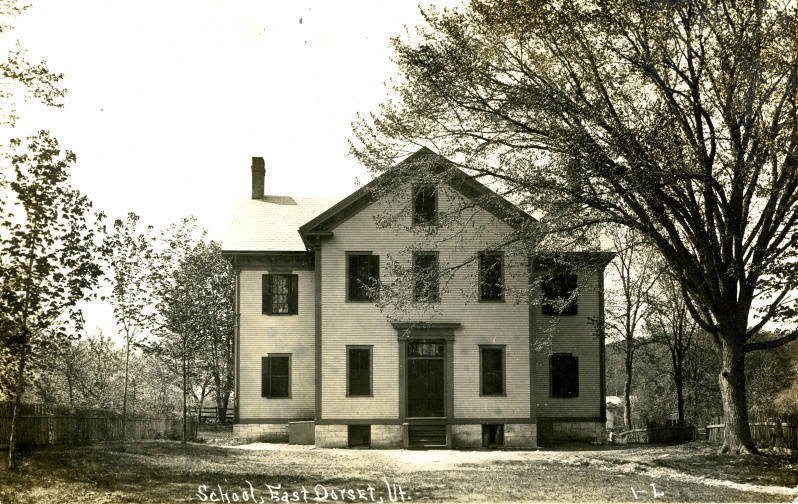
East Dorset was small. His sister remembered “about 20 homes on two main streets” around 1900, with marble sidewalks and sugar maples. Bill, in 1955, said about fifty houses.
The tellings don’t agree on what brought on his first depression. Pass It On ties it to the divorce. At St. Louis in 1955 Bill didn’t mention the divorce at all. He said he had been “tall and gawky,” that the smaller boys could push him around, and that he was very depressed “for a year or more” after he went to live with his grandparents.
He failed German in the spring of 1913, and the school held back his diploma. His mother came up from Boston, “extremely angry,” and there was a stormy scene in the principal’s office. “Still, I didn’t get that diploma.”
In 1955 he gave a different reason: “I was unable to finish because I could not accept the loss of any part of what I thought belonged to me.”
He made up the work and went on to college. Pass It On adds that “school records now list him with the group.”