Illustration · A dining table on a wartime night in New Bedford: candlelight, silver, one Bronx cocktail on a tray, and an officer’s cap and gloves. Not drawn from a photograph.
Norwich, New Bedford and Winchester · 1913–1919
The Bronx cocktail
A shy young officer who had never touched a drink took a cocktail at a society dinner, and for the first time in his life felt that he belonged.
“That strange barrier that had existed between me and all men and women seemed to instantly go down.”
A butler and a cocktail
In the summer of 1913 Bill W. was seventeen, and still sunk in the depression that followed the death of the girl he loved. At Emerald Lake, near his grandparents’ village in Vermont, he met Lois Burnham, a Brooklyn doctor’s daughter four years older, whose family spent their summers there. To a Vermont boy she was city folks, and her interest in him did “a tremendous amount to buck me up.” “She lifted me out of this despond,” he said. They were engaged in the summer of 1915.
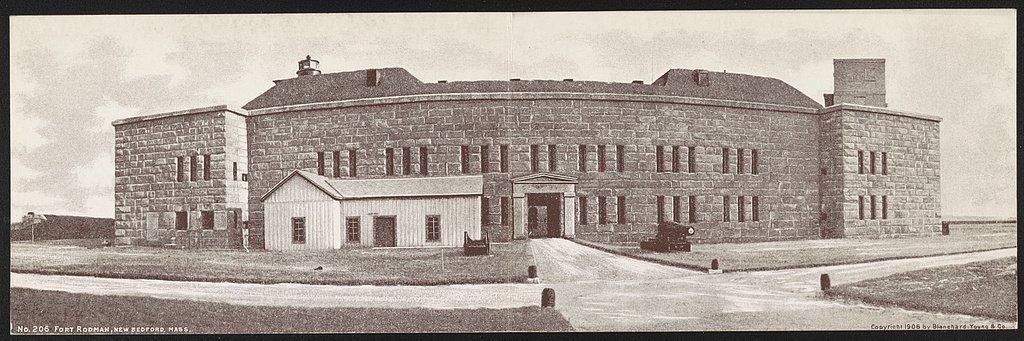
In the fall of 1914 he went to Norwich University, a military college in Vermont. “Again, I felt I was nobody.” Early in 1915, attacks of panic on the train back from Boston sent him home to his grandfather. When the United States went to war in 1917, he went to officers’ training at Plattsburgh, New York, and Fort Monroe, Virginia, and came out a second lieutenant in the Coast Artillery. He never went back to finish at Norwich. He was posted to Fort Rodman, which guarded the harbor at New Bedford, Massachusetts.
Image to comeFort Rodman, New Bedford, on a postcard
Wartime New Bedford made much of its young officers. The rich Grinnell family had a group of them to their house, and there, for the first time in his life, Bill saw a butler. “A great rush of fear, ineptitude, and self-consciousness swept over me,” he remembered. He could hardly say two words. He had never had a drink. His grandparents didn’t drink, and the family remembered what liquor had done on his father’s side. Someone handed him a Bronx cocktail, usually made of gin, dry and sweet vermouth, and orange juice.
“Well, my self-consciousness was such that I simply had to take that drink.” He took it, and another, and the barrier went down. He was the life of the party. He could talk. He belonged. “But I think, even that first evening, I got thoroughly drunk, and within the next time or two, I passed out completely.” No one made much of it, because everyone drank hard. By his own account he never went through a stage of drinking socially. He drank too much from the start.
He and Lois married in Brooklyn on January 24, 1918, moved up from February 1 because of a rumor that he was about to be sent overseas. By his own memory he passed out at about every third party that year. Lois found out, and wasn’t much troubled. “Living with me would be such an inspiration, I was sure, he would not need alcohol!”
He sailed for England in August. A few hours before he shipped out, he and Lois climbed a cliff at Newport and watched the sun go down over the ocean, and he felt “the first glimmerings of what I was to later understand as a spiritual experience.” Held at a camp near Winchester by an epidemic, depressed and lonely, he went into the cathedral and felt a “tremendous sense of presence.” Outside in the churchyard he stopped at an old soldier’s gravestone whose verse, as he remembered it, blamed the man’s death on beer.
He came home in the spring of 1919. “I fancied myself a leader,” he wrote twenty years later in the Big Book, “for had not the men of my battery given me a special token of appreciation?”
ListenThe Bronx cocktailAbout 1 minute
It’s 1917, in New Bedford, Massachusetts. Bill W. is twenty-one, a new second lieutenant at the coast artillery fort outside town, and he has never had a drink.
At a dinner in one of the town’s grand houses, he sees a butler for the first time in his life. He is so shy he can hardly say two words.
Someone hands him a Bronx cocktail. He takes it, and then another. And the wall between him and everyone else comes down. He can talk. He is the life of the party. He belongs.
That first night he gets thoroughly drunk. Within a time or two, he passes out.
Early in 1918 he marries Lois, who is sure that living with her will be inspiration enough.
It was his first drink, and it did exactly what he wanted it to do.
Compare the accounts
One drink, three tellings
Bill told the story of his first drink for the rest of his life. Here are three tellings, and when each one was set down.
All three are Bill’s own words. Pass It On doesn’t say when he recorded the recollection it quotes; it may come from the memories he dictated in 1954, published in 2000 as Bill W.: My First 40 Years. Quotations are short excerpts, shown side by side for comparison.
1939
Bill W., in the Big Book
22 years after · written by Bill
“I was part of life at last, and in the midst of the excitement I discovered liquor.”
That’s all of it: no house, no host, no cocktail, no count. The next sentence: “I forgot the strong warnings and the prejudices of my people concerning drink.”
“Bill’s Story,” in Alcoholics Anonymous (1939), the Big Book.
1955
Bill W., at St. Louis
38 years after · a talk to AA’s convention
“Still I took this first drink, and then another, and another. Ah, what magic! I had found the elixir of life!”
Told this way, it comes after the wedding: “We married during the World War when I was a young officer at New Bedford. There we were projected among the society folk of the town.”
His talk at St. Louis, July 1955, printed in Alcoholics Anonymous Comes of Age (1957), “Recovery: The First Legacy.”
1984
AA’s biography of Bill
67 years after · quoting Bill’s own recollection
“So I took it, and another one, and then, lo, the miracle! … I belonged to the universe; I was a part of things at last.”
This book dates it to 1917, before the wedding, at the Grinnells’ house, and adds that by his own account he was “an excessive drinker from the start.”
Bill’s recollection as quoted in Pass It On (1984), AA’s biography of Bill W. The book doesn’t say when he recorded it.
One line, then a whole evening
In 1939, with a book to finish, Bill gave his first drink one sentence. Told later, it became the scene he described best: the moment the wall between him and other people came down. The tellings disagree about when it happened and how many drinks there were. Two of them keep the same words: “part of life at last.”
For a closer look
Go deeper
The gravestone he remembered wrong, a sunset at Newport, and what his letters to his mother left out.
Remembered and real
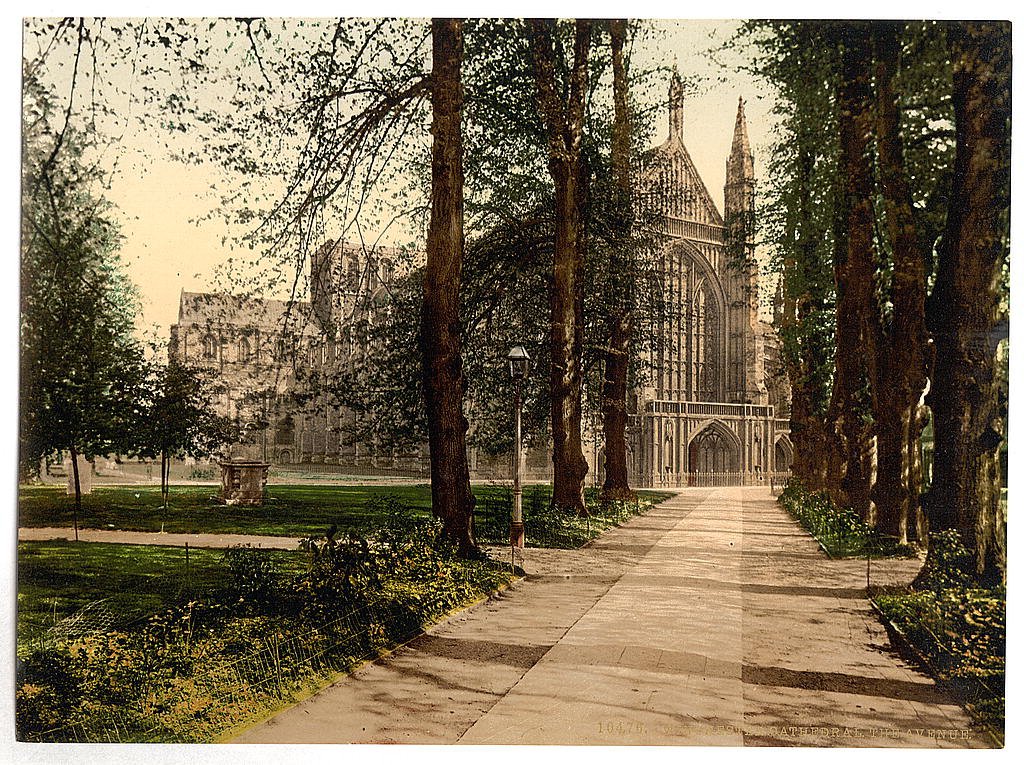
Image to comeWinchester Cathedral, about 1890 to 1900
Inside the cathedral, Bill said later, “For a brief moment, I had needed and wanted God.” Twenty years on, he put the soldier’s verse from the churchyard into the Big Book from memory:
“Here lies a Hampshire Grenadier / Who caught his death / Drinking cold small beer. / A good soldier is ne’er forgot / Whether he dieth by musket / Or by pot.”
Pass It On gives what the stone actually says: “Here sleeps in peace a Hampshire Grenadier, / Who caught his death by drunking cold small Beer. / Soldiers, be wise from his untimely fall, / And when yere hot, drink Strong or none at all. / An honest Soldier never is forgot, / Whether he die by Musket or by Pot.”
His memory dropped the two lines of advice. In the Big Book he called the stone an “Ominous warning—which I failed to heed.” Sixteen years after he read it, while Ebby talked at his kitchen table, “That wartime day in old Winchester Cathedral came back again.”
The cliff and the depth charge
“I shall never forget it.”
Bill, on the sunset from a Newport cliff, August 1918, as Pass It On quotes him.
Bill was afraid of going to war, and ashamed of being afraid. He felt he was letting down his Vermont ancestors: “None of those who came across the mountains with rifles and axes would have acted like that!”
Waiting at Fort Adams, near Newport, for his orders, he and Lois climbed one of the cliffs over the sea a few hours before he shipped out. Their gloom lifted, and he traced the first stirrings of his faith to that sunset.
On the British troopship Lancashire, Bill had the night watch at the bottom of the ship, “practically on the keel.” A huge thud against the hull sent the men rushing for the ladder where he stood. He had orders to shoot anyone who tried to climb out without permission. He drew his gun, then used his voice instead, and calmed them. The noise was an American depth charge exploding close by. The night, as Pass It On puts it, “gave proof of the courage that he had so sorely doubted.”
What his letters left out
Years later Bill remembered that no fraternity at Norwich asked him to join: “I didn’t get a bid to a single one.” His letters to his mother at the time say he had bids from three, and was taking a year to size them up. Pass It On’s editors think he lied to win her approval, and to explain why he never joined one.
The panic attacks of 1915 were real. On the train back to Northfield, “I began to have terrible sensations in the solar plexus. I felt like the world was coming to an end.” The college infirmary found nothing wrong with him, and he was sent home to his grandfather, “which was just exactly where I wanted to go.”
That spring, still shaky, he wrote to his mother asking for a car. “Normally, you know I am about as excitable as a mud turtle.”
Sources
Pass It On. AA World Services, 1984. Chapters 1 and 2, quoting Bill’s recollections, his letters and Lois’s.
Alcoholics Anonymous. Works Publishing, 1939. “Bill’s Story.”
Alcoholics Anonymous Comes of Age. AA World Services, 1957. “Recovery: The First Legacy,” Bill’s talk at St. Louis, 1955.
Fort Rodman, New Bedford, Mass. (postcard, about 1906), Library of Congress, Prints and Photographs Division. No known restrictions on publication.