October 20, 1928
The first promise
“To my beloved wife that has endured so much, let this stand as evidence of my pledge to you that I have finished with drink forever.”
Before Thanksgiving he was writing in it again.
Pass It On, ch. 4
Brooklyn, Wall Street and Montreal · 1919–1934
He made a fortune on paper, lost it in a day, and wrote four promises to Lois in the family Bible, none of which he kept.
“I have failed again this day. … Righteousness simply does not seem to be in me. Nobody wishes it more than I. Yet no one flouts it more often.”
Bill came home from the war in May 1919 and found that the subway guards no longer saluted him. He and Lois lived with her father in Brooklyn. He was a clerk for the New York Central Railroad until it fired him, then an investigator for a surety company. At his grandfather’s insistence he studied law at night, and at one of the finals, he wrote in the Big Book, “I was too drunk to think or write.” He made it up in the fall, but never went back for the diploma. Thomas Edison’s laboratory gave him a 286-question test and offered him a job. He turned it down, and in his recollections he gave no reason.
In the summer of 1922 Lois became pregnant. It was the first of three ectopic pregnancies, and after the second they accepted that they would never have children of their own. His drinking grew.
He had what he called “the shrewd Yankee idea that you’d better look in the horse’s mouth before you buy him.” When his broker friends wouldn’t pay him to go and look at companies, he and Lois went anyway. In April 1925 they gave up their jobs and set off on a motorcycle with a sidecar, Lois driving and Bill perched on top of the gear with a set of Moody’s Manuals, the investor’s reference books. Lois had her own reason: “I felt sure that during a year in the open I would be able to straighten him out.” His report on a Pennsylvania cement company made money for the firm of Frank Shaw, a broker friend, and in June 1926 Shaw’s firm took him on with an expense account and a $20,000 line of credit.
By 1928, in Pass It On’s words, he was “a star among his Wall Street associates.” He and Lois rented two apartments side by side on Livingston Street in Brooklyn and knocked out the wall between them. When the closing bell rang at three, he headed for a speakeasy and drank his way uptown: “I’d be pretty much out of commission at 14th Street and completely lose my wits at 59th.” At the end of 1927 he had told Lois, “I’m halfway to hell now and going strong,” and signed his brokerage accounts over to her. On October 20, 1928, he wrote his first promise in the family Bible.
He talked his mother into buying 900 shares of Penick and Ford, a stock he had sold to his friends and was holding up himself. In October the market broke. Penick and Ford fell from 55 to 42. He and his friends bought to hold it, and it climbed back to 52, then fell to 32 in a single day. He was broke, and so were the friends who had followed him. A friend in Montreal, Dick Johnson, gave him a job, and by spring he and Lois had an expensive apartment above the St. Lawrence. “I felt like Napoleon returning from Elba.” By fall Johnson had let him go. He was jailed after an argument with a hotel detective, and woke up at Emerald Lake in Vermont with a small-time con man.
Back in Brooklyn they lived with Lois’s parents at 182 Clinton Street. Her mother died on Christmas Day, 1930; Bill was drunk for days before and after. Lois went to work at Macy’s for $19 a week. He lost a job he had held for almost a year after a fight with a taxi driver. In 1932 he put together a group to buy stocks at the bottom of the market, and his partners wrote into the contract that if he drank, the deal was off and his share with it. He stayed sober two or three months. Then, on a business trip to New Jersey, the engineers he was with passed around a jug of applejack. “Well, I guess one bolt of Jersey lightning couldn’t hurt me much.” The deal was gone.
After that, he said, he drank “for oblivion.” He hid bottles in the attic, under the floor, in the toilet tanks and in the coal. He threw a small sewing machine at Lois and kicked the panels out of doors. In 1933 his brother-in-law, Dr. Leonard Strong, paid for him to go into Towns Hospital in New York, where Dr. William D. Silkworth told him his drinking was an illness. He went in more than once; the sources don’t agree how many times. In the summer of 1934 Silkworth told Lois that Bill would have to be locked up if he was to stay sane, or even alive.
Frightened, he stayed sober for months. On Armistice Day he rode out to Staten Island to play golf, fell into talk on the bus with a man carrying a rifle, and over a ginger ale explained “the allergy and the obsession” to him. At a country inn later, a bartender set down two drinks on the house. Bill drank without a thought. His new friend stared: “You must be crazy.” Bill’s answer was “Yes, I am.” Lois found him at five the next morning in the areaway of 182 Clinton Street, bleeding from the scalp. Late that month the telephone rang. It was Ebby.
It’s October 1928, in Brooklyn. Bill W. is a star on Wall Street, and every afternoon, when the market closes, he drinks his way uptown.
On the twentieth he writes a promise to Lois in the family Bible: he has finished with drink forever. By Thanksgiving he has written another. In January, a third.
In October 1929 the market breaks, and his stock falls twenty points in a single day. A friend takes him on in Montreal, and by fall lets him go. In September 1930 he writes in the Bible one last time.
Back in Brooklyn, Lois goes to work at a department store. He hides gin in the toilet tank and in the coal bin.
On Armistice Day 1934, after months sober, a bartender sets down a drink on the house, and he drinks it without a thought. The man beside him says he must be crazy.
Bill says, “Yes, I am.”
In the family Bible
Between 1928 and 1930 Bill wrote four promises to Lois in the family Bible, “the most sacred place he knew,” as Pass It On puts it.
The words are Bill’s, as Pass It On gives them. The book dates the fourth promise September 3, 1930, but tells it after Dick Johnson let him go, which it says happened “By fall.” The date and the story don’t quite agree.
October 20, 1928
“To my beloved wife that has endured so much, let this stand as evidence of my pledge to you that I have finished with drink forever.”
Before Thanksgiving he was writing in it again.
Pass It On, ch. 4
By Thanksgiving 1928
“My strength is renewed a thousandfold in my love for you.”
In January 1929 he wrote a third.
Pass It On, ch. 4
January 1929
“To tell you once more that I am finished with it. I love you.”
That month he told his mother not to sell her Penick and Ford shares for less than $60. Early that year he and Ebby T. flew into Manchester, Vermont, drunk.
Ebby’s side, in My Sponsor, EbbyPass It On, ch. 4
September 3, 1930
“Finally and for a lifetime, thank God for your love.”
By fall his friend had let him go. He was jailed after a row with a hotel detective, and woke up in Vermont beside a con man.
Pass It On, ch. 4
The last of them
“That was the last of the Bible promises,” Pass It On says. Four years later, sober on fear and sure he understood his illness, he drank again on Armistice Day.
For a closer look
A year on a motorcycle, the crash as he told it and as his biography tells it, and the child they never had.
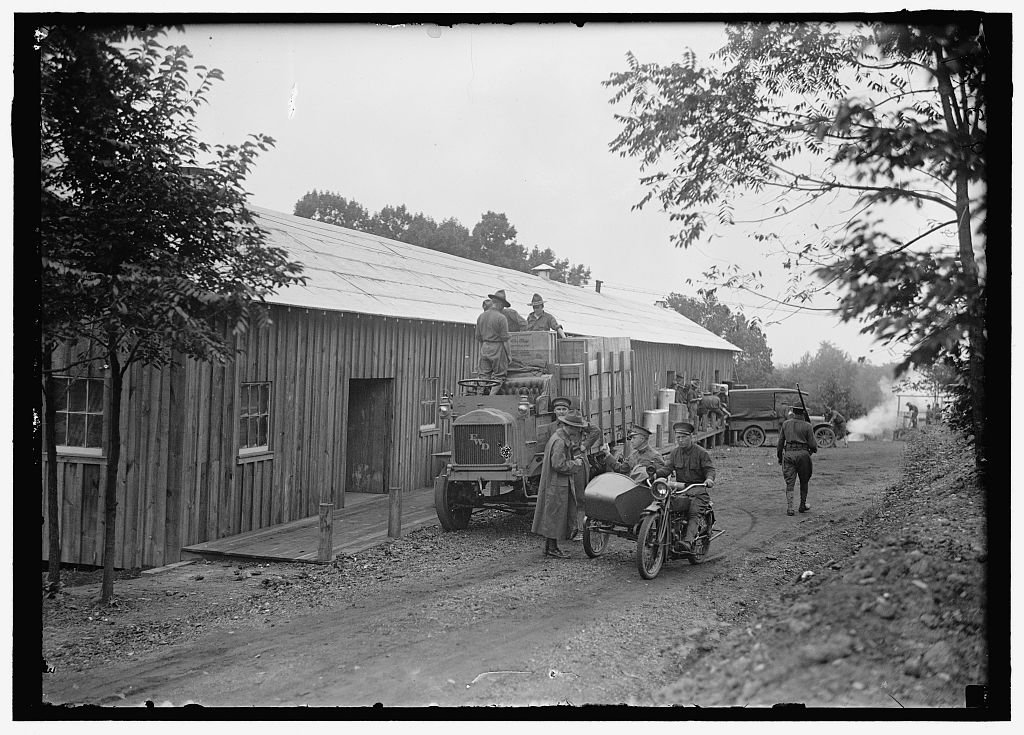
AA members call a move meant to leave the drinking behind a “geographic.” In part, the 1925 trip was one. As Lois put it, “I was so concerned about Bill’s drinking that I wanted to get him away from New York and its bars.” Their friends, Bill wrote in the Big Book, “thought a lunacy commission should be appointed. Perhaps they were right.”
Near Schenectady, almost out of money, they hired on for a month at a farm. “I insisted that I could milk and knew farming, and Lois claimed that she could cook, which was a damned lie,” Bill said. The farm bordered General Electric’s radio laboratory, and in the evenings he talked his way inside: “I got a preview of the whole radio industry five and ten years away.”
At a cement plant in Egypt, Pennsylvania, he counted the coal and read the power meters, and worked out that the company was making cement for less than a dollar a barrel. On his report, Frank Shaw’s firm bought 5,000 shares. In a field nearby, kept in their tent by four days of storm, Bill drank with a neighbor who dropped by with a bottle. It was one of the few bad bouts of the trip.
In the spring of 1926, near Dayton, Tennessee, Lois missed a turn in deep sand. Bill flew out of the sidecar over her head and broke his collarbone. They shipped the motorcycle home and took the train.
The Big Book tells the crash as one scene. Bill wobbled from a hotel bar to a brokerage office at eight at night, five hours after the close. “The ticker still clattered. I was staring at an inch of the tape which bore the inscription XYZ-32.” The papers reported men jumping from the towers of Wall Street. “I would not jump. I went back to the bar.”
Pass It On names the stock, Penick and Ford, and gives the fall from 55 to 42, the climb back to 52 on his and his friends’ buying, and the drop to 32. It adds his mother, who had bought 900 shares on his advice.
The two books also tell Montreal differently. In the Big Book he telephones a friend the next morning. In Pass It On, the friend, Dick Johnson, offers him a job, and he and Lois move to Montreal about Christmas.
Lois’s first pregnancy, in 1922, was ectopic, and so were two more. “Bill, even when drunk, took this overwhelming disappointment with grace and with kindness to me,” she said. “But his drinking had been increasing steadily.”
Years later, when they were better off, they applied to adopt. They waited a long time and asked several times, and each time they were told that a suitable child hadn’t been found yet. Bill was always sure it was because of his drinking.
After he died, Lois learned that he was right. One of the friends they had given the agency as a reference had told it “that they would not make reliable parents, because Bill drank so much.”