“Let’s keep it simple!”
Said at his front door in November 1950, on Bill’s last visit, as Bill remembered it. Many retellings move it into the Cleveland talk, but it isn’t there.
Good Oldtimers, p. 309; AA Comes of Age
1948–1950 and after
He asked for no monument, and there isn’t one.
“It is nothing I have done. I have merely been used.”
In the summer of 1948 Dr. Bob learned he had cancer. He closed his office and retired, so that he and Anne could spend their last days together quietly. Anne, nearly blind, was failing too. In May 1949 they flew to Texas to see their son. “I don’t really want to go, but Mama wants it,” he said. Anne said the same about him.
Anne came home with pneumonia and died at St. Thomas on June 1, 1949. Emma and Lavelle K., a couple Dr. Bob had helped, gave up their own home to look after him. When AA members started collecting for a monument, he had the money given back. Emma asked whether the stone would say something about AA. “Mercy, no,” he said. To Bill he put it this way: “Let’s you and I get buried just like other folks.”
He still went to King School whenever he could. He bought a black Buick Roadmaster convertible, “the car I always wanted,” and drove it too fast, sliding to a stop outside the house. He had three last wishes: to see St. Johnsbury once more, to spend Christmas in Texas, and to speak at AA’s first International Convention, in Cleveland.
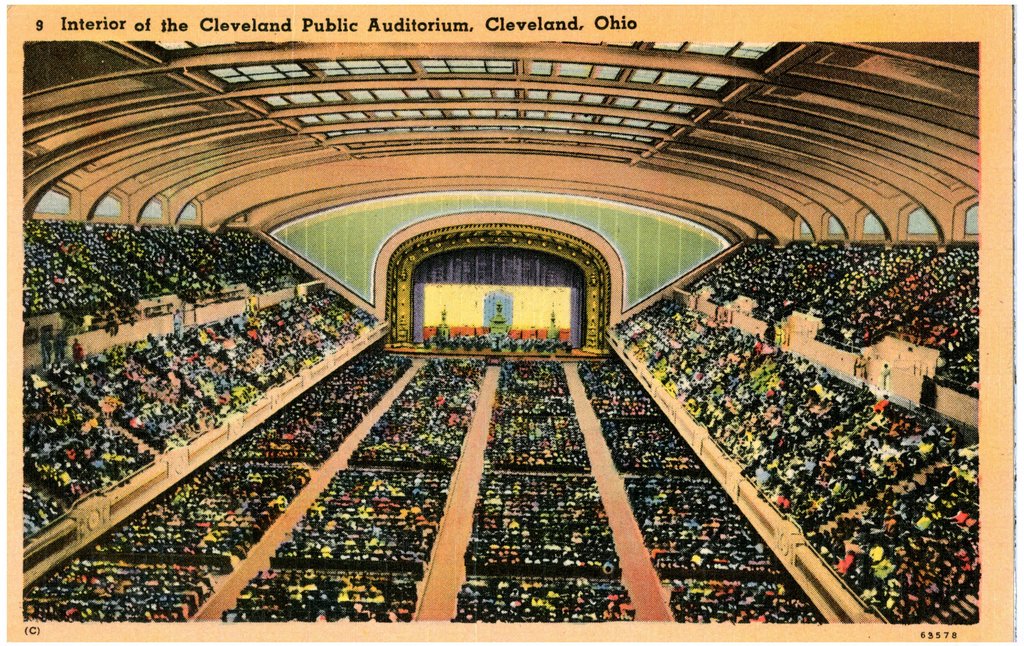
On July 30, 1950, he could hardly sit up. “Doctor, please don’t go,” Emma begged. “I just have to go,” he said. Thousands were waiting. He had been in bed five of the last seven months, he told them, so he would be brief. He asked them to keep the program simple, and said the Twelve Steps, “when simmered down to the last, resolve themselves into the words ‘love’ and ‘service.’” Then he walked off the stage.
Early in November Bill came to Akron one last time, and Dr. Bob agreed to the General Service Conference Bill had been urging on him. At the door, “carefully dressed in a light gray suit,” he smiled and said, “Remember, Bill, let’s not louse this thing up. Let’s keep it simple!” Bill never saw him again.
He died at City Hospital on November 16, 1950. Walter Tunks, who had answered Bill’s telephone call fifteen years before and helped bring the two of them together, led the funeral. He was buried beside Anne at Mt. Peace Cemetery, under a simple headstone that says nothing about AA.
It’s the summer of 1950. Anne has been gone a year. Dr. Bob has cancer, and he has spent five of the last seven months in bed.
AA’s first International Convention is meeting in Cleveland, and he has promised to speak. Friends beg him not to try. He says he just has to go.
Thousands are waiting. His talk is short. Keep the program simple, he tells them. Boil the Twelve Steps down, and they come to two words: love and service.
Then he leaves the stage.
In November, Bill comes to Akron one last time. At the front door, Dr. Bob, in a light gray suit, smiles and says: let’s not louse this thing up. Let’s keep it simple.
He dies on November sixteenth, and he is buried beside Anne under a plain stone. At King School, nobody sits in his seat for a long time.
Remembered sayings
AA repeats many sayings in Dr. Bob’s name. Here are four, with who heard or recorded them.
Dr. Bob and the Good Oldtimers warns that people sometimes quote Dr. Bob to lend weight to what they are saying.
Said at his front door in November 1950, on Bill’s last visit, as Bill remembered it. Many retellings move it into the Cleveland talk, but it isn’t there.
Good Oldtimers, p. 309; AA Comes of Age
His own words in Cleveland, July 30, 1950: what the Twelve Steps come to “when simmered down to the last.” The talk was recorded and is printed in full in Good Oldtimers.
Good Oldtimers, pp. 304–305
Written to Bill in May 1948, urging patience about the Conference: “‘Easy Does It’ is the best course to follow.” To Dan K. he explained that it means “you take it a day at a time.”
Good Oldtimers, pp. 254, 289
John R. said Dr. Bob kept repeating it. Jud O., who picked up a drink a week before his thirtieth AA anniversary, said afterward, “Dr. Bob was right.”
Good Oldtimers, pp. 207, 262
Only one is certain
Apart from “let’s keep it simple,” Good Oldtimers admits, it is hard to tell which sayings he really said. Before you quote Dr. Bob, check who remembered it.
For a closer look
What happened after, and the last things he settled.
Dr. Bob and Anne always sat in the same seats at King School. After his last talk, one member remembered, “you looked to the seat where he usually sat—and it was empty.”
Bill V. H. hated going to King School after they died. “I’d be used to seeing them sit there,” he said.
No one sat in Dr. Bob’s place for a long time. Then a newcomer who didn’t know sat down in it, and nobody said anything. Good Oldtimers thought that was probably the way it should have been.
Anne C. had known him since before he got sober. She told him he talked about dying the way she talked about driving home in the afternoon, with no fear at all. How come?
He asked if she had ever watched the planes take off at the airport. “For a while, you see the plane, and then you don’t see it,” he said. “That doesn’t mean that it has disintegrated or disappeared. It has just found a new horizon.”
Henrietta Seiberling visited him in those last months. “His faith was superb,” she said.
For years Bill had pressed for a General Service Conference, so that delegates from the groups, not the two founders, would take responsibility for AA as a whole. Dr. Bob held back. “‘Easy Does It’ is the best course to follow,” he wrote in 1948, and in 1949 he still thought the idea premature.
On that last Sunday visit he agreed: “Bill, it has to be A.A.’s decision, not ours. Let’s call that conference. It’s fine with me.” The first Conference met in April 1951, five months after his death. It voted to give his son and daughter a scroll honoring “the humility that declines all honors, the integrity that brooks no compromise.”