Watch The Kitchen Table
Illustration · A hospital bed squeezed into a flower room, among vases and buckets of flowers. Not drawn from a photograph of St. Thomas Hospital.

St. Thomas Hospital · 1939–1950

The flower room

When another hospital turned his patients away, a nun found a bed and wheeled it into the room where the flowers were kept.

“Doctor, we do not have any beds, much less private rooms, but I will do what I can.”

Sister Ignatia, August 1939, as she remembered it · Dr. Bob and the Good Oldtimers, 1980

Sister, may I have a bed?

Dr. Bob had known Sister Ignatia since 1928, when she worked in the admitting office at St. Thomas Hospital, a Catholic hospital run by the Sisters of Charity of Saint Augustine. “Doctor would call and say, ‘Sister, may I have a bed?’” she remembered. She always knew his voice, with its New England accent.

By 1939 his alcoholics were wearing out their welcome at City Hospital. One day another hospital told him, in Sister Ignatia’s words, “to seek refuge for his jittering patients elsewhere.” He came to St. Thomas more discouraged than she had ever seen him. She was wary herself: after she had once admitted a drunk on her own, the night supervisor warned her that next time she could stay up all night chasing him down the corridors.

She took his patient anyway, in August 1939. The next morning Dr. Bob asked for a private room, because some men wanted to talk with the patient alone. There were no beds free, let alone private rooms. Then she thought of the room where patients’ flowers were arranged. She wasn’t sure a bed would go through the door, “but it did, thank God.” Four or five men came to talk with him, and she could hardly believe they were alcoholics.

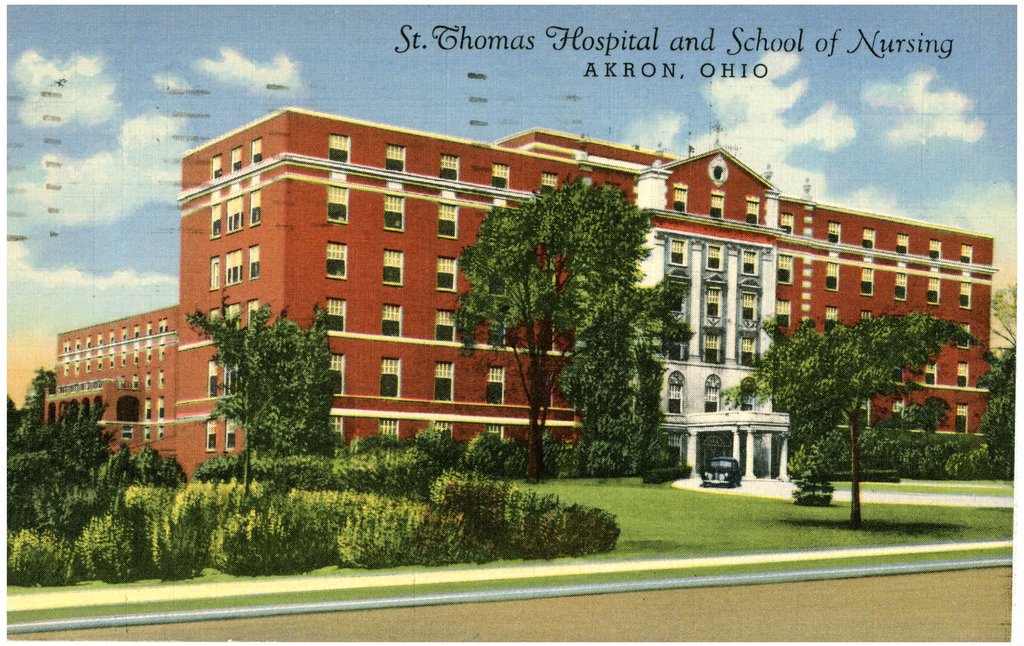
A color postcard of St. Thomas Hospital in Akron, a large brick building.
St. Thomas Hospital and School of Nursing, Akron, on a 1948 postcard, when the alcoholic ward was running.Columbus Metropolitan Library Digital Collections

A young priest, Father Vincent Haas, went to the AA meeting for her, since a sister couldn’t, and came back impressed. With the approval of the hospital and the church, she and Dr. Bob set up a program. It grew from two- and four-bed rooms to an eight-bed ward with a small lounge and a coffee bar.

The rules were strict. No one was admitted twice. Patients could see only AA visitors, sixty to a hundred of them in five days, and newspapers were forbidden. When they left, Sister Ignatia gave each one a Sacred Heart medallion, to be returned before the first drink. Dr. Bob visited every day, without pay, until his health failed. By his death, 4,800 alcoholics had been admitted under his care. Bill W. put it at over 5,000.

Listen The flower room About 1 minute

Side by side

Partners

For a decade a surgeon and a nun ran the ward together. Here is how each of them talked about the work, and about each other.

All but one of these lines are Sister Ignatia’s memories, recorded in the 1950s and printed in Dr. Bob and the Good Oldtimers. His Christmas note is the exception.

Dr. Bob

Who was ready
“Sister, he just isn’t ready.”After his morning rounds
Faith
“There is no spiritual angle. It’s a spiritual program.”His answer, time and again, to “I don’t get the spiritual angle”
Humor
“Sister, that monkey up there doesn’t want the program.”On a patient who wasn’t ready
Each other
“In a lifetime, one may meet some one or two wonderful characters like yourself.”His note to her on Christmas Eve, 1949

Sister Ignatia

Who was ready
“…it was a waste of time to force anyone to accept the program.”What she learned working with him
Faith
“…bend our knees instead of our elbows and ask for His help…”What she told the patients
Humor
“…we still have your size in pajamas.”To a man back for his tenth anniversary of sobriety
Each other
“He brought something with him when he came into a room.”Remembering him before AA

A pattern

St. Thomas was the first religious hospital to take alcoholics as a matter of course, and it became a pattern for hospitals across the country. The ward ran on Akron’s rules: AA visitors only, and a doctor and a nun who believed the patients could get well.

For a closer look

Go deeper

Their last Christmas, what the other doctors said, and where Sister Ignatia went next.

Christmas 1949
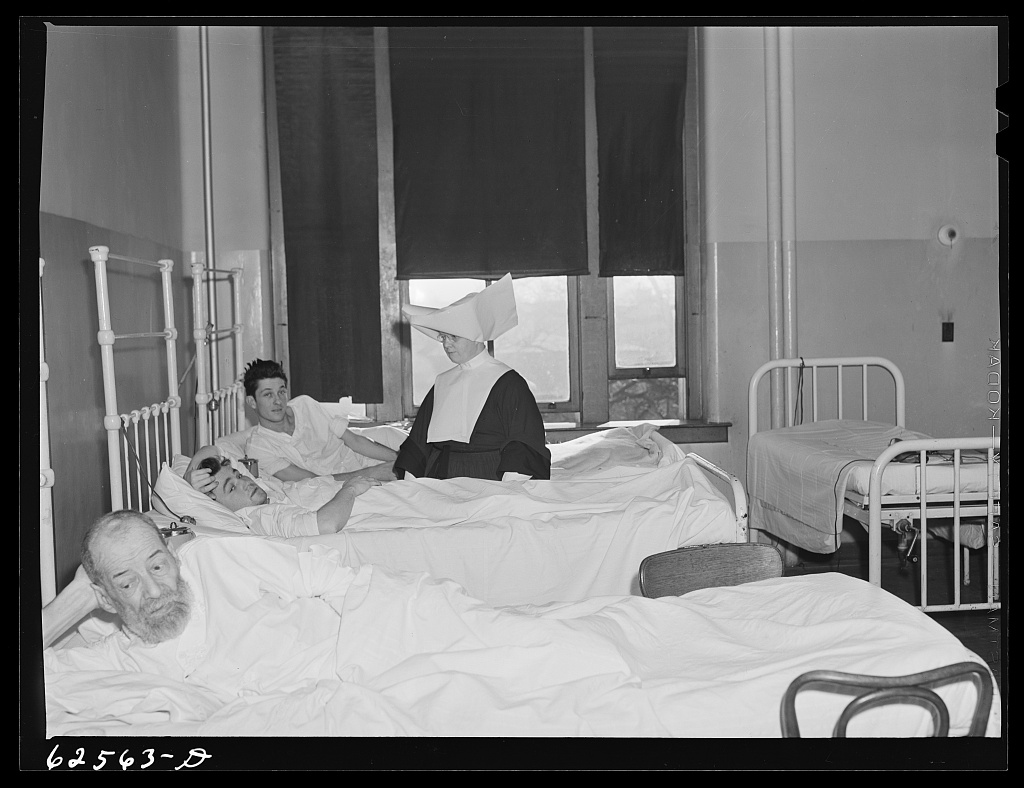
A black-and-white photograph of a hospital charity ward with rows of beds.
A Catholic hospital’s charity ward in Norfolk, Virginia, in March 1941. It is not St. Thomas; no photograph of the Akron ward is cleared for use.Photo: John Vachon, FSA/OWI Collection, Library of Congress

After Anne died in June 1949, Sister Ignatia wrote Dr. Bob a letter recalling what the three of them had been through together. On Christmas Eve he answered with a short note, thanking her for the friendship of “one so staunch and true as yourself.”

His last visit to the ward came about then, perhaps on Christmas Day. She played the organ for him and showed him the hospital’s new chimes. To Good Oldtimers, the chimes told how the criticism of ten years before had turned into “complete cooperation.”

“You have to be a drunk to get a bed”

Not everyone at St. Thomas welcomed the drunks. Dr. Bob told Sister Ignatia that while he was scrubbing for surgery he would overhear other doctors: “You have to be a drunk to get a bed in this place.” He went right on scrubbing and pretended not to hear.

She heard it too, from doctors and even nurses. “But I would be blind and deaf and dumb,” she said.

In April 1950 Ohio members gave the hospital a plaque honoring the ward. It says St. Thomas “became the first religious institution ever to open its door to our society.” Sister Ignatia, Bill W. wrote, would not let her name appear on it.

Rosary Hall

In 1952, two years after Dr. Bob’s death, Sister Ignatia was sent to Cleveland to run the alcoholic ward at St. Vincent Charity Hospital. At her suggestion it was named Rosary Hall. The initials carved over the door, R. H. S., “just happened” to be Dr. Bob’s.

By 1957, Bill W. wrote, 5,000 more alcoholics had been treated there. When she asked to be kept out of a magazine article about AA, Bill teased her: “To be anonymous, Sister, you’ll have to take a little drink.”

She died in April 1966. At her funeral the priest said, “The more she tried to conceal her holiness, the more it became apparent to all men.”
Sources