Watch The Kitchen Table
Rx
Illustration · A doctor’s desk in Akron at four o’clock in the afternoon. Not drawn from a photograph.

Akron · 1910–1933

The hiding places

For seventeen years a respected surgeon stayed dry until four in the afternoon, and kept bottles all over his house.

“I had sense enough never to go to the hospital if I had been drinking, and very seldom did I receive patients.”

Dr. Bob, on his drinking years · Alcoholics Anonymous, 1939

Dry until four

Dr. Bob came to Akron in 1910 for a two-year internship at City Hospital. He was kept so busy, he said, that he hardly left the hospital, and he stayed out of trouble. In 1912 he opened an office downtown, and soon found that a couple of drinks eased his stomach trouble. “I was between Scylla and Charybdis now,” he wrote: if he didn’t drink, his stomach tortured him, and if he did, his nerves did.

He dried out in local sanitariums at least a dozen times. Early in 1914 his father sent a doctor from Vermont to bring him home, and four months later he came back to Akron sober. In January 1915 he married Anne Ripley, and they moved into a new house at 855 Ardmore Avenue. For three years he stayed sober, and they were happy.

Then the country went dry. “I felt quite safe,” he said: whatever liquor people had stocked up would soon be gone. He hadn’t known that doctors could get almost unlimited alcohol for medicinal use. He wrote prescriptions to names picked at random from the phone book, and a bootlegger delivered the rest.
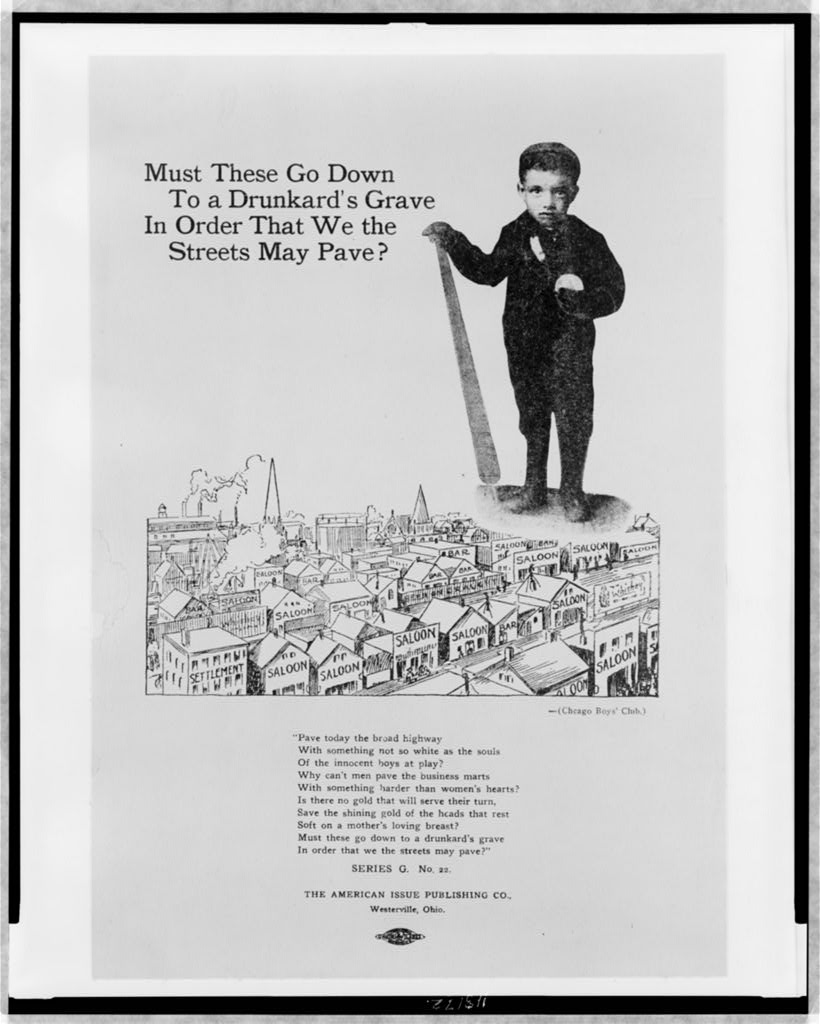
A temperance poster: a small boy with a bat and ball stands before a street of saloons, under the words “Must these go down to a drunkard’s grave?”
A temperance poster printed in Westerville, Ohio, the Anti-Saloon League’s hometown, between 1915 and 1919.Library of Congress, Prints and Photographs Division

He built a routine around the secret. Heavy sedatives in the morning instead of a drink. Never the hospital after drinking. Dry until four o’clock, then home. His career even advanced: in 1929 he began to specialize as a rectal surgeon. “It was really a horrible nightmare,” he wrote, “this earning money, getting liquor, smuggling it home, getting drunk, morning jitters…”

By 1933 the Depression had idled Akron’s rubber factories, and his practice had all but gone. The family lived on potato soup, and a mortgage moratorium saved the house. Anne and his office girl, Lily, lied to his patients. “Dad had almost no practice left,” his son remembered.

Listen The hiding places About 1 minute

Inside the house

Where he hid it

The places Dr. Bob hid liquor from his wife, most of them from his own list in the Big Book.

The house is a diagram, not drawn from photographs or plans of 855 Ardmore Avenue.

Diagram of a two-story house with its hiding places numberedA cross-section of a house: a bathroom and bedroom upstairs with a back porch, a front hall, living room and kitchen downstairs, back steps outside, and a cellar. Numbers mark the hiding places listed beside the diagram; the toilet tank is marked as never used.BathBedroomBack porchFront hallParlorKitchenCellarBack steps12345678910
A diagram, not a plan of the real house. Each place is shown where it would usually be.
  1. 1. The coal bin

    The first place on his own list, in the Big Book, of where he hid what he smuggled home when Anne went out for the afternoon. Numbers 2 to 7 come from the same list.

  2. 2. The clothes chute

  3. 3. Over the doorjambs

  4. 4. Over the beams in the cellar

  5. 5. Cracks in the cellar tile

  6. 6. Old trunks and chests

  7. 7. The old-can container, and even the ash container

  8. 8. The back steps

    His bootlegger hid alcohol there, “where I could get it at my convenience.”

  9. 9. The back porch

    Bottles in a fur-lined glove, tossed up onto the back airing porch “when winter days got dark enough.” His son remembered a driving mitten and the upstairs sun porch.

  10. 10. His stocking tops

    His pockets were searched when he came in, so he carried four-ounce bottles in his stocking tops, until he and Anne saw Wallace Beery try the same trick in the movie Tugboat Annie.

  11. Never used: The toilet tank

    He never used it, “because that looked too easy.” He found out later that Anne checked it often.

Hidden from everyone

He hid it from everyone, and the people who lived with him knew anyway. Anne checked the toilet tank. The men at the garage were trained to drive him home. His daughter wouldn’t fetch his bottle for ten dollars.

For a closer look

Go deeper

What his colleagues and his family saw, and where his practice went.

What others saw
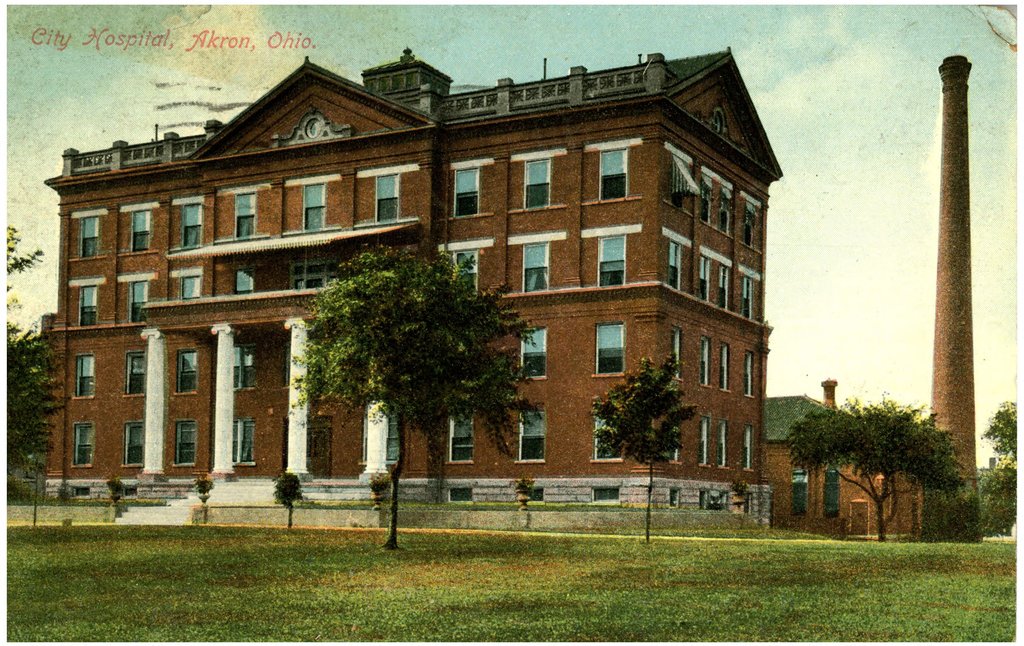
A color postcard of a large brick hospital building with towers, set on a lawn.
City Hospital, Akron, on a 1911 postcard, from the years he interned there.Columbus Metropolitan Library Digital Collections

Betty B., a student nurse at City Hospital in 1934, had no idea he drank, though she noticed his hands sometimes shook during a dressing and his eyes were bloodshot. She remembered purple striped socks under too-short surgical trousers, a cap perched “like that of a rakish baker,” and a growled “Sit down, woman” whenever students stood up for him.

When she dropped a specimen, he told her supervisor he had “dropped the damn thing” himself. “He kept it simple before A.A.,” she said, “and the nurses who scrubbed for him loved him for it.”

Anne C., who later came into AA herself, remembered him at the lunch counter in his office building, ordering Bromo-Seltzer, tomato juice and aspirin. She asked the owner if he had palsy. “No, he has a perpetual hangover.”

What the family knew

Anne searched his pockets and checked the toilet tank. Once, desperate, she took a drink of whiskey herself and told their son to say she was drunk when his father came home. “It ended up in quite an uproar and didn’t accomplish much,” Smitty said.

In high school, Sue refused when he asked her to fetch his bottle. He offered her money, and “finally got up to ten dollars,” and she still wouldn’t. “That was when I realized I didn’t know much about what was going on with him—how much he wanted it.”

Afterward she would find two or three extra dollars in her dime bank. “I think he tried to make it up to me that way.”

Two for the Lord

He hated sending bills. His receptionist, Lily, had a hard time getting him to say who owed him, and many patients he never charged at all. “Well, I’ve got three operations this morning,” his son remembered him saying, “two for the Lord and one for R. H.”

By 1933 his standing at City Hospital was shaky. Some say he was dismissed. Good Oldtimers found no record of it, and thinks he stopped drinking just in time.

Dr. Thomas Scuderi, a young intern who met him in 1934, later gave three reasons he wasn’t disciplined more: he was a better surgeon than most, even drinking; his colleagues liked him and covered for him; and doctors had a tacit agreement not to admit that alcoholism existed among doctors.

Sources
  • Alcoholics Anonymous. Works Publishing, 1939. Dr. Bob’s story, “Doctor Bob’s Nightmare.”
  • Dr. Bob and the Good Oldtimers. AA World Services, 1980. Chapters II–IV.
  • Pass It On. AA World Services, 1984. Chapter 7.
  • Must these go down to a drunkard’s grave… (poster), American Issue Publishing Company, 1915–1919, Library of Congress. No known restrictions on publication.
  • City Hospital, Akron, Ohio (postcard), 1911, Columbus Metropolitan Library. No copyright in the United States.