Defeat
Ebby at Towns, 1934
“You admit you are licked…”
The six steps, 1938
“We admitted that we were licked, that we were powerless over alcohol.”
Calvary Mission and 182 Clinton Street · November–December 1934
Broke and living in a mission, he spent a few cents to reach an old friend who was still drinking.
“It wasn’t like the water wagon business at all.”
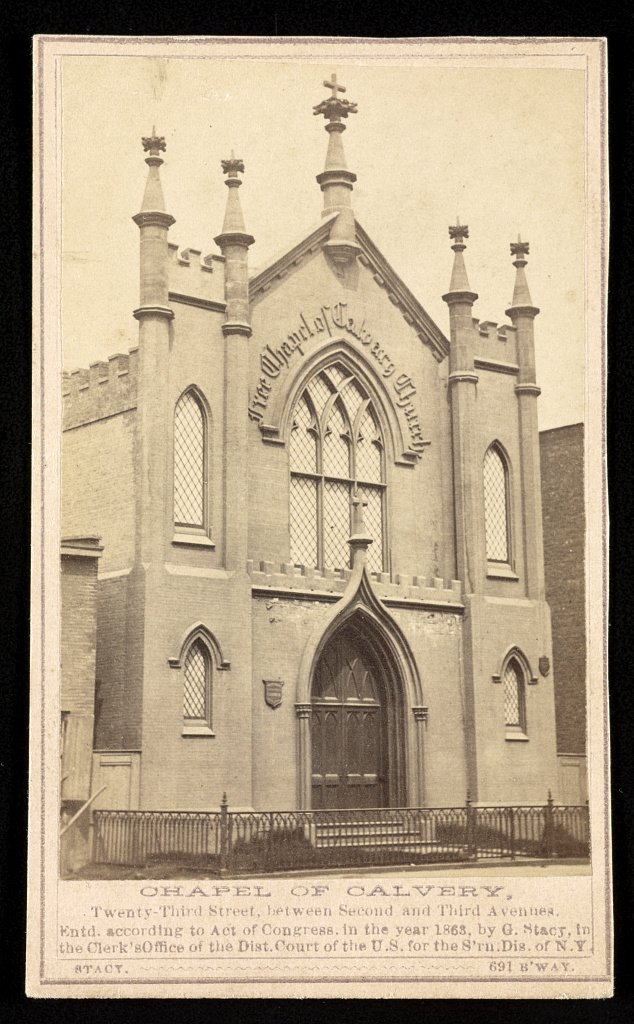
That fall Ebby was in New York, sober and broke. After a stay with Shep C., he found a bed at the Calvary Mission on East 23rd Street, a rescue mission for homeless men run by Sam Shoemaker’s Calvary Church, a center of the Oxford Group in New York. He joined “the brotherhood,” the men who helped run the place, and the mission recorded his surrender as November 1, 1934.
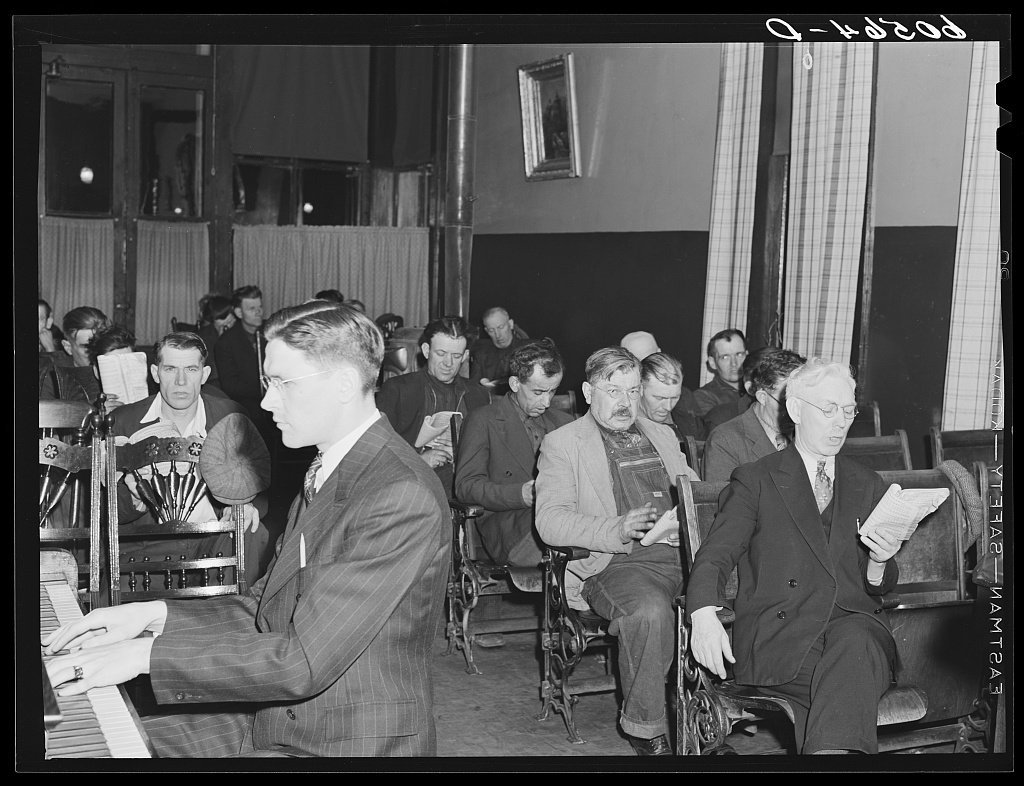
Friends on Wall Street told him Bill W. was in bad shape. In Ebby’s memory, he phoned the house and got Lois, Bill’s wife, “and she invited me over to dinner a night or two later.” Bill remembered Ebby on the phone, and himself hoping for a night of drinking.
Late in November, Ebby sat across the kitchen table from Bill at 182 Clinton Street, in Brooklyn. He turned down the drink Bill pushed across to him and said he had got religion. The Kitchen Table, the film on this site, tells that evening from Bill’s side. From Ebby’s side, what mattered was how this differed from every time he had quit before: “It wasn’t like the water wagon business at all. This time I felt completely released of the desire.” Afterward Bill walked him to the subway and said he wanted whatever Ebby had found.
Bill kept drinking. One day he went looking for the mission, stopping in bars along the way, and turned up at nightfall with a Finnish fisherman named Alec. The man in charge wanted to throw them out. Then Ebby “turned up, grinning,” and asked, “What about a plate of beans?” That night, when Bill went forward at the altar call, “Ebby reached for my coattails, but it was too late.”
On December 11 Bill checked into Towns Hospital for the last time. Three days later Ebby came by. “Mighty sorry you had to land up here again,” he said. “Thought I’d come up and say ‘hello.’” He didn’t preach. When Bill asked, he went over it all again, what Bill called “your neat little formula.” Soon after, he brought Bill a book he hadn’t read himself, William James’s The Varieties of Religious Experience, which Oxford Group friends had recommended.
Ebby stayed on at the mission for about a year, working with the men there, then moved in with Bill and Lois at Clinton Street.
New York, November 1934. Ebby T. is sober, broke, and sleeping at a rescue mission on East 23rd Street.
He hears that his old friend Bill W. is in bad shape, drinking in a kitchen in Brooklyn. So he spends a few cents on a phone call and a subway ride.
At the kitchen table, Bill pushes a drink across to him. Ebby turns it down. He says he’s got religion.
What he wants Bill to understand is that this isn’t the water wagon. He isn’t holding out against the drink. The desire is gone.
Bill keeps drinking. But a few weeks later, in Towns Hospital, he asks Ebby to go over it one more time. You admit you’re licked. You get honest. You talk it out with someone. You make amends. You give of yourself. And you pray, even as an experiment.
Four years later, those ideas were six steps. Soon after, there were twelve.
Then and later
What Ebby told Bill at Towns Hospital in December 1934, beside the six-step program the early members were passing on four years later.
Both columns are Bill’s words in AA Comes of Age: the first his memory of Ebby’s visit, the second his list of the “word-of-mouth program” as it stood in the fall of 1938. The two lists run in the same order.
Ebby at Towns, 1934
“You admit you are licked…”
The six steps, 1938
“We admitted that we were licked, that we were powerless over alcohol.”
Ebby at Towns, 1934
“…you get honest with yourself…”
The six steps, 1938
“We made a moral inventory of our defects or sins.”
Ebby at Towns, 1934
“…you talk it out with somebody else…”
The six steps, 1938
“We confessed or shared our shortcomings with another person in confidence.”
Ebby at Towns, 1934
“…you make restitution to the people you have harmed…”
The six steps, 1938
“We made restitution to all those we had harmed by our drinking.”
Ebby at Towns, 1934
“…you try to give of yourself without stint, with no demand for reward…”
The six steps, 1938
“We tried to help other alcoholics, with no thought of reward in money or prestige.”
Ebby at Towns, 1934
“…you pray to whatever God you think there is, even as an experiment…”
The six steps, 1938
“We prayed to whatever God we thought there was for power to practice these precepts.”
Where the Steps came from
Bill called that early program “the substance of the formula for sobriety that Ebby had given me.” Most of the ideas, he said, came from the Oxford Group, William James and Dr. Silkworth. Ebby was the one who carried them to the kitchen table. When Bill wrote the Big Book’s fifth chapter, the six became twelve.
For a closer look
What the call cost, whether Ebby was at the mission that night, and the book he hadn’t read.
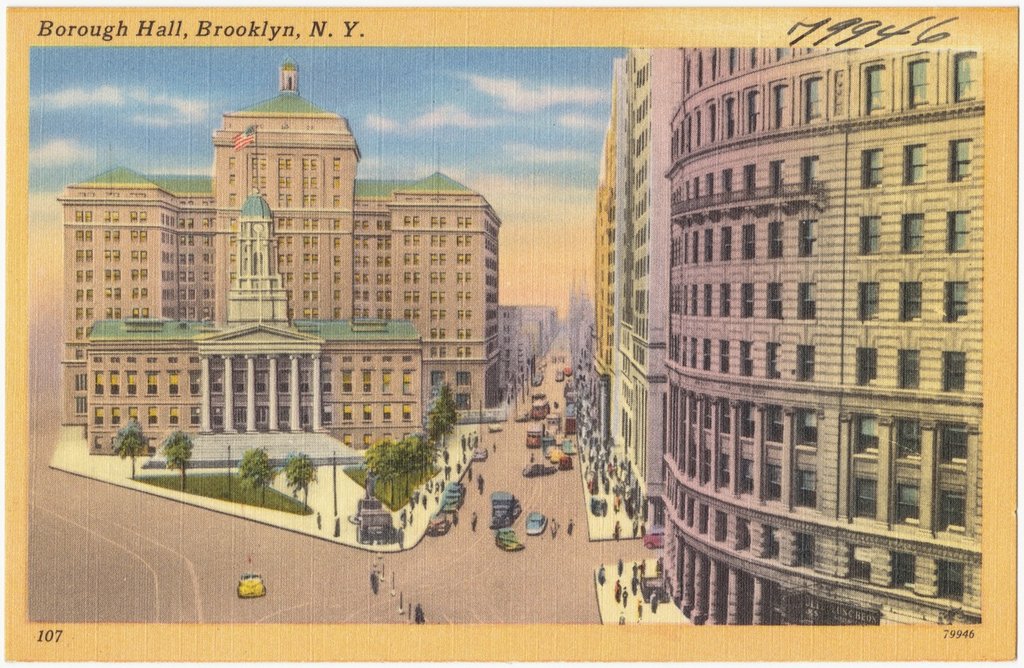
Bill, in 1957: “He called me on the phone and then got into the subway; total cost, ten cents.”
Mel B. counts three nickels: one for a call to Lois, one for a later call to Bill, and one for the subway to Brooklyn. Bill never mentioned a call to Lois. Perhaps he forgot it, or she never told him.
Either way, Bill drew a lesson from it: “Ebby established the principle that A.A. in action calls for the sacrifice of much time and a little money.”
In Bill’s telling, Ebby turned up with the offer of beans, sat beside him on the bench, and tried to hold him back at the altar call.
Billy D., the mission’s assistant superintendent, remembered it differently in a 1962 letter: Ebby wasn’t there that night at all. In his version, Bill told the meeting he had seen Ebby testify at Calvary Church the Sunday before, and that if Ebby could get help here, so could he. Billy D. also remembered Bill’s companion as a man named Johnson, not Alec.
Mel B. sides with Bill. The letter was written twenty-eight years after the night.
Bill, in 1957: “It was Ebby, I think, who brought me a copy of William James’ Varieties of Religious Experience.” Pass It On is surer: Ebby, on the third day. Ebby said Oxford Group friends had recommended it; he hadn’t read it himself.
Bill read it cover to cover and found in it a name for what had happened to him: “Deflation at depth—yes, that was it.” The book also made sense of the chain that had reached him: “Dr. Carl Jung had told an Oxford group friend of Ebby’s how hopeless his alcoholism was and Dr. Silkworth had passed the same sentence upon me. Then Ebby, also an alcoholic, had handed me the identical dose.”
The Oxford Group friend was Rowland H., the man who stood up for Ebby in court. His story is in 3 · The ale in the cellar.