Illustration · A hallway in an old inn in the Cotswolds in the 1930s: an oil lamp on a sideboard crowded with the guests’ own bottles, and a little cupboard in the paneling standing open, with a tray of pink gins hidden inside. Not drawn from a photograph.
Chicago, London and the Queen Mary · 1921–1936
The last passenger
She drank from seventeen, eloped at twenty-two, lost control of her drinking in London, and after six years abroad came home on a stretcher.
“That was the last time I tried to stop drinking on my own!”
Gay with the gayest
Marty M. dated her drinking from seventeen, though she couldn’t remember her first drink. She had grown up with a little wine on holidays and beer at Sunday dinner. By 1921 Prohibition was in force, but her father had laid in a cellar to last it out, and from seventeen she could help herself. The times, she wrote later, taught her “to be gay with the gayest; my own inner urges led me to outdo them all.” The young men in her crowd once matched her against a young married woman in a drinking contest, with bets on the side. At five in the morning the judges called it a draw.
She came out as a debutante in the winter of 1925–26. In 1926, as a bridesmaid at a society wedding in New Orleans, she met one of the groomsmen, John Blakemore. “He was one of the most attractive men I’ve met, interesting, traveled, with a keen mind. His family was prominent socially and he was the town’s worst drunk.” Back in New Orleans for Mardi Gras the next year, after a whirlwind courtship, they slipped across the Mississippi to Gretna and were married by a justice of the peace on March 12, 1927. Both of them, her biographers write, were high on alcohol.
She left him after three months. Her TB flared up, and she spent a year on the family’s ranch in New Mexico, getting well and qualifying for a divorce, which came through on June 20, 1928. She moved to New York and wrote about art for a Hearst magazine, International Studio. Her father, who drank and gambled heavily, had left Marshall Field in 1926. Seventeen days before the stock market crash of October 1929, he filed for bankruptcy.
In 1930 she moved to London to write a novel. The money ran out in six months, and she went into partnership in a photography studio, doing portraits and fashion work for magazines like Vogue and Tatler. Around 1932 her drinking crossed a line. She needed a drink in the morning, and the bottle she left by the bed was gone when she woke: “And I didn’t even remember drinking it!” She hid bottles from herself, and drank in the darkroom. When friends said she drank too much, she found new friends. Doctors told her she wasn’t crazy. On their advice she took two rest cures in the country.
Then friends who owned an inn at Broadway, a village in the Cotswolds, asked her to run it while they took three months off. She decided to stop drinking for Lent. Within days she was sick, and the village doctor decided she had picked up some tropical disease. The shakes went on. At the bank, an officer who took her for a forger had her sign her name again. She tried fifteen times, went to the pub for martinis, and came back and signed perfectly. Three weeks into Lent she was drinking again, and when the owners came home they fired her.
Back in London she ran the publicity for the 1935 opera season at Covent Garden. That year, twice, she tried to take her own life, and after the second time she spent six months in a London hospital. Her nurse took her home to Scotland, near the Dornoch Firth, to get well, on condition that she didn’t drink. She drank with the neighbors. In the village library she found Asylum, a book by an old drinking companion, William Seabrook, about a New York hospital that he believed had taught him to drink normally. She read it over and over. “Maybe … I’ve been in exile too many years. I need to get home, back to where drinking wasn’t a problem.”
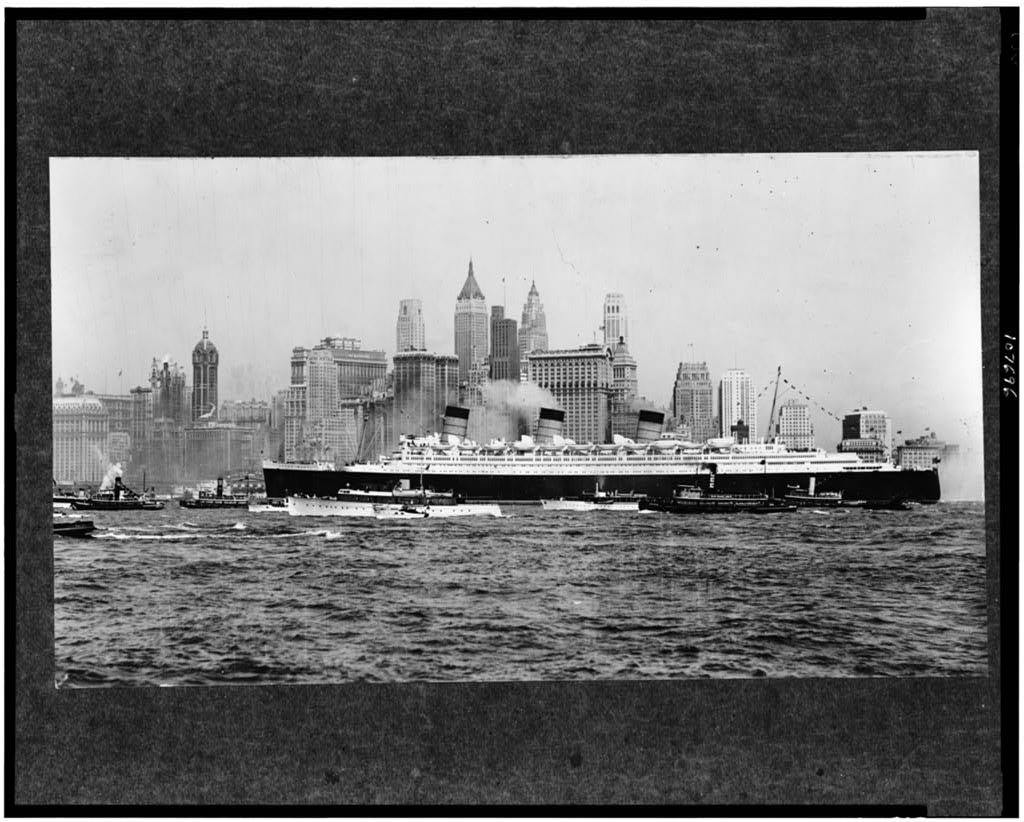
Image to comeThe Queen Mary in New York, about 1936
Back from Scotland, with no money and no job, she sat for days in a rented deck chair in Hyde Park with a bottle. In early December 1936 she sailed for New York on the Queen Mary, on borrowed money, meaning to sober up on the way. She had a beer to celebrate, drank through all six days of the crossing, and remembered only hearing that King Edward VIII had given up his throne. On December 15 the ship docked. Her mother, her sister Chris and Chris’s roommate watched every passenger come down the gangplank, and waited in the cold until they were alone on the pier. Then two stewards came down with a stretcher, carrying the last passenger off the ship.
ListenThe last passengerAbout 1 minute
It’s December 15, 1936, and the Queen Mary is docking in New York. Marty M. is thirty-two, and she is coming home.
She has been a debutante, a bride for three months, a writer about art, and a photographer in London. She has been away six years. Her family has no idea how she drinks.
She meant to sober up on the voyage. She had one beer to celebrate, and drank for six days.
On the pier, her mother and her sister wait. The passengers come down the gangplank and go off through customs, until they are the only ones left on the pier, in the cold.
Then two stewards come down, carrying a stretcher. On it is the last passenger off the ship, too drunk to walk.
Marty has come home.
Her story and the record
What her story left out
In her story in the Big Book, Marty M. covered these fifteen years in a few short paragraphs. Here are her sentences, beside what her biographers found.
The left column is from “Women Suffer Too,” first printed, without her name, in the Big Book’s second edition in 1955. The right column is from her biographers, who worked from her talks and papers, newspapers and court records.
The yearsHer story, 1955The record
Married
Her story, 1955
“The year after coming out, I married. So far, so good—all according to plan, like thousands of others.”
The record
Not quite to plan. She eloped in March 1927, before a justice of the peace across the river from New Orleans, and both of them had been drinking.
Her husband
Her story, 1955
“My husband was an alcoholic, and since I had only contempt for those without my own amazing capacity, the outcome was inevitable.”
The record
She left after three months. Looking back, she said:
“I showed neither patience nor understanding—I thought his drinking showed lack of character and will.”
Divorce
Her story, 1955
“My divorce coincided with my father’s bankruptcy, and I went to work …”
The record
The divorce came through in June 1928. Her father filed for bankruptcy in October 1929, more than a year later.
Abroad
Her story, 1955
“For the next ten years I did just that. For greater freedom and excitement I went abroad to live.”
The record
First two years in New York, writing about art for a magazine. Then six years in London, from 1930.
Her business
Her story, 1955
“I had my own business, successful enough for me to indulge most of my desires.”
The record
A photography studio, with a partner. By about 1932 she was drinking in the darkroom. She sold her share, went to run an inn in the Cotswolds, and was fired.
Home
Her story, 1955
“No doubt I had been an exile too long—I should go home to America. I did.”
The record
She borrowed the fare, drank for six days on the Queen Mary, and was carried off the ship on a stretcher while her mother and sister waited on the pier.
The short version
Her story keeps the shape of those years, the plan, the drinking, the misery and the trip home, and leaves out most of the particulars: the elopement, the inn, the Queen Mary, the stretcher. Some of those she told in her talks and to newspapers, and her biographers drew on them.
For a closer look
Go deeper
Lent at the inn, the girl who could outdrink everyone, and the father she took after.
The inn at Broadway
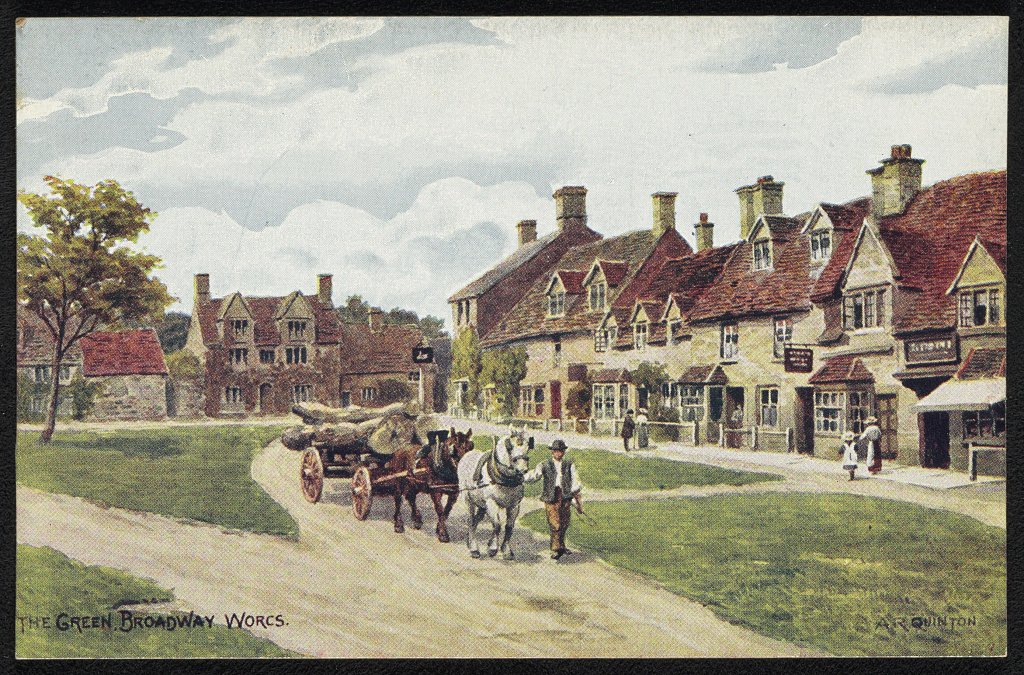
Image to comeThe green at Broadway, Worcestershire
The inn stood at the foot of the main street, white stucco with black trim, with an English butler. It had no license to sell drink, so the guests brought their own and kept their bottles on the sideboard. There were two pubs close by, one across the street and one through the orchard behind.
Every day she sent the butler across the street for a tray of pink gins, and he hid them in little cubbyholes all over the inn. As the manager, she “inspected” the cupboards daily and drank what she found. Soon she was drinking from the guests’ bottles too. When they noticed, she blamed “that new kitchen boy” and fired him. She fired the chef as well, after he chased the kitchen help with a carving knife. Then she found the attic full of the owners’ homemade raspberry, dandelion and elderberry wines. “Ghastly stuff!” She drank them anyway, moving the empties to the bottom.
Years later one of the owners ran into her in New York. “Were you the one who drank all our terrible wine in the attic?” She said she was. “Well,” he laughed, “you deserved to die!”
A hollow leg
“sit like a bump on a log or hog the whole show”
Marty M., on herself as a shy teenager, as her biographers quote her.
She remembered herself at seventeen as shy and awkward. She had two dates before she started drinking, and neither boy asked her out again. Then she found that three stiff drinks before going out made her one of the gang. Liquor, she said later, did her growing up for her.
She could drink more than anyone and not show it. Her dates boasted about it, and at the end of a party she drove everyone home. The contest, at a mansion on Lake Shore Drive, was over French 75s, bathtub gin topped with champagne, poured by three judges who weren’t allowed to drink. She carried the piano player upstairs and rode the dumbwaiter to the attic and back. After the draw at five, judges and contestants went out for breakfast together, and then the two women settled down to drink in earnest.
Sober, she told audiences that a hollow leg like hers had been an early warning sign.
Her father’s daughter
Her father, Will, was charming, domineering and sure of himself, and his eldest daughter was very like him. They were at loggerheads even before she was a teenager. He was a Republican, so she became a Democrat.
He was also a heavy drinker and a gambler, on horses, cards, stocks and land. Her mother’s father had seen to it that money he left his daughter was in a trust meant to keep it out of Will’s hands. After Will left Marshall Field in 1926, it took him three years to go from rich man to bankrupt. In 1937, when he failed to pay his son’s tuition, he explained, “I had some bad luck investing in a silver mine and a pea plantation.”
He had stopped drinking on his own, by willpower. In London, as her own drinking went out of control, she couldn’t understand why he could do it and she couldn’t. Her will was at least as strong as his.
Sources
Sally Brown and David R. Brown, A Biography of Mrs. Marty Mann. Hazelden, 2001. Chapters 2–11. Its unattributed quotes of her come from fifty-one tapes of her talks or from her writings.
“Women Suffer Too,” in Alcoholics Anonymous (the Big Book), second edition, 1955; quoted from the fourth edition, 2001.