Watch The Kitchen Table
Illustration · A path through the pine woods above Freudenstadt, in the Black Forest, where Frank Buchman walked in 1938 and was wheeled in August 1961, days before he died there. Not drawn from a photograph.

St. Louis and Freudenstadt · 1955 and after

Legacy

Sam Shoemaker came to AA’s convention to remember the Group’s better days. AA kept what worked, and the Group went on under another name.

“They had begun to find this through the old Oxford Groups in its earlier and, I think, better days.”

Sam Shoemaker, at AA’s convention in St. Louis, 1955 · printed in Alcoholics Anonymous Comes of Age, 1957

Better days

After the break with Buchman in 1941, Sam Shoemaker went on with his own work: Calvary Church in New York until 1952, then Calvary Church in Pittsburgh, and a lay movement called Faith at Work. Some time after the break he wrote Bill W. an apology. At Calvary, he said, they had been “coached in the feeling that you were off on your own spur,” and for his own part “in that stupid desire to control the Spirit, as He manifested Himself in individual people like yourself, I am heartily sorry and ashamed.”

In July 1955 AA held its twentieth-anniversary convention in the Kiel Auditorium in St. Louis, and on the Sunday morning Shoemaker spoke. Bill introduced him: “It is through Sam Shoemaker that most of A.A.’s spiritual principles have come.” A woman had asked Shoemaker when he arrived whether he was an alcoholic. When he said no, she told him, “Well, you talk like one!” For an outfit like AA “to become dogmatic would have been fatal, I think,” he said; it had been wise to stick to the experience and leave the theology to the churches.

Bill set down his verdict two years later. Some of the Group’s attitudes had “proved unsuited to A.A.’s purpose,” he wrote, and Shoemaker’s own views of “these lesser aspects of the Oxford Groups had later changed and become more like our A.A. views of today.” What mattered was what AA had taken. “A.A. owes a debt of timeless gratitude for all that God sent us through Sam and his friends in the days of A.A.’s infancy.”

The Group went on as Moral Re-Armament. From 1946 its center was a near-derelict hotel at Caux, high above Lake Geneva, bought by Swiss supporters. Buchman died in 1961 at Freudenstadt, the Black Forest town where the phrase “moral and spiritual re-armament” had come to him in 1938, and was buried beside his parents in Allentown. Shoemaker died two years later. In 2001 Moral Re-Armament became Initiatives of Change; in Britain its charity is still, in law, the Oxford Group.

Listen Legacy About 1 minute

Then and now

What to do

The other half of Bill’s line: the Groupers “had clearly shown us what to do.” The Group’s own handbook of 1933 has a chapter for each of its practices. Here they are beside the Steps AA wrote five years later.

Quotations are short excerpts. The handbook is What Is the Oxford Group? (1933), by “the Layman with a Notebook”; the Steps are as the first edition of Alcoholics Anonymous printed them in 1939.

Sharing

The Group’s handbook, 1933

“…telling, or talking over, our sins with another whose life has already been surrendered to God…”

The Twelve Steps, 1939

“Admitted to God, to ourselves, and to another human being the exact nature of our wrongs.”

Step Five

Surrender

The Group’s handbook, 1933

“…a complete giving back to God of the will-power He gave us at Creation…”

The Twelve Steps, 1939

“Made a decision to turn our will and our lives over to the care of God as we understood Him.”

Step Three

Restitution

The Group’s handbook, 1933

“Restitution is righting to the best of our present ability wrongs we have committed in the past.”

The Twelve Steps, 1939

“Made direct amends to such people wherever possible, except when to do so would injure them or others.”

Step Nine

Guidance

The Group’s handbook, 1933

“The Oxford Group advocates our use of a pencil and note-book so that we may record every God-given thought…”

The Twelve Steps, 1939

“Sought through prayer and meditation to improve our conscious contact with God as we understood Him…”

Step Eleven

The four absolutes

The Group’s handbook, 1933

“To ourselves the absolute truth; to others as truthful as we are to ourselves.”

The Twelve Steps, 1939

“Made a searching and fearless moral inventory of ourselves.”

Step Four. The word “absolute” isn’t in the Steps.

The world

The Group’s handbook, 1933

“It is certain that this civilization cannot continue to live whilst its roots are rotting with fear, hate, and paganism.”

The Twelve Steps, 1939

“…we tried to carry this message to alcoholics, and to practice these principles in all our affairs.”

Step Twelve

Ten of the twelve

In 1960 Bill traced the Steps to their sources. Step One came from Dr. William D. Silkworth, and the spiritual awakening of Step Twelve from William James. “The spiritual substance of our remaining ten Steps came straight from Dr. Bob’s and my own earlier association with the Oxford Groups.”

For a closer look

Go deeper

Buchman’s last days at Freudenstadt; how the Group’s own biographer tells the start of AA; and what Bill said about Sam Shoemaker, three times over.

Freudenstadt
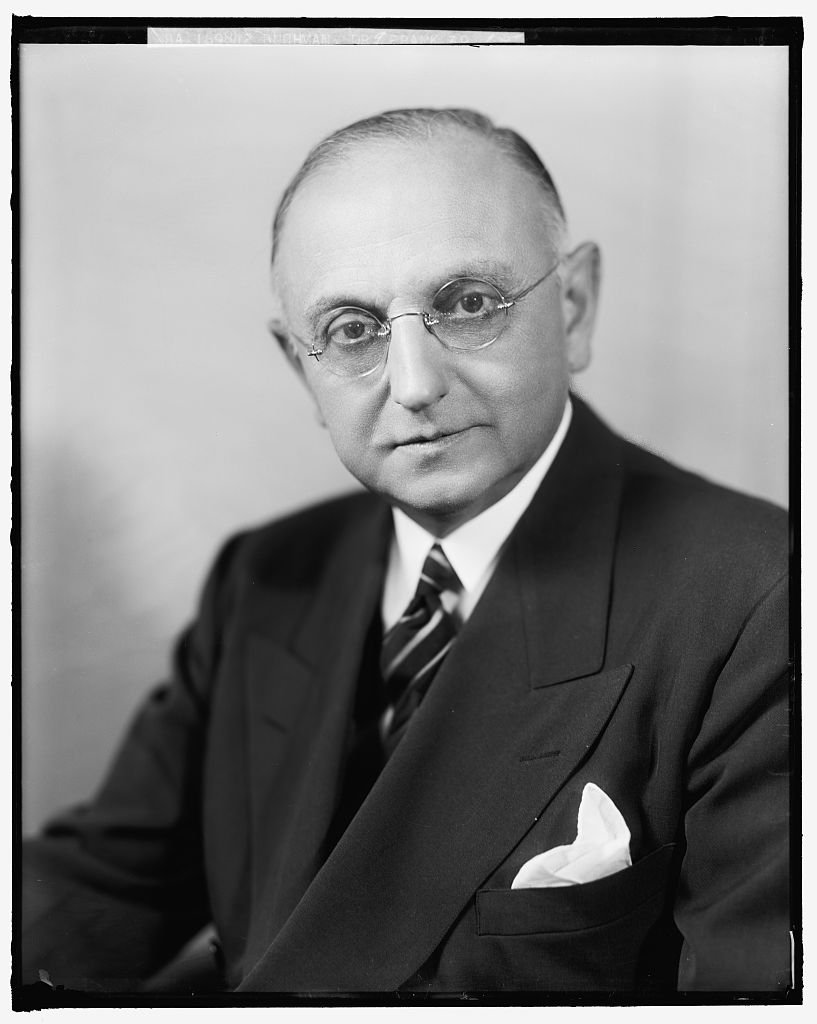
A studio portrait of Frank Buchman in a dark suit and round glasses.
Frank Buchman, about 1940.Harris & Ewing Collection, Library of Congress

On April 17, 1956, the mayor and council of Freudenstadt named a path through the woods above the town for Buchman: the one he had walked in 1938, Lean writes, “when he had the thought of a ‘moral and spiritual re-armament for all nations’.”

He came back in the summer of 1961, at 83, after a season at Caux. In August, Lean writes, “Buchman was pushed the length of the Frank Buchmanweg in his wheelchair.” On Sunday, August 6, he had a sharp pain in his chest. Between spells of unconsciousness he kept asking what news had come in. “‘How are my Americans?’ was his final question.” He died the next evening, at a quarter to ten.

His funeral was in Allentown, Pennsylvania, where he had grown up, and he was buried beside his parents.

How the Group tells it

Garth Lean’s biography of Buchman tells the start of AA in a page, in a chapter called “Communism and Alcoholics Anonymous.” In his telling, Bill W.’s first months of failure ended when someone told him, “You’re preaching at these fellows, Bill. No one ever preached at you.” (AA’s own books give that advice to Dr. Silkworth.) Late in life, T. Henry Williams was asked where AA had started. He pointed to a spot on his carpet: “It started right there!”

Looking back over Buchman’s life, Lean counted the people who had left him. Some abandoned his principles, he wrote, but more went on to use what they had learned, “in some cases creating such ‘spin-offs’ as Alcoholics Anonymous,” and Shoemaker’s Faith at Work. Lean was a follower of Buchman; this is the Group’s view of AA.

Bill on Sam

Bill W. paid tribute to Shoemaker in print more than once. In the order he wrote them:

  • 1957. In AA Comes of Age: “Dr. Silkworth gave us the needed knowledge of our illness, but Sam Shoemaker had given us the concrete knowledge of what we could do about it.”
  • 1960. In the Grapevine, for AA’s twenty-fifth anniversary: the substance of ten of the Steps came from the Oxford Groups, “as they were then led in America by that Episcopal rector, Dr. Samuel Shoemaker.”
  • 1967. In the Grapevine, after Shoemaker’s widow, Helen, published his biography, I Stand by the Door: “Dr. Sam Shoemaker was one of AA’s indispensables. Had it not been for his ministry to us in our early time, our Fellowship would not be in existence today.”
Sources
  • Alcoholics Anonymous Comes of Age. Alcoholics Anonymous Publishing, 1957 (the St. Louis convention of 1955, with Shoemaker’s talk; Bill W. on Shoemaker).
  • Pass It On. AA World Services, 1984. Chapter 9 (Shoemaker’s apology to Bill).
  • Bill W., The Language of the Heart. AA Grapevine, 1988. “After Twenty-Five Years,” March 1960, and “Samuel Shoemaker,” February 1967.
  • The Layman with a Notebook, What Is the Oxford Group? Oxford University Press, 1933. The chapters “Sharing,” “Surrender,” “Restitution,” “Guidance,” “The Four Absolutes” and “The World.” At the Internet Archive.
  • Alcoholics Anonymous. Works Publishing, 1939. “How It Works” (the Twelve Steps, as first printed).
  • Garth Lean, Frank Buchman: A Life. Constable, 1985. Chapters 14, “Communism and Alcoholics Anonymous,” 30 (Caux), 44, “Finding Time to Die,” and 45, “Assessments.” Free to read at frankbuchman.info.
  • Twelve Steps and Twelve Traditions. AA Grapevine and Alcoholics Anonymous Publishing, 1953. Tradition Six, for the note on what AA kept.
  • “Sam Shoemaker” and “Initiatives of Change,” Wikipedia (Shoemaker’s parishes after 1941; the name Initiatives of Change, from 2001).
  • Frank Buchman, about 1940: Harris & Ewing Collection, Library of Congress. No known restrictions on publication.