His great-grandfather
The philosopher
He ran mills and wrote philosophy. He was a friend of William Ellery Channing, the founder of American Unitarianism, and corresponded with John Stuart Mill.
Cora Finch, Stellar Fire, chapter 2.
Peace Dale, New Haven and New York · 1881–1926
The eldest son of a family of mills, colleges and causes, and by 1925 the one it worried about.
“A certain American business man had ability, good sense, and high character.”
Rowland H. was born on October 29, 1881, in Peace Dale, Rhode Island, the mill village where his family’s woolen mills stood. He was the eldest of five children. His father, also Rowland, was president of the Peace Dale Manufacturing Company and a vice-president of the Solvay Process Company in Syracuse, the family’s chemical works. His mother, Mary, was a minister’s daughter. The family called the boy Roy.
He went to the Fay School and the Taft School, then to Yale, where friends called him Ike, Roy or Rowley and he sang in the glee clubs and the college choir. After graduating in 1903 he went into the family businesses, starting, the Grapevine says, in the mill’s wool-sorting room. He worked for the Solvay companies in Chicago and Syracuse, then came home as the mills’ secretary and treasurer.
In October 1910, in Chicago, he married Helen Campbell, a banker’s daughter. They had four children: Caroline in 1911, Rowland in 1917, Peter in 1918 and Charles in 1920. Like his father he went into Republican politics, with a seat on the town council, an alternate’s place at the 1912 national convention, and a term in the state senate. In the First World War he worked for the Army’s Ordnance Department and then the Chemical Warfare Service, and was commissioned a captain in September 1918, three months before his discharge.
His father died that year, and the mills were sold. When the Solvay companies and three others merged in 1920 to form Allied Chemical and Dye, Rowland was one of its first directors, and he stayed on the board for the rest of his life. From 1920 he was also a member of a New York investment firm, Lee, Higginson & Company. But it was his brother Thomas, eleven years younger, who took charge of their father’s estate. Writing in the Grapevine in 1995, Ron R. wondered whether the drinking had already begun.
Nobody wrote down when it started. Ebby T., who met him years later, remembered being impressed by a “drinking career, which consisted of prolonged sprees, where he traveled all over the country.” By 1925, Cora Finch found in the family’s letters, he had become a source of great anxiety to them. That summer he went into Dr. Austen Riggs’s sanitarium in Stockbridge, Massachusetts, and he kept going back to see Riggs about once a month to the end of the year.
It’s 1903, in New Haven. Rowland H. is graduating from Yale. His friends call him Ike, or Roy.
His family built the mill village of Peace Dale, Rhode Island, and the chemical works in Syracuse. An aunt runs Wellesley College. An uncle teaches economics at Yale.
Rowland goes into the family business. He marries, sits in the state senate, and serves as an Army captain in the First World War. By the twenties he’s a director of Allied Chemical and a New York investment man.
He is also drinking, in long sprees that take him all over the country. Nobody wrote down when it started.
By 1925 he is the one the family worries about. That summer, he goes into a sanitarium in Stockbridge, Massachusetts.
Four generations
Rowland grew up among people who built mills, model houses and a kindergarten, ran a college, and took up causes. Five of them, and the eldest son.
From Cora Finch’s account of the family’s papers and Ron R.’s profile in the Grapevine, 1995. Quotations are short excerpts.
His great-grandfather
He ran mills and wrote philosophy. He was a friend of William Ellery Channing, the founder of American Unitarianism, and corresponded with John Stuart Mill.
Cora Finch, Stellar Fire, chapter 2.
His grandfather
Known as the father of the American alkali industry, he brought profit-sharing to the woolen mills. When he bought a lead mine in Missouri in 1874, he shortened the miners’ week, built them houses and started a school. Give people labors too great for their powers, he wrote in 1875, “and listless, slipshod habits will result with whiskey as a relief from trouble.”
Ron R., “What We Were Like,” AA Grapevine, May 1995.
His father
President of the Peace Dale Manufacturing Company and a vice-president of Solvay Process, he was superintendent of the Congregational Sabbath school for twenty-five years. He died in 1918.
Ron R., AA Grapevine, May 1995; the Yale obituary record, 1947.
His aunt Caroline
President of Wellesley College from 1899 to 1910, and a writer of poems, essays and local history. Her letters to her nephew Leonard Bacon are much of what is known of Roy’s worst years.
Cora Finch, Stellar Fire, chapters 2 to 6.
His uncle by marriage
Irving Fisher, who married his father’s sister Margaret, taught political economy at Yale and was a prominent supporter of Prohibition.
Cora Finch, Stellar Fire, chapter 3; Amy Colwell Bluhm, 2006.
Born 1881
Yale, the mills, the state senate, a captain’s commission, a seat on Allied Chemical’s board and a place in a New York investment firm.
By 1925, the one the family’s letters worried over.
The Yale obituary record, 1947; Cora Finch, Stellar Fire, chapter 2.
Expected of him
The family built mills, houses and schools, and ran a college. Two of its men had views on drink: one explained why worn-out miners turned to whiskey, and one was a prominent supporter of Prohibition. Its eldest son became the drinker its letters worried over.
For a closer look
His Yale years, his war, and the sanitarium in Stockbridge.
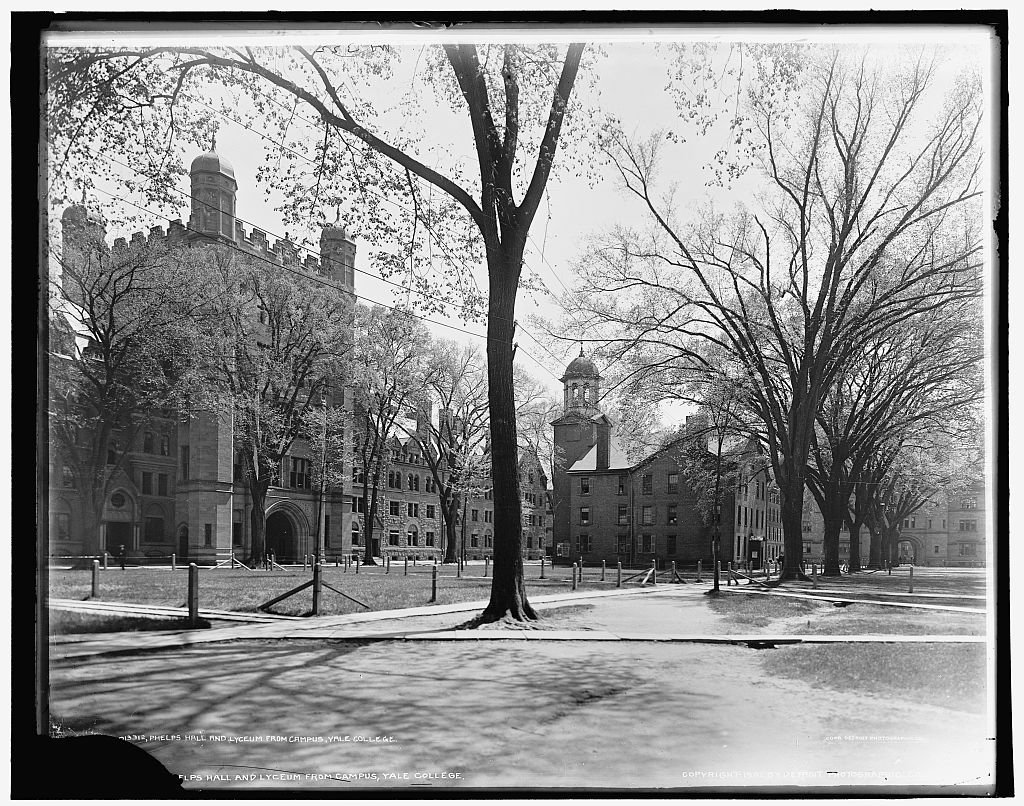
Yale was a family school. Yale’s obituary record for him, printed in January 1947, lists about two dozen relatives who went there, among them his mother’s father, a minister, and a great-great-great-uncle named Eli Whitney, class of 1792.
He was in the Apollo Glee Club as a junior, and in the University Glee Club and the college choir as a junior and senior. He joined Alpha Delta Phi and the Elihu Club, a senior society.
A classmate, George Porter, was an usher at his wedding. In 1926 Porter, by then a former patient of Jung’s, would help talk him into going to Zurich.
He was thirty-five when the United States went to war in 1917. He began as a civilian in the equipment section of the Army’s Ordnance Department, then resigned, the Grapevine says, to take a commission in the Chemical Warfare Service, the Army’s new branch for gas warfare.
Yale’s record has him at Camp A. A. Humphreys, in Virginia, and Camp Kendrick, in New Jersey, in 1917 and 1918. He was commissioned a captain in September 1918 and discharged on December 13, a month after the armistice.
Dr. Austen Fox Riggs ran a sanitarium in Stockbridge, in the Berkshires. A psychology textbook of 1958 described him as “eminently successful in using methods of reeducation and environmental control,” and opposed to psychoanalytic theory.
Rowland spent the summer of 1925 there, and his bank ledger shows him visiting Riggs about once a month through the end of the year and at least once in 1926. By the spring of 1926 Helen thought Riggs hadn’t helped, as part 2 tells.
Ten years later Stockbridge filled with thousands of Oxford Groupers for the Group’s national assembly. Stockbridge, in What Not to Do, tells it.