October 1939 · Cleveland
A committee of seven
Five men and two women, one of each stepping off every month. They meet monthly, among other things to arrange hospital care.
Dorothy S.’s letter, in Box 4-5-9, 2007; Good Oldtimers, ch. 15
Cleveland’s AA members set up AA’s first central committee, with a rule that kept anyone from running it for long, and other cities opened offices of their own.
“One man and one woman drop off each month and are replaced by seniority.”
Cleveland’s own AA meeting had started in May 1939 at the home of a member, Al G., and by October there were hospital beds to arrange and newcomers to visit. After a run of articles in the Cleveland Plain Dealer late that month, the city had three groups within weeks. (You had to be sponsored, in You Had to Be Sponsored, tells that year.)
That October Dorothy S., the wife of Clarence S., who had started the Cleveland meeting, wrote to Ruth Hock, who answered AA’s mail: “Our committee of 7 is really functioning—5 men, 2 women…” It met once a month, among other things to arrange hospital care, and it had a rule. Each month one man and one woman stepped off, and the next in line took their places. Dr. Bob and the Good Oldtimers calls it the first central committee in AA, and adds that it “is said to be the first example of rotation in A.A.”
Bill W. gave Al G., its first chairman, the credit for rotation, Good Oldtimers says, though it can’t tell whether for this committee or for “the later establishment of a more formalized central committee.” Until then, Bill said, AA’s affairs had been “in charge of the ultra-oldtimers, and we naturally supposed it would always be that way.” Al was older than most members, had family affairs to keep him busy, and was ready to hand things on.
The committee became Cleveland’s Central Committee. By 1942 each group was invited to send two members, who had, its paper said, “no special powers or authority,” and in October that year the committee started a monthly paper of its own, the Central Bulletin. (Ink-stained wretches, in Jittery and Alone, tells how it helped start the Grapevine.)
Other cities found the same need. Bill described it later: phones went unanswered, hospitals tired of “slapdash” admissions, and old-timers rented a small office, hired a secretary and ran it as a committee. In Chicago, where the Saturday Evening Post article of 1941 had swamped Sylvia K.’s telephone, the members rented a one-room office in the Loop for her secretary, Grace Cultice. Bill called it “A.A.’s first organized local service center.”
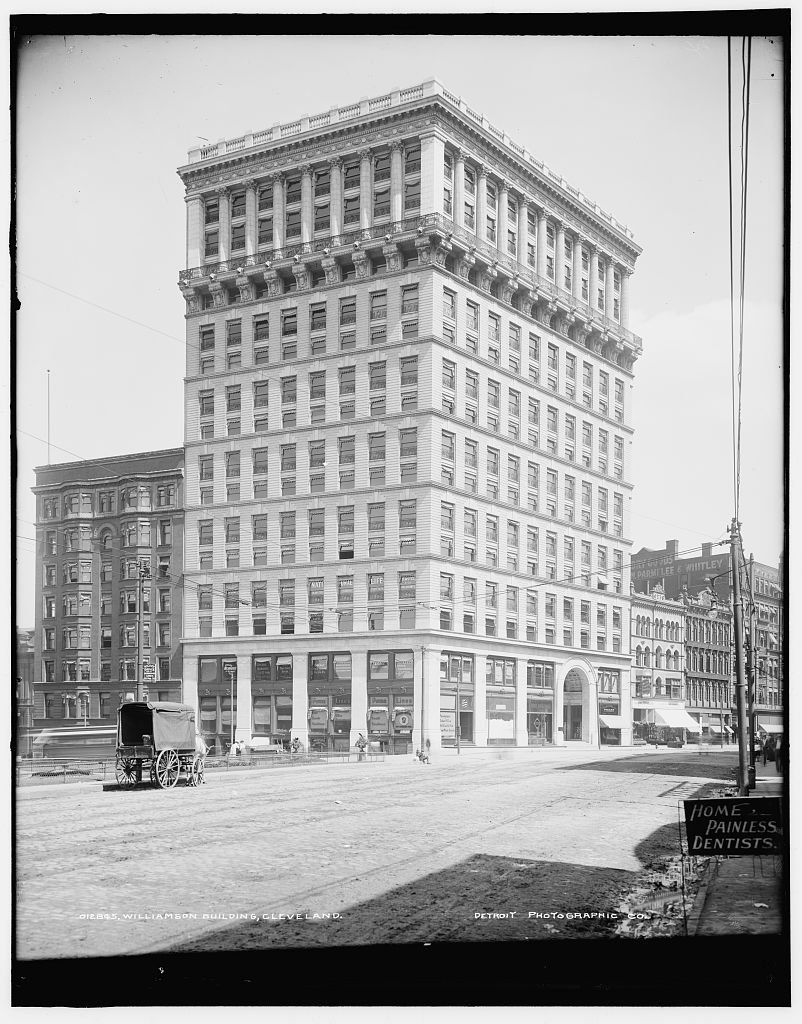
Cleveland opened its own office in February 1945, in the Williamson Building on Public Square, with about two hundred members paying for it. New York’s groups formed their Intergroup in June 1946, and it arranged hospital beds for the city’s newcomers.
The secretaries were often AA members, and some members called that professionalism. Twelve Steps and Twelve Traditions answered that a secretary who answered the phone all day, arranged hospital beds and found sponsors for newcomers “could surely not be called a professional A.A.” The offices belonged to the groups that paid for them, and except in Chicago they grew up outside the service structure Bill was building in New York. Rotation went into the Traditions.
It’s October 1939, in Cleveland. AA’s own meeting here is five months old, and there are newcomers in the hospitals and beds to find. So the members have a committee, seven of them, five men and two women, meeting once a month.
Dorothy S. writes to AA’s office about it, and about its rule. Every month, one man and one woman step off, and the next in line take their places. Nobody runs it for long. It’s said to be AA’s first rotation, and the idea spreads.
Within a few years other cities need the same thing: somebody to answer the phone, find a hospital bed and send a member to see the man who called. Chicago rents a one-room office in 1941. Cleveland opens its own in 1945, and New York’s groups start their Intergroup the next year.
The first local offices
Cleveland’s committee came first. Within seven years the big cities had offices of their own, each paid for by its groups. In the order they began:
Each card names its sources. The dates come from AA’s newsletters and the cities’ own histories, which don’t always agree; Go deeper has the disagreements.
October 1939 · Cleveland
Five men and two women, one of each stepping off every month. They meet monthly, among other things to arrange hospital care.
Dorothy S.’s letter, in Box 4-5-9, 2007; Good Oldtimers, ch. 15
May 1941 · Chicago
Grace Cultice, Sylvia K.’s secretary, sends callers on for twelfth-step visits, hospital beds and other help.
AA Comes of Age; Markings, Spring 2014
October 1942 · Cleveland
The Central Committee’s monthly paper, a dollar a year. Its first issue counts 1,400 active members in the county.
The Central Bulletin, October and December 1942
1943 · Columbus
The office today called the Fellowship Intergroup gets its start.
Box 4-5-9, August–September 2007
1944 · Los Angeles
A central office opens. Sybil C. runs it as its executive secretary for twelve years.
Box 4-5-9, August–September 2007; Markings, Fall 2008
February 1945 · Cleveland
Cleveland’s own office opens in the Williamson Building, after about two hundred members give $3,600 to start it.
Cleveland AA’s office history; the Central Bulletin, 1945
1945 · Boston
A central office for Boston and eastern Massachusetts.
Bob P.’s history, ch. 3; Box 4-5-9, October–November 1975
June 1946 · New York
New York’s groups, twenty-two of them by one count, set up an office of their own. By 1954 it had sent 10,000 alcoholics to the ward at Knickerbocker Hospital.
Box 4-5-9, 2007; AA Comes of Age
Sixteen by 1951
When the first General Service Conference met in April 1951, at least sixteen central offices and intergroups were serving their groups, and except in Chicago none was part of the service structure New York was building.
For a closer look
How the accounts of Cleveland’s committee differ; whose office came first; and where the word “intergroup” came from.
Most of the accounts call Cleveland’s the first central committee, and Good Oldtimers says it “is said to be” AA’s first rotation. They differ on what it was and when. In the order they were set down:
Several places have a claim to the first local office:
New York’s own dates differ too. Box 4-5-9, in 2002 and 2007, and Mitchell K. give its first central committee as 1942. The Grapevine’s first issue reports the vote to form one on May 10, 1944, once ten groups had named representatives. And the Intergroup, by Box 4-5-9, “wasn’t officially established until June 1946.”
When Bill W. first set out the points that became the Twelve Traditions, in April 1946, the ninth said that the groups of a big city might elect “their central committee.” A year later, writing about clubs, he spoke of “central or intergroup committee management.” By September 1947, when he reviewed the points in a talk at Memphis (printed that October), the ninth read “their central or intergroup committee,” and the “usually” had gone from “Rotating leadership is usually the best.”
The word was older still. The Grapevine’s first issue, in June 1944, reported New York members meeting to hear “the new proposal of the Inter Group Committee.” Box 4-5-9, in 2002 and again in 2007, said the word was first used in Charleston, West Virginia, in 1953.