Watch The Kitchen Table
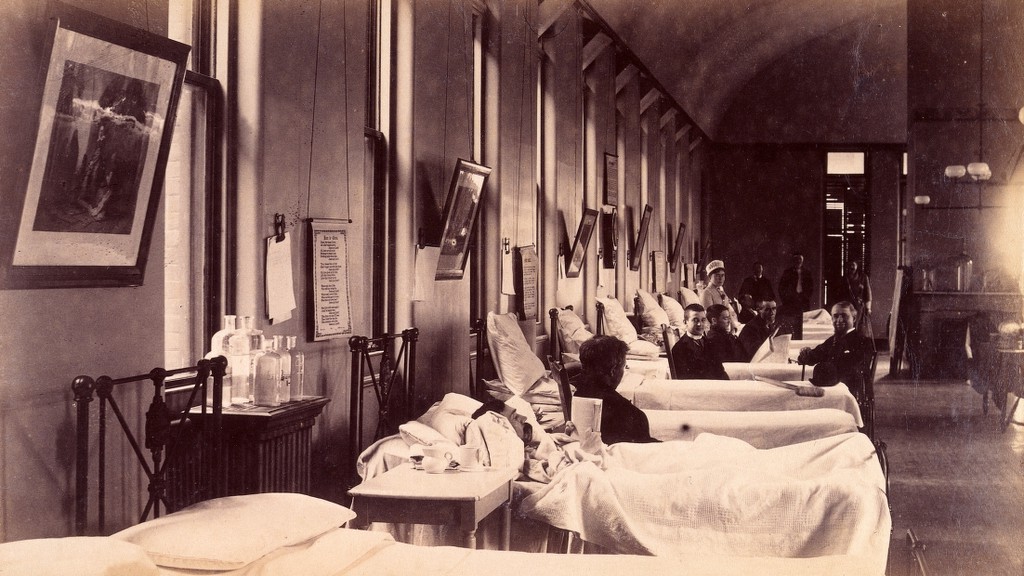
Illustration · A men’s ward at Bellevue Hospital, 1890s

Bellevue and after · 1896–1932

Inebriate ward

Long before he met Bill W., he had spent more than thirty years among drunks.

“We are continually searching for a specific cure, as of old men sought the fountain of perpetual youth. In reality, the cure lies within ourselves.”

Dr. William D. Silkworth · New York Medical Journal, January 16, 1909

A young doctor at Bellevue

William Silkworth was born in Brooklyn in 1873. After Princeton, he raced through Bellevue Hospital Medical College, finishing its four-year program in three and graduating in 1899.

Bellevue, New York’s great public hospital, was one of the few in the country with a department for alcoholics. As a young doctor there, he saw them up close, at a time when most physicians regarded heavy drinking as a vice rather than a disease.

He kept at it. In 1908 and 1909 he reported on an experimental treatment for morphine addiction, and argued that no drug would work unless the doctor first won the patient’s trust.

Then the 1929 crash wiped out his savings. He took a job at a private hospital for alcoholics on Central Park West, for about forty dollars a week and board. There, a few years later, he would meet Bill W.

Listen Inebriate ward About 1 minute

In his own words

What he wrote in 1909

Twenty-five years before he met Bill W., Silkworth was already telling his fellow physicians that trust mattered more than any drug.

Transcribed from the original page, which is in the public domain. The highlighting is ours.

New York Medical JournalJanuary 16, 1909Page 116

Am I not correct in stating that two ideas are generally accepted by the physician as essential to successful treatment? First, that the patient must cooperate with the physician; and, second, that the patient will secretly take morphine unless most carefully watched. These ideas are certainly not compatible. Briefly, the physician must have the entire confidence of the patient and keep it. This cannot be emphasized too strongly. He also must exert to the utmost encouragement, tact, sympathy, and perseverance. If he has a secret understanding with the relatives or friends, the patient will almost surely detect it and resent it deeply.

We are continually searching for a specific cure, as of old men sought the fountain of perpetual youth. In reality, the cure lies within ourselves, as these cases I present must convince you.
From Silkworth’s follow-up report on the “jungle plant” in morphine addiction, pages 115–116. See the original page

Why it matters

Winning the patient’s full confidence, and believing the cure lies within the patient, runs straight through his later work with Bill W. and the first members of AA.

For a closer look

Go deeper

The questions historians still argue about, and where this story comes from.

The jungle plant

In 1908 Silkworth told the New York County Medical Society about six patients he had taken off opium using an infusion of a plant, Combretum sundaicum, tapering both over ten days to three weeks. Five of the six came off the drug.

In January 1909 he reported how his patients were doing months later. The historian J.D. McPeake notes that follow-ups like this were rare in addiction treatment at the time.

The plant never caught on. The paper is remembered for what it says about trust.

Bellevue
A long men’s ward at Bellevue Hospital, with rows of beds and patients’ case notes clipped to the wall above them.
A men’s ward at Bellevue Hospital, photographed in the years Silkworth trained there.Wellcome Collection

Bellevue began as New York’s almshouse and grew into the city’s great public hospital, taking in whoever came through its gate, the city’s drunks included. It was one of the few hospitals in the country with a department devoted to alcoholism.

For a young doctor interested in the mind, it was a school no textbook could match.

Forty dollars a week
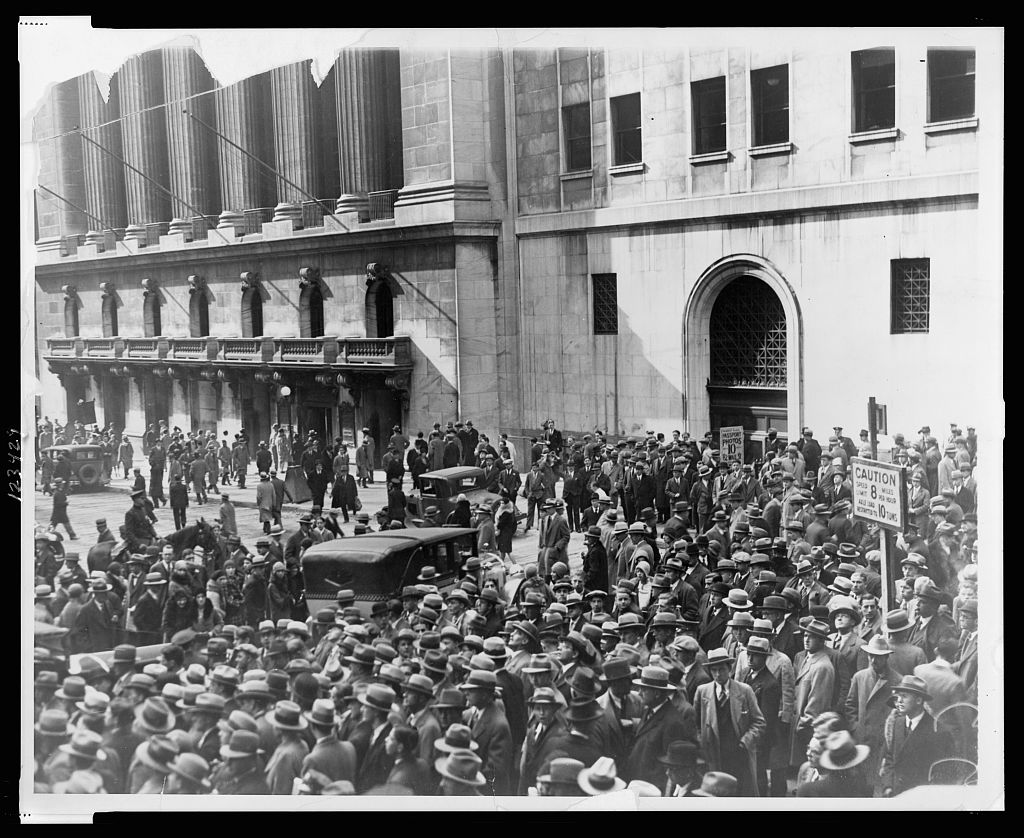
A large crowd gathered in the street outside the New York Stock Exchange after the crash of 1929.
The crowd outside the New York Stock Exchange after the crash of 1929.Library of Congress, Prints and Photographs Division

The crash of October 1929 ruined investors of every kind, and Silkworth lost his savings. He became chief physician at Charles B. Towns Hospital, for “something like $40 a week and board,” as AA’s biography of Bill puts it.

Accounts differ on exactly when he started at Towns. Most place it in the early 1930s. Either way, the job put him in front of an endless line of alcoholics, and in 1934, one of them was Bill W.

Sources
  • W. Duncan Silkworth, “Notes of the Jungle Plant (Combretum Sundiacum): Exhibit of Cases.” New York Medical Journal, May 30, 1908, p. 1032.
  • W. Duncan Silkworth, report on the “jungle plant” in morphine addiction. New York Medical Journal, January 16, 1909, pp. 115–116.
  • Dale Mitchel, Silkworth: The Little Doctor Who Loved Drunks. Hazelden, 2002.
  • Pass It On. AA World Services, 1984.
  • Alcoholics Anonymous Comes of Age. AA World Services, 1957.
  • J.D. McPeake, “William D. Silkworth, M.D., and the Origin and Development of Alcoholics Anonymous.” The Dublin Group, 2012.
  • William L. White, Slaying the Dragon. Chestnut Health Systems, 1998.