Watch The Kitchen Table
Illustration · Towns Hospital, 293 Central Park West, drawn from the hospital’s own 1918 description

Towns Hospital · December 1934

The Bedside

The doctor who had called Bill hopeless did not call him crazy.

“Whatever you have got, you had better hang on to; it is so much better than what you had only an hour ago.”

Dr. William D. Silkworth, as Bill W. remembered it · Alcoholics Anonymous Comes of Age, 1957

The fourth admission

On December 11, 1934, Bill W. checked into Towns Hospital for the fourth time, with three beers in him and a fourth in his hand. Months earlier, during his third stay, Dr. William Silkworth had warned Bill’s wife, Lois, that he might have to be locked away to save his life.

A few days into treatment, out of hope, Bill cried out: if there was a God, let him show himself. The room, he said later, filled with a great white light. He felt as if he stood on a mountaintop, and that he was a free man.

Then came fear. Had drink finally cost him his mind? He asked for Silkworth.

The doctor had treated thousands of alcoholics, and the belladonna in Bill’s treatment gave him every reason to call this a symptom. He asked careful questions instead. Then he told Bill he was not insane, that he had read of experiences like this, and that whatever had happened, Bill should hold on to it.

Bill never drank again.

Listen The Bedside About 1 minute

Compare the accounts

What did the doctor say?

Everyone agrees on the moment. No two accounts agree on the words. Here are five, in the order they were written down.

Bars show each account’s length in words. Quotations are short excerpts, shown side by side for comparison.

c.1948

A visitor to his ward
6 words

“Whatever it is, hang onto it.”

From “Duffy’s Tavern,” an unpublished report on his ward at Knickerbocker Hospital, about 1948. His biographer credits it to Silkworth, but it describes him in the third person, as a visitor would. Reprinted in Dale Mitchel, Silkworth: The Little Doctor Who Loved Drunks (2002), p. 175.

1949

Bill W., in a letter
11 words

“No, you’re not hallucinating — you’d better hold onto what you have.”

The letter goes on: “That saved my life…”

Bill’s Christmas letter to Silkworth, December 25, 1949, fifteen years after that night. Reproduced in Dale Mitchel, Silkworth: The Little Doctor Who Loved Drunks (2002), from the Silkworth family’s papers.

1957

Bill W.
29 words

“No, Bill, you are not hallucinating. Whatever you have got, you had better hang on to; it is so much better than what you had only an hour ago.”

Later in the same book, Bill tells it another way: “No, Bill, you are not crazy. There has been some basic psychological or spiritual event here.”

Alcoholics Anonymous Comes of Age (1957), Bill’s own history of AA.

1975

His biographer
26 words

“Whatever it is you’ve got now, hang on to it, boy. It is so much better than what you had only a couple of hours ago.”

Robert Thomsen, Bill W. (1975). Thomsen worked beside Bill for the last twelve years of his life.

1984

AA’s biography of Bill
48 words

“Yes, my boy, you are sane, perfectly sane in my judgment. You have been the subject of some great psychic occurrence, something that I don’t understand. I’ve read of these things in books, but I’ve never seen one myself before. You have had some kind of conversion experience.”

The same passage goes on: “So, my boy, whatever you’ve got now, you’d better hold on to.”

Pass It On (1984), AA’s official biography of Bill W.

What changed, and what didn’t

The two earliest accounts are the shortest: a visitor’s report on his ward, and Bill’s own Christmas letter to the doctor. The longest was published fifty years after the night it describes. The words grew in the retelling, but the message held: you are not crazy, and hold on to what happened.
For a closer look

Go deeper

The questions historians still argue about, and where this story comes from.

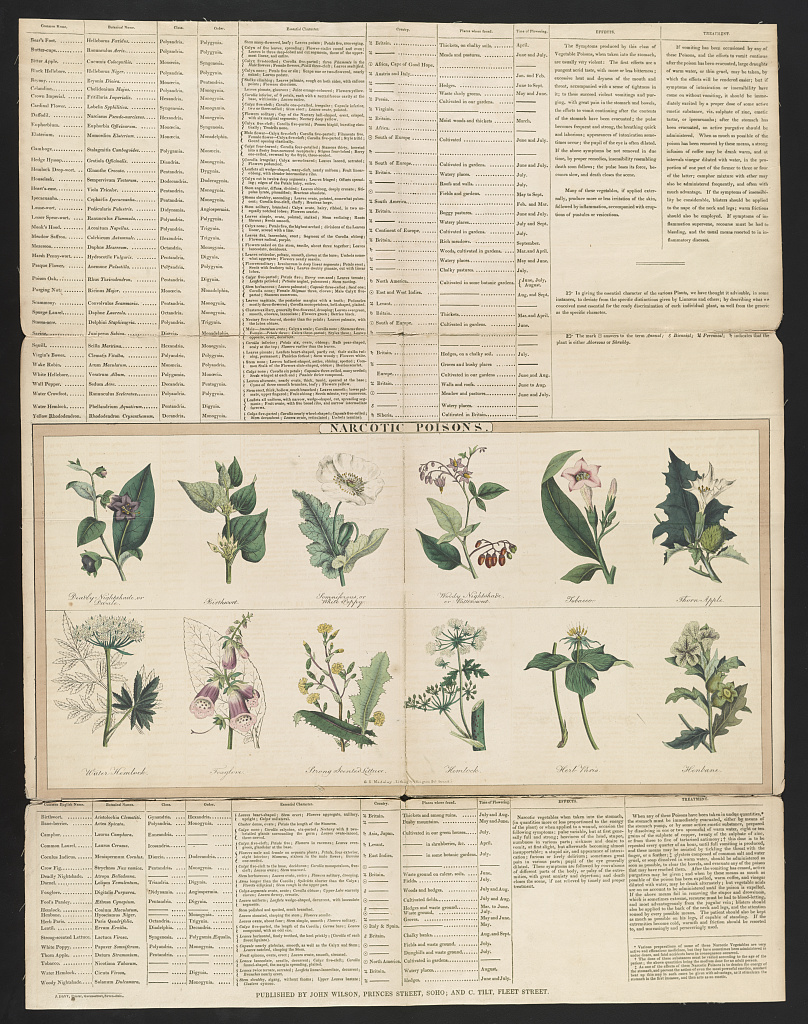
The belladonna question
A hand-colored 1843 botanical print of poisonous plants, among them deadly nightshade.
Deadly nightshade, the source of belladonna, is among the plants in this 1843 print.Library of Congress, Prints and Photographs Division

Towns Hospital treated withdrawal with the Towns–Lambert regimen, a mixture built on belladonna and henbane. In large doses both plants can cause delirium, and skeptics have long pointed to them to explain what Bill saw.

Two things complicate that account. Bill had been through the hospital’s treatment on earlier stays with no such experience. And what followed was not a passing vision but thirty-six years without a drink.

History can’t settle what happened in that room. It can say what the doctor did with it. Silkworth knew those drugs as well as anyone, and he chose not to treat the experience as a symptom.

What he didn’t do

The historian William White argues that what Silkworth did not do mattered as much as what he did. He didn’t reach for a sedative. He didn’t tell Bill he had been hallucinating. He offered words instead of drugs.

And he pointed Bill toward what he had read: that now and then, a spiritual experience had set an alcoholic free. Soon Bill was reading William James’s The Varieties of Religious Experience, looking for the same answer.

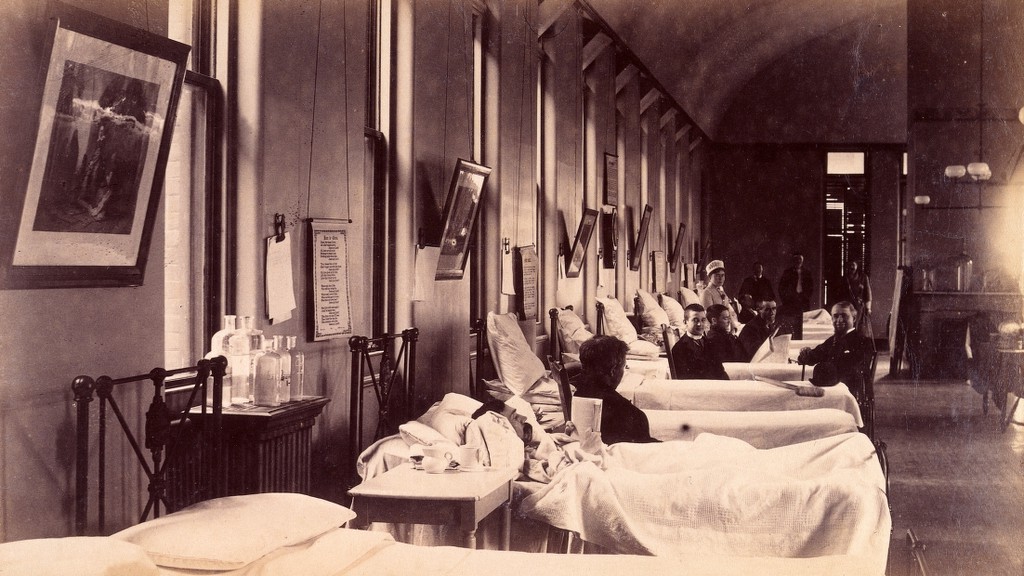
Where he learned
A long men’s ward at Bellevue Hospital, with rows of beds and patients’ case notes clipped to the wall above them.
A men’s ward at Bellevue Hospital, photographed in the years Silkworth trained there.Wellcome Collection

By 1934 Silkworth had spent nearly forty years with alcoholics, beginning as a young doctor in Bellevue’s wards in the 1890s. He knew from his reading that sudden recoveries happened, but no one had found a way to make them happen. That long view may be why he recognized something worth protecting when Bill described it.

Sources
  • Alcoholics Anonymous Comes of Age. AA World Services, 1957.
  • Robert Thomsen, Bill W. Harper & Row, 1975.
  • Pass It On. AA World Services, 1984.
  • Dale Mitchel, Silkworth: The Little Doctor Who Loved Drunks. Hazelden, 2002. Includes a photograph of Bill W.’s letter to Silkworth, December 25, 1949.
  • William L. White, Slaying the Dragon. Chestnut Health Systems, 1998.
  • J.D. McPeake, “William D. Silkworth, M.D., and the Origin and Development of Alcoholics Anonymous.” The Dublin Group, 2012.
  • The Work of the Charles B. Towns Hospital (brochure), 1918.