Watch The Kitchen Table
Illustration · Towns Hospital, 293 Central Park West, 1930s. Drawn from written descriptions; no photograph of the building was available.

Central Park West · 1933–1934

Towns Hospital

He was the first to tell Bill his drinking was an illness. Then he told Lois it was hopeless.

“…the obsession of the mind that compels us to drink and the allergy of the body that condemns us to go mad or die.”

Bill W., on what Dr. Silkworth taught him · Alcoholics Anonymous Comes of Age, 1957

A hospital for those who could pay

Towns Hospital was a private hospital for alcoholics and addicts at 293 Central Park West. Its owner, Charles B. Towns, was a former salesman who promoted his own cure. A five-day stay cost $200 to $350, a fortune in the Depression.

Bill W. could not pay. His brother-in-law, Dr. Leonard Strong, covered his stays.

The hospital’s chief physician was William Silkworth. He told Bill something no one had told him before: that he was not weak but sick. His body reacted to alcohol in a way other people’s did not, and his mind had become obsessed with drinking.

The explanation gave Bill and Lois hope. It did not keep him sober for long. By the summer of 1934, the doctor had a harder message for Lois.

Listen Towns Hospital About 1 minute

One patient, one doctor

Four stays at Towns

Between the fall of 1933 and December 1934, Bill W. was admitted to Towns Hospital four times. Each stay ended differently.

Dates follow Pass It On, AA’s biography of Bill. Other accounts differ on the first three stays; Silkworth’s biographer dates Bill’s first treatment to 1932.

Autumn 1933

The explanation

Bill’s brother-in-law, Dr. Leonard Strong, pays for his first stay. Silkworth tells Bill his drinking is not a lack of willpower but an illness: an obsession of the mind and an allergy of the body. Bill leaves “a new man,” and stays sober for weeks, perhaps months.

Pass It On, pp. 99–104
Early summer 1934

The second stay

After a spring in Vermont, Bill is drinking again and lands back at Towns. This time he leaves without any of the old confidence.

Pass It On, pp. 105–107

Midsummer 1934

The verdict

On a hot summer night, Silkworth tells Lois that her husband is hopeless. To keep him from madness or death, he will probably have to be locked away.

Pass It On, pp. 107–109; AA Comes of Age, p. 52

December 11, 1934

The last stay

Bill walks in having drunk three of four beers bought on credit, waving the fourth. They are the last drinks of his life.

Continue to 3 · The Bedside

Pass It On, pp. 119–120; AA Comes of Age, ch. 2

For a closer look

Go deeper

The questions historians still argue about, and where this story comes from.

The Towns–Lambert cure

Charles B. Towns sold his treatment as a cure for alcohol and drug addiction. He developed it with Dr. Alexander Lambert, a Cornell professor and physician to Theodore Roosevelt.

It combined belladonna, henbane and prickly ash with strong laxatives such as castor oil, given around the clock for about two days. One person who remembered the hospital described it as a place where alcoholics were “purged and puked.”

For what the belladonna may have had to do with Bill’s experience, see 3 · The Bedside.

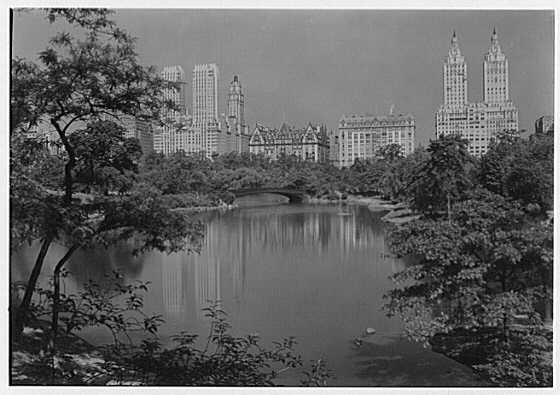
Central Park West
The apartment buildings of Central Park West reflected in a lake in Central Park, 1932.
Central Park West seen across the lake, June 1932, the year before Bill’s first stay.Gottscho-Schleisner Collection, Library of Congress

The hospital’s own 1918 brochure promised “absolute privacy,” meals served in patients’ rooms, private baths and telephones, and a solarium “on the roof,” “fitted up in garden style.” Its upper floors looked out over Central Park.

Where the sources differ

Even the basic facts of Bill’s stays at Towns are tangled. Some accounts say he met Silkworth on his first stay; others say the second. Bill himself remembered waking to find the doctor at his bedside “that first time.”

Accounts of when Silkworth started at Towns range from 1924 to 1932; Pass It On says 1930, his biographer 1929. Where accounts differ, these pages say so rather than quietly picking a side.

Sources
  • Pass It On. AA World Services, 1984.
  • Alcoholics Anonymous Comes of Age. AA World Services, 1957.
  • Robert Thomsen, Bill W. Harper & Row, 1975.
  • Dale Mitchel, Silkworth: The Little Doctor Who Loved Drunks. Hazelden, 2002.
  • Bill Pittman, The Roots of Alcoholics Anonymous, 1988.
  • The Work of the Charles B. Towns Hospital (brochure), 1918.
  • Timeline, 1933 to 1934, silkworth.net, a compilation with page references.