Watch The Kitchen Table
THE TWELVE STEPS THE TWELVE TRADITIONS
Illustration · A meeting room in a church basement before a meeting, with the Twelve Steps and the Twelve Traditions hanging on the wall. AA groups often rent rooms in churches, which AA’s own pamphlet on spirituality says can give the wrong impression; not drawn from a photograph.

St. Louis, New York and Toronto · 1955–2018

Good for God

A monk suggested “good” in place of “God,” and for sixty years AA kept the word in the Steps and kept arguing about it.

“Alcoholics may be led to believe in God, but none can be forced.”

Bill W., at AA’s convention in St. Louis, July 1955 · Alcoholics Anonymous Comes of Age, 1957

Suggestions only

On the Saturday night of AA’s twentieth-anniversary convention in St. Louis, July 2, 1955, Bill W. told the hall about a letter from Thailand. A Presbyterian minister there had taken AA’s Twelve Steps “to the largest Buddhist monastery in this province” and shown them to the monk at its head. The monk liked them, but “it might be slightly more acceptable if you inserted the word ‘good’ in your Steps instead of ‘God.’” Then he answered himself: the Steps said God as you understand Him. “That clears up the point for us.”

Some members, Bill said, might hear “good” for “God” as a watering down. “But here we must remember that A.A.’s Steps are suggestions only.” Nobody had to believe in them as written to belong. The same year, the Big Book’s second edition said in its new foreword: “Alcoholics Anonymous is not a religious organization.” (Bill’s talks are known as they were printed in 1957, “edited and enlarged.”)
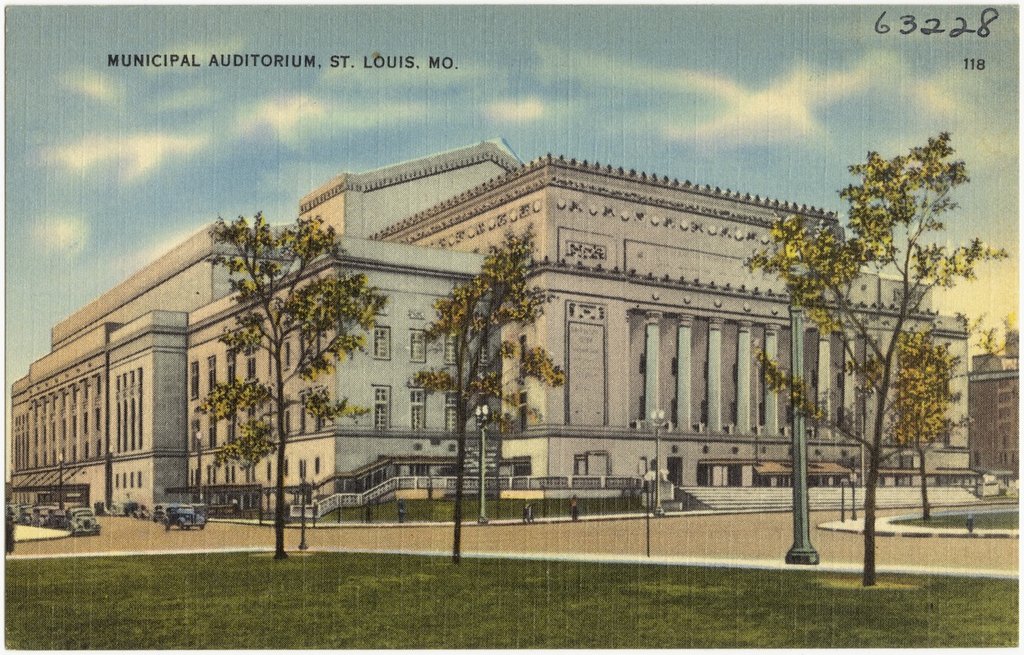
A color postcard of the Municipal Auditorium in St. Louis.
The Municipal Auditorium, St. Louis, on a postcard from about 1930 to 1945. Later renamed the Kiel Auditorium, it held the convention’s closing session in 1955.Tichnor Brothers Collection, Boston Public Library

Bill kept coming back to it in the Grapevine. In April 1961 he wrote that in AA’s first years he had nearly ruined the whole thing with what he called unconscious arrogance: “God as I understood him had to be for everybody.” In May 1962 he wrote that it was “especially required of the atheist and agnostic that he become open-minded on the subject of God.” In July 1965, writing ahead of the convention at Toronto, he put it plainly: “We have atheists and agnostics.”

Groups for nonbelievers came later (The closing, in Keep Coming Back, tells of what is usually called the first, in Chicago in 1975). In May 2011 AA’s General Service Conference asked its trustees to keep developing literature with “stories from atheists and agnostics who are sober in Alcoholics Anonymous.” That same month, on May 31, the Intergroup in Toronto took two groups, Beyond Belief and We Agnostics, out of its meeting list. Beyond Belief had posted a version of the Steps without “God” on the Toronto website. “They’ve changed them to their own personal needs,” one member at the meeting told the Toronto Star. Beyond Belief’s own statement said alcoholics could get sober in AA “without having to accept anyone else’s beliefs, or having to deny their own.”

Larry K., who had helped start agnostic AA meetings around Toronto, took the matter to the Human Rights Tribunal of Ontario. In January 2017 the Intergroup, A.A. World Services and AA’s General Service Board settled with him. His legal clinic’s release said he and the Intergroup agreed: “All groups, regardless of their belief system form part of the A.A fellowship.” The Intergroup said the matter was “best left to the collective conscience of the AA members in the Greater Toronto Area.” The next year AA adopted a pamphlet of agnostic and atheist members’ stories, The “God” Word.

Listen Good for God About 1 minute

In AA’s own words

AA’s words about God

What AA’s books, pamphlets and Bill W. said about God and belief, from the first edition to 2018, in date order.

From the Big Book, the Twelve and Twelve, AA Comes of Age, Bill’s Grapevine articles and AA’s pamphlets and Conference reports. Short quotations only.

Marks the times AA said it isn’t a religion

  1. 1939

    “…something like fifty of us thought we were atheists or agnostics.”

    Alcoholics Anonymous, “We Agnostics,” the chapter before the Steps

    Later editions say “half of us” (Go deeper).

  2. 1953

    “Alcoholics Anonymous does not demand that you believe anything.”

    Twelve Steps and Twelve Traditions, Step Two

    A sponsor talking to a newcomer who says he won’t believe (Wit’s End tells the book).

  3. 1955

    “Alcoholics Anonymous is not a religious organization.”

    Alcoholics Anonymous, foreword to the second edition

    Its members, it says, include “a sprinkling of Moslems and Buddhists.”

  4. 1955

    “But changes in them seldom last; the original version usually wins out.”

    Bill W., at St. Louis, as printed in AA Comes of Age

    On the monk’s “good” for “God” and other changes to the Steps.

  5. 1957

    “In A.A. practically no full recovery from alcoholism has been possible without this all-important faith.”

    AA Comes of Age, introducing the convention’s talks on religion

    The faith is in “a higher Power which most of us call God.”

  6. 1961

    “God as I understood him had to be for everybody.”

    Bill W., “God As We Understand Him: The Dilemma of No Faith,” Grapevine, April 1961

    On his own first years in AA.

  7. 1962

    “It is especially required of the atheist and agnostic that he become open-minded on the subject of God.”

    Bill W., “Where Willpower Comes In,” Grapevine, May 1962

    The same article ends: “You can still take your pick!”

  8. 1965

    “We have atheists and agnostics.”

    Bill W., “Responsibility Is Our Theme,” Grapevine, July 1965

    The same article: “Alcoholics Anonymous is not a religion…” AA’s pamphlets of 2014 and 2018 quote it.

  9. 2011

    “…literature which focuses on spirituality that includes stories from atheists and agnostics…”

    General Service Conference, May 2011

    An action of the Conference of May 1–7, 2011.

  10. 2014

    “A misconception about Alcoholics Anonymous is that it is a religious organization.”

    Many Paths to Spirituality, approved by the 2014 Conference

    Stories from members of many beliefs and none, among them a Catholic, a Jewish alcoholic, agnostics and atheists.

  11. 2018

    “There is room in A.A. for people of all shades of belief and non-belief.”

    The “God” Word, first published by AA in Great Britain; adopted by the 2018 Conference

    Stories from ten agnostic and atheist members, as AA describes it.

The words around the Steps

The Steps’ words about God read the same in every year shown here. What changed was what AA said around them, and one idea kept coming back: that AA is not a religion.

For a closer look

Go deeper

How many of the first members doubted; Bill on both sides of the question; and a priest and a minister on the Sunday at St. Louis.

Fifty, or half?

The 1939 “We Agnostics” says “something like fifty of us thought we were atheists or agnostics,” and that “About half our fellowship” were of that type. In 1939 that was about right: the book counted “more than one hundred” members.

Today’s fourth edition says “something like half of us” and “About half our original fellowship.” One uncredited online comparison of the editions puts the change no later than the second edition, of 1955. It doesn’t say whether a late printing of the first edition changed it first.

Bill used “half” again in 1961: a working faith had once seemed impossible to “perhaps half of our present membership of three hundred thousand.”

Bill, both ways

In June 1958 Bill wrote about prayer “for the benefit of the complete doubter,” who, if he thought there was no God, could admit “just for experimental purposes” that he might be wrong.

In 1960 he wrote that his own unbelief in 1934 had been “exactly the kind of deep-seated block we so often see today in new people who say they are atheistic or agnostic.”

In April 1961 he told of a doctor in a Midwestern city, whom he took for an agnostic and had tried to convert in AA’s first years, and learned after the man’s death how much he had misjudged him. In May 1962 he asked the atheist to become open-minded, then ended, “You can still take your pick!” In July 1965: “Let us always try to be inclusive rather than exclusive…”

Sunday morning at St. Louis

On Sunday morning, July 3, 1955, the St. Louis convention held a meeting called “God as We Understand Him.” Two of the speakers were clergymen: Father Edward Dowling, a Jesuit, and the Rev. Samuel Shoemaker, an Episcopal minister. AA Comes of Age prints their talks as “Religion Looks at Alcoholics Anonymous.”

Father Dowling said: “…I think we are all agnostic.” Some were devout but “agnostic as to application,” and some were “the sincere eighteen-carat agnostics who really have difficulty with the spiritual hurdle.” (Leave the words alone, in part 4, has another of his lines that day.)

Shoemaker: “For an outfit like A.A. to become dogmatic would have been fatal, I think.” Those with no church, he said, “had to give themselves to the God that they saw in other people.”

Sources