“We cannot give AA membership to nonalcoholic narcotics addicts.”
Powerless over what?
In 1944 Bill W. wrote in the Grapevine that all kinds of people were taking notice of AA: “Doctors think of applying our methods to other neurotics…” By 1947 a student of Carl Jung’s, Margarita Luttichau, planned such a group for neurotics, and Bill, then deep in a depression, expected to be its first member (The quarter mile tells it). Addicts had been trying AA’s program since its first years; in 1947 some of them formed a group inside a federal hospital. Since 1935 the U.S. Public Health Service had run a hospital for narcotic addicts at Lexington, Kentucky, some sent there as prisoners and some who came on their own. In 1946 Houston S., an AA member sober since 1944, was transferred to Frankfort, twenty miles away. He went to the medical director, Dr. Victor Vogel, and suggested a group like AA for the patients. It first met on February 16, 1947, and the members, as the historians William L. White, Chris Budnick and Boyd Pickard put it, “christened themselves Addicts Anonymous.” By 1950 more than 200 patients belonged.
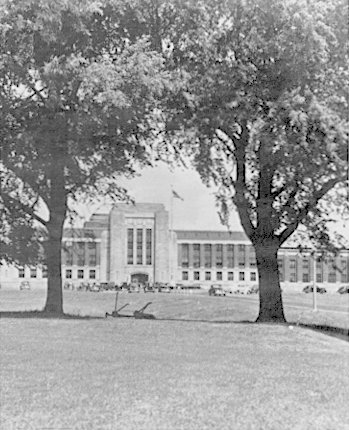
Patients took it home. Danny C., back in New York after his last stay at Lexington in April 1949, started a group there and called it Narcotics Anonymous, the historians write, “to avoid the potential confusion of two AAs.” In July 1952 Jack P., of AA’s institutions committee in Los Angeles, wrote to Bill W. that the sheriff’s department wanted help starting such a group in the women’s jail. “I certainly think you ought to try,” he answered, as the historians quote the letter, “though I agree it should not be in the least under A.A. auspices.” In August 1953 six people met in Van Nuys to organize Narcotics Anonymous, and twenty-five came to its first meeting, on October 5 at the Dad’s Club in Sun Valley. In 1954, after an argument over “alcohol and drugs,” “narcotic drugs” or plain “drugs,” Jimmy K. got the words “our addiction” into the First Step.
In February 1958 Bill set out AA’s answer in an article called “Problems Other Than Alcohol.” Drug users and alcoholics, he wrote, “happen to be first cousins of a sort,” and an addict with “a genuine alcoholic history” could belong to AA as an alcoholic (The quarter mile, in Number One Man, has the same question coming up in 1945). An addict who wasn’t an alcoholic couldn’t. AA members, he added, “should be encouraged to band together in groups to deal with sedative and drug problems. But they ought to refrain from calling themselves AA groups.”
Others came to the Steps by other doors. In 1957 Bill wrote that groups for gambling, divorce, delinquency and mental illness had “borrowed from A.A., but they made their own adaptations.” Gamblers Anonymous first met in Los Angeles on September 13, 1957. Overeaters Anonymous met first in Hollywood on January 19, 1960; its founder, Rozanne S., had found the format at a Gamblers Anonymous meeting. In 1970 Time reported that Neurotics Anonymous had been founded six years before, and called it “a direct plagiarism—fully approved, to be sure, by its model.” Minnesota’s groups, which broke away and incorporated as Emotions Anonymous in 1971, had permission from A.A. World Services to use the Steps and Traditions.
It’s February 1947, at the federal narcotic hospital in Lexington, Kentucky. An AA member named Houston S., who works twenty miles away, has asked the medical director to let the patients try AA’s way. They meet, and they call themselves Addicts Anonymous. Two years later, when they print their own Twelve Steps, where AA says alcohol, they put drugs.
Over the next twenty years the same thing happens again and again. Narcotics Anonymous, in New York and then in California. Gamblers Anonymous. Overeaters Anonymous. Each one keeps the word powerless and changes what comes after it.
In 1958 Bill W. sets out AA’s answer. Addicts who aren’t alcoholics can’t be AA members, he writes. But AA members are welcome to help them, in groups of their own, under another name.