“If you would win a man to your cause, first convince him that you are his sincere friend.”
Six at Chase’s Tavern
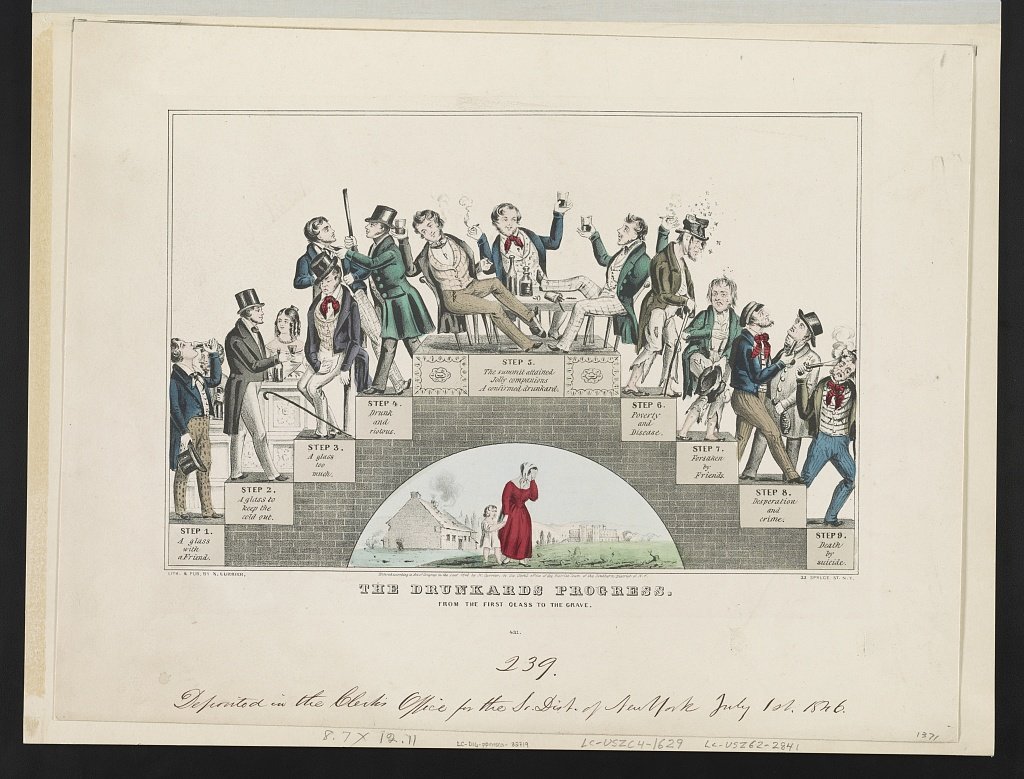
On the evening of Thursday, April 2, 1840, six regulars were drinking at Chase’s Tavern on Liberty Street in Baltimore: a tailor, a carpenter, two blacksmiths, a coach maker and a silversmith. A temperance preacher, the Rev. Matthew Hale Smith, was lecturing in town that night, and four of them went to hear him. On Sunday they decided to quit, and to start a society of their own. The tailor, William K. Mitchell, wrote a pledge that they would “not drink any spirituous or malt liquors, wine or cider.” They named the society for George Washington.
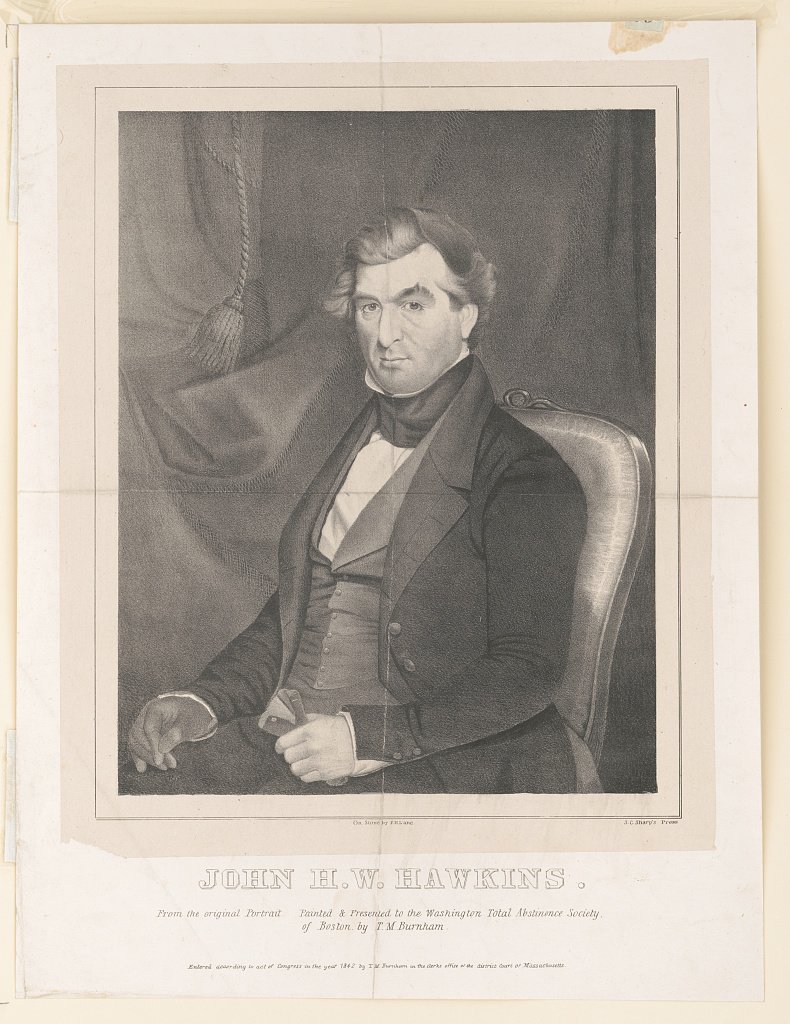
What was new was who did the talking. At their meetings members got up one after another to “state their temperance experience,” drunks speaking to drunks, and they went after their old drinking companions to bring them in. John H. W. Hawkins, one of the early Baltimore members, became their best-known speaker. In the spring of 1841 the movement reached New York and Boston, and women formed Martha Washington societies to feed and clothe the poor and to reclaim women who drank.
Nobody knows how big it grew. Claims of reformed drunkards ran into the hundreds of thousands, and many who signed the pledge had never been drunkards.
By the end of the decade it had faded. Fraternal orders such as the Sons of Temperance, founded by Washingtonians in 1842, drew members away. The temperance cause turned from persuading drinkers to passing laws. The speeches lost their novelty. By 1848 the American Temperance Union’s yearly report didn’t mention the Washingtonians at all.
A century later, AA’s members had never heard of them. In July 1945 a member in Lansing, Michigan, wrote them up for the Grapevine, AA’s monthly magazine, and said their groups had split as men took sides over slavery. The next month Bill W. admitted that “few of us had ever heard of it,” and drew the lesson. In 1953 he wrote that the society “didn’t have a chance from the moment it determined to reform America’s drinking habits,” and that its wreck was where AA learned to stay out of public controversy: “Thus was laid the cornerstone for Tradition Ten.”
It’s April 1840, at Chase’s Tavern on Liberty Street in Baltimore. Six regulars, a tailor, a carpenter, two blacksmiths, a coach maker and a silversmith, decide to quit drinking. They sign a pledge and name their society for George Washington.
Their idea is new. At meetings, reformed drunks stand up and tell their own stories, and they go after their old drinking companions. Within three years the movement claims hundreds of thousands of reformed drunkards.
Then it fades. Members drift off into other orders and other causes, and the temperance movement turns from persuasion to law. By the end of the decade, hardly anyone mentions them.
A century later, Bill W. reads their story and draws a lesson for AA: stick to the one thing you do, and stay out of public fights.