Watch The Kitchen Table
Illustration · An imagined plain headstone in an Akron cemetery on a summer afternoon, with a potted plant left in front of it. Not drawn from a photograph.

Akron · 1949 and after

Legacy

Bill W. called her the mother of AA’s first group, Dr. Bob turned down a monument, and Bill named her among the wives who first planted Al-Anon.

“…this deep, quiet, considerate person, who would do battle for what she believed or to protect her family, was the solid foundation which Dad needed to carry on his part of A.A.”

Smitty, her son, on what he understood only after she died · Dr. Bob and the Good Oldtimers, 1980

The mother of the first group

When Anne died, on June 1, 1949, newspapers printed her full name and her husband’s, Mary C. Darrah writes, and with them, for the first time in public, the news that Dr. Bob was a founder of AA. In an editorial, the Akron Beacon Journal regretted that her work had not been publicly recognized while she lived, but said she must have known how grateful the people she had helped were.

In the next month’s AA Grapevine, Bill W. wrote that she was “quite literally, the mother of our first group, Akron Number One,” and went further: “In the full sense of the word, she was one of the founders of Alcoholics Anonymous.”

Friends began collecting money for a monument to Anne and Dr. Bob. He had it given back. “Annie and I plan to be buried just like other folks,” he said, as Bill told it in 1951. In later tellings, Bill’s own and Good Oldtimers’, it was “you and I.” When he died, in November 1950, he was buried beside her in Mount Peace Cemetery, under a plain stone that says nothing about AA. Visiting the grave some years later, Bill wrote, “This made me so glad I cried.”

The plaque their friends put up in the alcoholic ward at St. Thomas Hospital in April 1950 did carry her name. Under the words “In Gratitude,” it begins: “The friends of Dr. Bob and Anne S. affectionately dedicate this memorial to the Sisters and staff of St. Thomas Hospital.”

The work she had done with wives went on. Anne, Lois W. and a wife named Katie, Bill wrote in 1957, “long ago planted the ideas which have since flowered into hundreds of Al-Anon Family Groups.” Lois, who started Al-Anon’s office in 1951, wrote that Anne’s part in it “should never be forgotten.” Anne’s daughter, Sue, went further. Her mother passed on to other women the help she had been given, Sue said, and she thought “that was the start of Al-Anon.”

Listen Legacy About 1 minute

Names

What they called her

She went by many names, depending on who was speaking. Here they are, from the most formal to the one she is known by now.

From Dr. Bob and the Good Oldtimers (1980), Lois Remembers (1979) and Bill W.’s tribute in the AA Grapevine (July 1949), now in The Language of the Heart (1988). Quotations are short excerpts.

  1. Mrs. S.

    Newcomers’ wives, at first · Emma K., always

    What newcomers’ wives called her, or heard her called, until she put them right. The books print her married name in full; this site shortens it, as it does Dr. Bob’s. Emma K., who nursed her for three years, never managed anything else. “I sometimes think everybody called her Anne but me.”

  2. Anne

    What she asked for · 1935 and after

    “Anne to you, my dear,” she told Henrietta D. in 1935. “Call me Anne,” she told Dorothy S. M. in 1938. She called everybody by their first names, too, Dorothy said, and remembered all their children.

  3. Annie

    Dr. Bob, Lois W. and the oldtimers

    Their son’s wife, Betty, never spent a day with them when Dr. Bob didn’t hug Anne and ask, “How is our love today, Annie?” Lois called her Annie all through her memoir.

  4. Mama

    Dr. Bob, at home

    “She usually called him Dad,” Emma K. said, and he called her Mama. Each said the last trip to Texas was only to please the other.

  5. The mother of our first group

    Bill W. · July 1949

    Bill’s words in the Grapevine the month after she died: “quite literally, the mother of our first group, Akron Number One.”

  6. The Mother of AA

    Later, and now

    The name most people know her by. None of AA’s own histories quite uses it. The nearest is Bill’s line of 1949.

Call me Anne

Of all of them, the name she chose for herself was the plainest, and she handed it to newcomers who met her as Mrs. S.

For a closer look

Go deeper

The wives’ meeting at Cleveland in 1950, a dream Emma K. had, and who wrote Anne down.

The wives at Cleveland
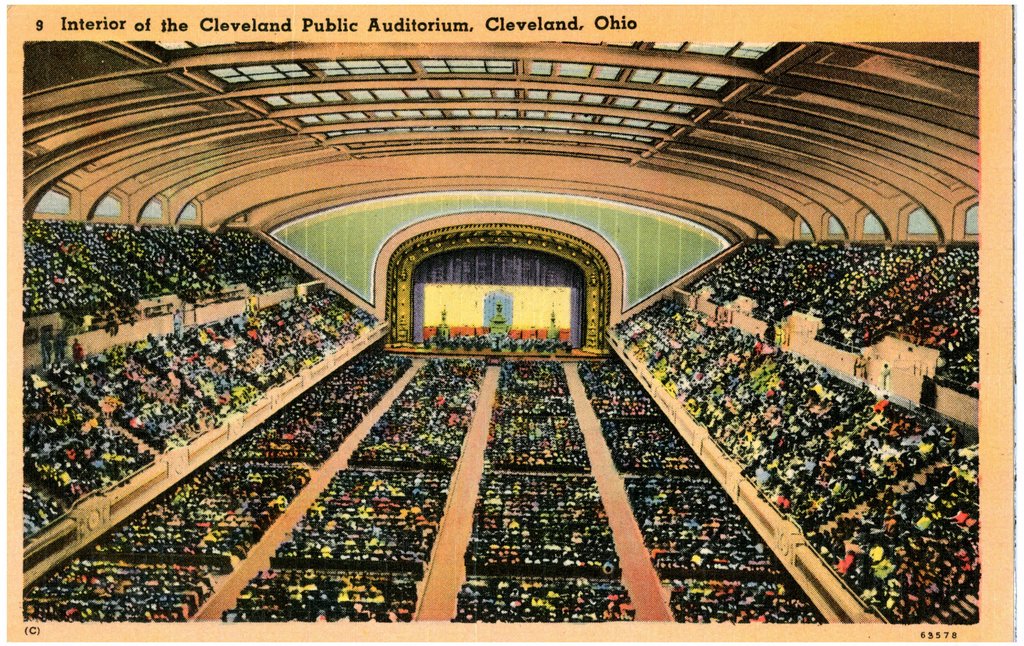
A color postcard of the inside of Cleveland’s Public Auditorium, a vast hall with a stage and tiers of seats.
Inside Cleveland’s Public Auditorium, on a 1943 postcard. AA’s first International Convention met in Cleveland in July 1950.Columbus Metropolitan Library Digital Collections

At AA’s first International Convention, in Cleveland in July 1950, a year after Anne died, the wives held a meeting of their own and invited the alcoholics to listen. Writing about it in the Grapevine, Bill said that some there recalled how Anne, “in the Akron early days, had been boon companion and adviser to distraught wives. She clearly saw alcoholism as a family problem.”

The next year Lois W. and her friend Anne B. opened an office for the family groups, and early in 1952 the groups chose a name: Al-Anon.

Please don’t leave Dad

After Anne died, Emma K. and her husband, Lavelle, stayed with Dr. Bob through the funeral and for two or three weeks after, while he interviewed housekeepers and turned each one down.

Then, Emma said, “I dreamed Mrs. [S.] said to me, ‘Emma, please don’t leave Dad.’” In the morning Lavelle told her he had the queerest feeling: “Anne kept talking to me. We can’t leave him.” That evening they told Dr. Bob they would give up their own home and move in. They looked after him until he died.

Who wrote her down

Anne never wrote her own story. The main thing that survives of her own is the notebook from her Oxford Group years, now in AA’s archives in New York, most of it in Sue’s typing. Much of it has been in print since 1992, in a book by Dick B. now titled Anne Smith’s Journal. It was all there, Sue said: “share with people, don’t preach, don’t argue.” The rest came from others: Bill’s tributes of 1949 and 1951; letters to Dr. Bob after her death from Sister Ignatia and Henrietta D.; Bill’s recorded conversations in the 1950s with Sue, Smitty, Dorothy S. M. and others; AA Comes of Age (1957); Lois Remembers (1979); and AA’s own histories, Dr. Bob and the Good Oldtimers (1980) and Pass It On (1984).

Most of those memories were set down years, even decades, after she died, and they don’t always agree. These pages say so where they don’t.

Sources
  • The Language of the Heart. AA Grapevine, 1988. Bill W., “Anne S.” (July 1949), “We Came of Age” (September 1950), “Dr. Bob: A Tribute” (January 1951), “Why Alcoholics Anonymous Is Anonymous” (January 1955) and “For Sister Ignatia” (August 1966, the plaque), all first printed in the AA Grapevine.
  • Dr. Bob and the Good Oldtimers. AA World Services, 1980. Chapter VII and chapter XI (Henrietta D. and Dorothy S. M.; one member on accidents), chapter XVIII (Dorothy on names), chapter XXVII (Emma K.; Betty), and chapter XXVIII, “Without Anne, but with loving friends” (Smitty; the Akron Beacon Journal; the monument; Emma and Lavelle K.), and chapter XXIX, “The last year” (his burial).
  • Mary C. Darrah, Sister Ignatia: Angel of Alcoholics Anonymous. Loyola University Press, 1992. Chapter 4, “Akron’s Magic Blend” (the newspapers; Henrietta D.’s letter; Anne’s notebook in AA’s archives).
  • Alcoholics Anonymous Comes of Age. Alcoholics Anonymous Publishing, 1957. “When A.A. Came of Age” (the St. Thomas plaque; Anne, Lois and Katie).
  • Lois Remembers. Al-Anon Family Group Headquarters, 1979. Chapter 17 (Annie and Al-Anon).
  • Dick B., Anne Smith’s Journal, 1933–1939: A.A.’s Principles of Success. Revised edition, Paradise Research Publications, 1994; first published in 1992. Chapter 1, “A Lady of Faith, Courage, and Love” (the notebook and Sue’s typing), and chapter 2, “The Elements of the Twelve Steps” (Sue on Al-Anon and the notebook, from Smitty and Sue’s memoir, Children of the Healer, Parkside, 1992). Quotations are from the scanned text.
  • Interior of the Cleveland Public Auditorium, Cleveland, Ohio (postcard, Braun Art Publishing), 1943, Columbus Metropolitan Library. No known copyright.