Illustration · A desk in a cement-block studio in the 1960s: a cigarette burning down on the scarred edge, an airmail envelope with a red stamp, a small brown pill bottle, carbon copies and a telephone. Not drawn from a photograph.
Los Angeles, New York and Bedford Hills · 1956–1968
Mr. Anonymous
With AA in its members’ hands, he tried LSD, the spirits and a vitamin, and lived a private life that AA’s own biography leaves out.
“You cannot escape being ‘Bill W.’ — nor would you, really, even though at times you will rebel.”
Stepping down
Around 1949 a therapist had told Bill that his place in AA was at war with his needs as a person. He put it in a letter: “So we have the person of Mr. Anonymous in conflict with Bill [W.]” In 1955, at St. Louis, he handed AA over to its members and meant to step back. Dennis Manders, the longtime controller at AA’s office, put it more exactly: “Bill would spend the next 15 years stepping down.”
Through the English writer Gerald Heard, Bill had met two psychiatrists, Humphry Osmond and Abram Hoffer, who were giving a new drug, LSD, to alcoholics at a hospital in Saskatchewan. At first he was against it. Then, on August 29, 1956, in Los Angeles, he took it himself, with Heard and Dr. Sidney Cohen, a Veterans Administration psychiatrist, guiding him, and Tom P. taking notes. He came to think it worked by “sharply reducing the forces of the ego — temporarily, of course,” and that it might reach drunks AA couldn’t.
He asked friends to join him. Father Ed Dowling did, and Dr. Jack Norris declined. He gave some to Lois. “Even acute heart cases can take the material with impunity,” he wrote; she had had a heart attack in 1954. “Actually, I could not tell any difference,” she said. “Most A.A.’s were violently opposed,” Pass It On says. In 1958 he was still defending it: “The material is about as harmless as aspirin.” By 1959, the book says, he had withdrawn from the experiments. The historian Ernest Kurtz, who talked with Lois and Nell Wing, wrote that “Bill continued his experiments with LSD into the early 1960s.”
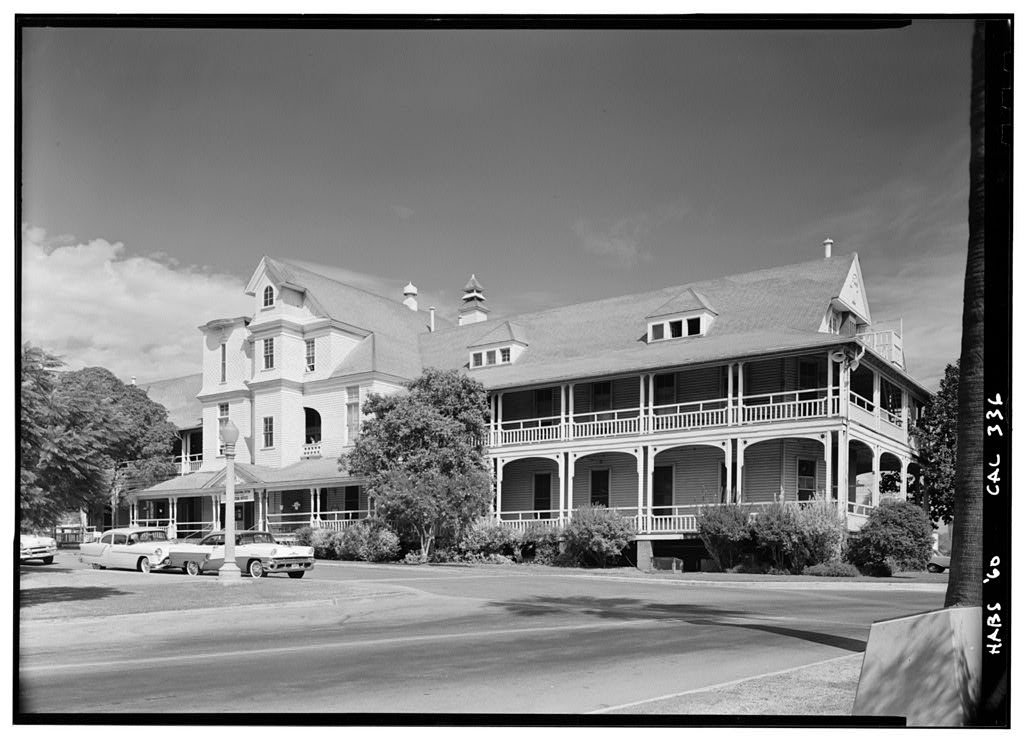
Image to comeWest Los Angeles, 1960
Part of the old soldiers’ home at Wilshire and Sawtelle in West Los Angeles, photographed in October 1960, the year it was torn down. The grounds had become the Veterans Administration’s. Pass It On places Dr. Sidney Cohen at the Los Angeles VA hospital, but doesn’t say where the sessions were held.Historic American Buildings Survey, Library of Congress
The same letter, written to Sam Shoemaker in June 1958, is frank about the spirits, too. “In addition to my original mystic experience, I’ve had a lot of such phenomenalism myself.” He had come to believe that proof surely existed “that life goes on,” and he wanted to help find it.
With less AA work to do, he went back to Wall Street in a small way. “I confess that I had rather gone broke emotionally on an overdose of good works,” he wrote. In the early 1960s, as Robert Thomsen tells it, he bumped into Joe Hirshhorn at La Guardia Airport. Hirshhorn, by then a famous collector, had hired him in the early 1930s, and they hadn’t met in thirty years. When Hirshhorn asked what he had been up to, Bill said he thought everyone knew: he had become “America’s Number One drunk.” Hirshhorn had no idea what he meant.
AA’s biography of Bill leaves one part of these years out. Three later writers report that there were other women: Nan Robertson, a New York Times reporter, in 1988; Francis Hartigan, Lois’s secretary in her last years, in 2000; and Susan Cheever in 2004. Robertson wrote that he couldn’t stop pursuing women and, citing old-timers close to him, that his affairs filled him with guilt but he kept straying. Hartigan’s main witness was Tom P. He told Hartigan that while they worked on the Twelve and Twelve he argued with Bill that he was killing himself, that Bill would agree and then say he couldn’t give it up, and that Lois knew everything. Tom P. later broke with Bill.
From the mid-1950s, all three writers say, Bill had a long relationship with Helen W. (no relation to his half sister Helen). Hartigan writes that she was a former actress about eighteen years younger, and that Bill found her a job at the Grapevine, AA’s magazine. By Robertson’s and Hartigan’s accounts, about a tenth of his royalties went to her after his death, under an arrangement made in 1963. Pass It On describes that 1963 agreement, which let Lois leave her royalties to “approved beneficiaries,” and names no one else. No word of Bill’s about any of it is in AA’s books.
Osmond and Hoffer were also treating alcoholics with niacin, vitamin B-3, and Bill came to believe it explained the “allergy” Dr. William D. Silkworth had written of in the Big Book. He took it himself, and in December 1965 he sent AA’s doctors the first of three papers on it. He had “some of the girls in the office” taking it, a trustee remembered. Members said he was breaking two of his own Traditions, which keep AA’s name off outside causes and out of public controversy. “He’s got a messiah complex,” said some. In 1967 the board had niacin mail sent to an office in Pleasantville, New York, and asked him to use stationery without AA’s address. His last paper on niacin went out after he died.
His last fight inside AA was over the board. He wanted alcoholics, not nonalcoholics, to hold most of the trustees’ seats. It took ten years. The change passed in April 1966, and it was, Pass It On says, “Bill’s last official business with the Fellowship.”
ListenMr. AnonymousAbout 1 minute
It’s August 29, 1956, in Los Angeles. Bill W. is sixty, more than twenty years sober, and a year past handing AA over to its members.
This afternoon, with a psychiatrist and an English writer guiding him, he takes LSD for the first time. He thinks it might shrink the ego the way a spiritual experience does, and reach the drunks AA can’t. Most members are horrified, and within a few years he steps back.
But he keeps looking. There are the spirits, and later a vitamin, niacin, which he urges on AA’s doctors in three long papers.
And there’s a private life that AA’s own biography leaves out. Three later writers report other women, and one long relationship.
Years before, a therapist had put her finger on the trouble, and Bill wrote it down himself: Mr. Anonymous, in conflict with Bill.
One card per claim
How we know
The hard claims about these years, and the ones that circulate without a source, each with who says so, how they knew, and how strong the evidence is.
Four labels. His own words: his letters, or people who were there. Documents: papers and records from the time. Biographers: later writers, working from interviews. Not supported: no first-hand source found.
His own words
He took LSD, from 1956.
Who says so
His letters, quoted in Pass It On (1984): “I’ve taken lysergic acid several times.” Betty Eisner, a psychologist who was at a session in February 1957, in a memoir she wrote in 2002. The historian Ernest Kurtz (1999).
How they knew
Bill wrote about it himself. Tom P. and Gerald Heard took notes at the first session, and Eisner was in the room at hers. When he stopped, the sources differ: by 1959, says Pass It On; into the early 1960s, says Kurtz.
His own words
He gave some to Lois.
Who says so
His letter, and Lois’s own memory, both in Pass It On.
How they knew
He wrote that he had given it to her. She remembered taking it, and said she could tell no difference.
His own words
Séances and spirit messages.
Who says so
His 1958 letter to Sam Shoemaker. Lois and Tom P., who took part, in Pass It On. His secretary Nell Wing’s version, as Susan Cheever tells it (2004).
How they knew
He and the people around the table described the sessions themselves. Section 5 tells of the spook room at Stepping Stones.
Documents
The niacin campaign.
Who says so
His papers to AA’s doctors, from December 1965. The board’s report to the 1967 General Service Conference, in Pass It On.
How they knew
The papers survive, and the first is online. The board’s action is in AA’s own record.
Biographers
Other women, and Helen W.
Who says so
Nan Robertson (1988), Francis Hartigan (2000) and Susan Cheever (2004), each reporting it.
How they knew
From old-timers, and above all from Tom P., who told Hartigan what he saw and heard. Tom P. later broke with Bill. The historian Ernest Kurtz is reported to have doubted the stories, and to have traced them to Tom P. (William Schaberg, 2019; not checked against the book). No statement of Bill’s about it is in AA’s books.
Biographers
A share of his royalties to Helen W.
Who says so
Nan Robertson (1988) and Francis Hartigan (2000).
How they knew
Both put it at about a tenth, under an arrangement made in 1963. Pass It On describes the 1963 agreement but names no one besides Lois.
Not supported
Four claims found online.
Who says so
Websites, blogs and comment threads, mostly repeating each other: that he wrote a “Fifteenth Step”; that he invented “thirteenth-stepping,” AA slang for an old-timer chasing a newcomer; that he wanted to be remembered for niacin rather than AA; and that he took LSD with Aldous Huxley.
How they knew
They don’t say. No first-hand source was found for any of the four.
What the books leave out
AA’s own biography of Bill tells the first four and says nothing of the rest. Ernest Kurtz, who first wrote about the LSD in the 1970s, recalled: “An A.A. Trustee had asked me to consider excluding that part of my dissertation from publication.” He kept it in.
For a closer look
Go deeper
Betty Eisner’s session with Bill, a trustee’s dinner about niacin, and the last fight over the board.
Betty Eisner, a psychologist working with Dr. Sidney Cohen, sat in on a session with Bill in Los Angeles on February 16, 1957, with Cohen and Tom P. When he was told to take as much as he wanted, she remembered, he answered, “Never say that to a drunk,” and took two pills. In her account he soon looked years younger, and visibly less tense. In March he wrote to the Eisners, crediting the sessions with some of his better spirits.
Aldous Huxley, whom Bill met through Gerald Heard, called him “the greatest social architect of the century.” Whether the two ever took LSD together, no first-hand source says.
Soup at Stouffer’s
“No, he’s all wrapped up, selling me — a promoter!”
Frank R., an AA trustee, remembering a dinner with Bill in 1967, as Pass It On quotes him.
Frank R., a trustee from the Boston area, had dinner with Bill at Stouffer’s after a board meeting one Sunday evening in 1967. Bill started in on niacin as soon as they had ordered. The waitress kept after him: “Mister, mister, are you going to finish your soup?” Frank remembered, “I guess we got out of Stouffer’s after about two hours.” Then Bill took him up to his room and kept at it until one in the morning.
His case for spreading the word, as Frank told it, went back to the wheel. Whoever invented it didn’t keep it to themselves, and AA hadn’t kept sobriety to itself either.
Members argued about niacin at meetings, and most of the arguing was about Bill. “He’s pulled one miracle; now he’s going for a second,” said some. Tradition Six says an AA group ought never lend the AA name to an outside enterprise, and Tradition Ten says AA has no opinion on outside issues. Almost everyone agreed, Pass It On says, that he was breaking both.
An office at headquarters
When AA’s board of trustees was set up in 1938, Bill himself had wanted nonalcoholics in the majority; no one knew yet whether the drunks could run their own affairs. After St. Louis he wanted it the other way round, and he went at it head-on. “There was no active opposition to doing this,” said Herb M., a trustee. “There was active opposition to the way he was going about it.”
Year after year the Conference said no. In 1962 it voted 72 to 36 to keep the old majority. When his plan was first turned down, Bill asked, “Will it be all right if I still have an office at headquarters?” Dr. Jack said he could act like a “bleeding deacon,” AA slang for a self-righteous old-timer, when he didn’t get his way. In the end Dr. Jack told him, “They’re not reacting to your ideas — they’re reacting to your method. Let me handle it.”
In April 1966 the board voted unanimously to grow to 21 trustees, seven nonalcoholics and fourteen alcoholics. Bill wrote to Herb M., “You cannot imagine how happy and grateful I am.”
Sources
Pass It On. AA World Services, 1984. Chapters 20 and 23 to 25, quoting Bill’s letters, Lois, Nell Wing, Dr. Jack Norris, Frank R., Herb M. and Dennis Manders, and Robert Thomsen’s account of La Guardia.
Nan Robertson, Getting Better: Inside Alcoholics Anonymous. William Morrow, 1988, as reported online; not yet checked against the book. And her “Alcoholics Anonymous”, New York Times Magazine, February 21, 1988, on the royalties.
Francis Hartigan, Bill W. St. Martin’s Press, 2000. On Tom P., Helen W. and the royalties, as reported online; not yet checked against the book.
Susan Cheever, My Name Is Bill. Simon & Schuster, 2004. On Helen W., as reported online, and Nell Wing’s version of the séances, as excerpted by Beliefnet, March 2004; not yet checked against the book.
William Schaberg, Writing the Big Book. 2019. On Ernest Kurtz’s doubts, as reported online; not yet checked against the book.