First
The wife
Dr. Bob and a member talked to the wife before the drinker. “Does your husband want to stop drinking, or is he merely uncomfortable?” Often the man himself hadn’t asked for help at all.
Good Oldtimers, pp. 76, 101
The first group · 1935–1940
Soon after his last drink, they went looking for another drunk. For five years Bob and Anne’s house was never closed.
“No, I’m not an answer to a prayer. I’m trying to keep from drinking myself.”
“Where can we find any alcoholics?” Bill W. asked. Dr. Bob knew: City Hospital always had a batch. He called the admissions nurse, an old friend, and told her he and a man from New York had a cure for alcoholism. Had he tried it on himself? “Yes,” he said, “I sure have.”
She had a dandy: a lawyer who had been in six times in four months, who had just roughed up a couple of nurses and was strapped down tight. His name was Bill D. They saw his wife, Henrietta, first, and that became the rule. “What kind of bird is this egg when he’s sober?” Dr. Bob asked her. A private room would cost fifty dollars, he said, and whatever they did for her husband “won’t cost you a cent.”
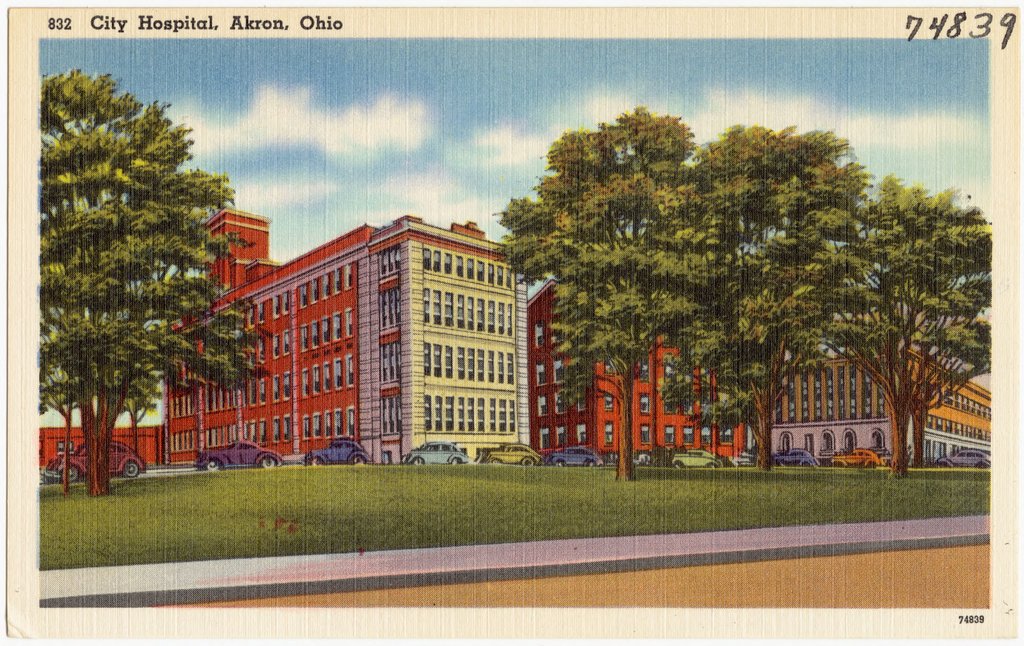
They talked with him for days. After about five, he got down on his knees beside the hospital bed and turned his life over to God. He walked out on the Fourth of July, 1935, and AA counts him as its third member. Dr. Bob had been sober only three weeks. “I thought they’d been sober for years,” Henrietta said later.
Others followed, and many came through 855 Ardmore. A drunk and his wife moved into Sue’s room. Archie T., from Detroit, lived with the family for ten months. Every morning Anne read to them from the Bible, often from the Book of James. The coffee ran to nine pounds a week, and during Bill’s three months there, Dr. Bob remembered, “There was hardly a night … that we didn’t sit up until two and three o’clock, talking.”
On Wednesday nights the alcoholics met with the Oxford Group at the home of T. Henry and Clarace Williams, where Dr. Bob took newcomers upstairs to surrender. By November 1937 he and Bill counted about forty staying sober, and “we actually wept for joy,” Bill said. Late in 1939 the Akron alcoholics left the Oxford Group. Seventy-four people crowded into “my little house,” as Dr. Bob called it, and in the new year the meeting moved to King School.
It’s the summer of 1935, at 855 Ardmore Avenue. Soon after his last drink, Dr. Bob tells Bill: if we’re going to stay sober, we’d better get busy.
He calls the admissions nurse at City Hospital, an old friend. Does she have a drunk for them? She does: a lawyer who has just roughed up two nurses and is strapped to his bed.
They go to see him. Within days he’s on his knees beside the bed. On the Fourth of July he walks out of the hospital, AA’s third member.
More follow, and the house never closes. A drunk and his wife move in. Another man stays almost a year. Every morning Anne reads to them from the Bible, and the coffee runs to nine pounds a week.
And almost every night that summer, Bob and Bill sit up at the kitchen table until two or three in the morning, talking.
Akron · 1935–1939
Before there was a book or Twelve Steps, Akron had a routine for every newcomer, and it didn’t bend much.
From Dr. Bob and the Good Oldtimers, chapters VII–IX. The routine loosened as the groups grew.
First
Dr. Bob and a member talked to the wife before the drinker. “Does your husband want to stop drinking, or is he merely uncomfortable?” Often the man himself hadn’t asked for help at all.
Good Oldtimers, pp. 76, 101
Second
Five to eight days in a private room at City Hospital to be “defogged,” on sauerkraut and tomatoes, with a Bible as the only thing to read.
Good Oldtimers, pp. 78, 94, 102
Third
Only recovered alcoholics could visit: every member in town, every day. Dr. Bob explained the illness in plain words and told each man where it led: death, an asylum or the penitentiary.
Good Oldtimers, pp. 94, 102, 108
Fourth
On his knees, with one or more members present, the newcomer admitted he was powerless over alcohol and gave his will to God. At the Williams home, Dr. Bob took the new men upstairs to do it.
Next: 7 · The flower roomGood Oldtimers, pp. 81, 102
Loosening up
The rules eased as the groups grew. In Cleveland in 1939 a newcomer was let in without a hospital stay, over some members’ objections. And the kneeling surrender never made it into the Twelve Steps: “the other drunks made Bill take it out,” one member remembered.
For a closer look
The other kitchen table, what Rockefeller’s man found, and how Akron left the Oxford Group.
AA’s story has two kitchen tables. The first was in Brooklyn in November 1934, where Ebby T. sat across from Bill W. and told him how he had gotten sober. To Bill he was “a miracle directly across the kitchen table.”
The second was at 855 Ardmore the next summer. Dr. Bob found it hard to believe that nothing said in those nightly talks had shaped the Twelve Steps. “I didn’t write the Twelve Steps,” he said later. “But I think I probably had something to do with them indirectly.” Later, Clevelanders drove down to sit with him and Anne “over cups of coffee at their kitchen table,” Bill wrote.
The Kitchen Table, the film on this site, tells how AA began. Watch The Kitchen Table
In February 1938 John D. Rockefeller Jr. sent Frank Amos, a newspaper and advertising man, to see what was going on in Akron. Amos talked with Dr. Bob’s colleagues. An eye specialist called him “a brilliant and skillful surgeon” whose drinking had nearly cost him the confidence of other doctors, and who had been winning it back since he stopped.
Another doctor, one of the alcoholics he had helped, said the work took “an average of ten hours a day,” all of it unpaid. Amos found him in debt and driving “an Oldsmobile of somewhat ancient vintage,” and proposed $50,000 for the movement. Rockefeller gave $5,000 instead, for the two founders’ own use. Three thousand dollars of it paid off the mortgage on 855 Ardmore.
The Akron alcoholics stayed with the Oxford Group two years longer than New York did. When Clarence S. of Cleveland pressed for meetings of their own in 1939, Dr. Bob held back out of loyalty. “We can’t abandon these people,” he said. “We owe our lives to them.”
By late 1939 the Akron members were unhappy too, and the wives settled it. “Doc went along with Annie,” one member said. Henrietta Seiberling told him, “How could you do this? You’ll be sorry.” T. Henry Williams wrote Bill that the alcoholics would always be welcome: “Our door is open, and we love every one of the boys.”
The first meeting at 855 Ardmore came late in 1939, with a Christmas tree in the living room. Dr. Bob put his foot on the rung of a dining-room chair, said he was an alcoholic, and read the Sermon on the Mount. On January 2, 1940, he wrote Bill: “Have definitely shaken off the shackles of the Oxford Group.”