Watch The Kitchen Table
Illustration · A living room set out for a Wednesday-night meeting, with the stairs going up. Not drawn from a photograph.

The Oxford Group · 1933–1935

Secret drinker

For two and a half years he prayed, read and went to meetings every week, and got drunk every night.

“I am a secret drinker, and I can’t stop.”

Dr. Bob, spring 1935, as Henrietta Seiberling remembered it · Dr. Bob and the Good Oldtimers, 1980

Two and a half years

Early in 1933 Anne persuaded him to try the Oxford Group, a Christian movement led by Frank Buchman that had arrived in Akron with a ten-day “house party.” Its members aimed at absolute honesty, unselfishness, purity and love, and practiced confession, restitution and quiet times listening for God’s guidance.

He didn’t expect much; he had sworn off churches as a boy. What drew him was the members themselves, “their seeming poise, health, and happiness,” he wrote. “I was self conscious and ill at ease most of the time, my health was at the breaking point, and I was thoroughly miserable.” It helped that they met at the Mayflower Hotel and in private homes, not in a church.

For two and a half years he went to meetings every week, joined a church, read the Bible and the lives of the saints, and prayed. “But I got tight every night,” he said later. “I couldn’t understand what was wrong.”

In the spring of 1935 Henrietta Seiberling, a fellow member, decided to hold a meeting for him at the home of T. Henry and Clarace Williams. One by one, the others shared costly things about themselves. Then, in his deep, serious voice, Dr. Bob said he would tell them something that might cost him his profession: “I am a secret drinker, and I can’t stop.” They got on their knees and prayed with him. That was the beginning of the Wednesday-night meeting at the Williams home.

Still he drank. A few weeks later, a stranger from New York telephoned Henrietta.

Listen Secret drinker About 1 minute

Before and after

What he had, and what he lacked

The Oxford Group gave him a program, a church and friends who knew his secret. It couldn’t give him the one thing he needed.

Both quotations in the second card are Dr. Bob’s own: from the Big Book (1939), and from his talk in Detroit (1948) as printed in Dr. Bob and the Good Oldtimers.

1933 to spring 1935

What the Oxford Group gave him

The four absolutes. Confession, restitution and prayer. Meetings every week, a church, and in the end, friends who knew his secret and prayed with him.

Two and a half years: drunk every night.

Alcoholics Anonymous; Good Oldtimers, pp. 49–55

May 1935

What was missing

Someone who knew drinking from the inside. Bill W. was “the first living human” he had talked with who knew alcoholism “from actual experience.” And the habit of helping others: “Bill had acquired their idea of service. I had not.”

About a month later: his last drink.

Continue to 4 · The gate lodge

Alcoholics Anonymous, p. 180; Good Oldtimers, p. 64

What AA kept

AA grew up inside the Oxford Group and kept much of what it taught. What it added was one drunk talking to another, and the discovery that helping the next one keeps you sober.

For a closer look

Go deeper

The Oxford Group’s ideas, and the friend who wouldn’t give up on him.

The four absolutes
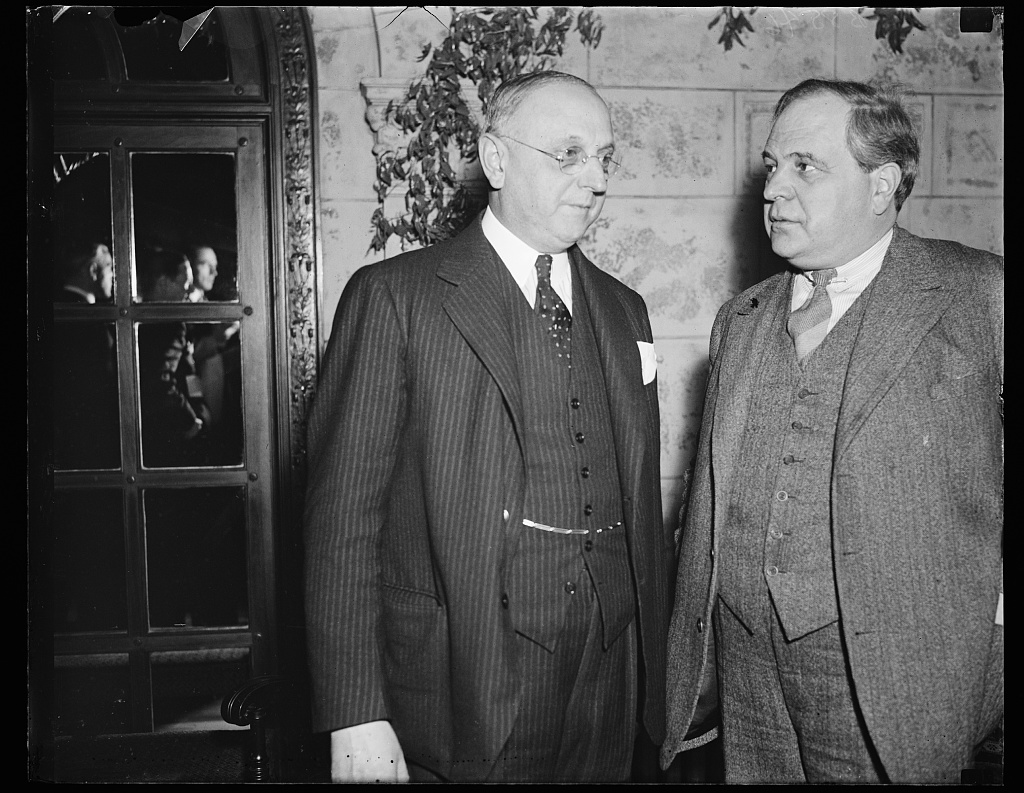
A press photograph of several men in suits standing together; Frank Buchman is at the left.
Frank Buchman (left), founder of the Oxford Group, in Washington on November 7, 1935.Harris & Ewing Collection, Library of Congress

Honesty, unselfishness, purity and love, each one absolute. In 1948 Dr. Bob called them “the only yardsticks” AA had in its early days, before the Twelve Steps. He still measured hard decisions against them, he said, and if a decision checked out with all four, “then my answer can’t be very far out of the way.”

The Groupers had slogans, too: “Study men, not books” and “Win your argument, lose your man.” Members greeted each other with a cheerful question: “Are you maximum?”

Want-to-want-to

In 1948 he remembered asking Henrietta whether she thought he really wanted to stop. “I can’t conceive of any living human who really wanted to do something as badly as I think I do, who could be such a total failure,” he told her. “Henri, I think I’m just one of those want-to-want-to guys.” She told him he did want to. He just hadn’t found a way to work it yet.

The morning after his confession, Henrietta felt guided that “Bob must not touch one drop of alcohol,” and asked him over to tell him so. He was disappointed. He had thought guidance would mean seeing somebody or going someplace.
Who Henrietta Seiberling was
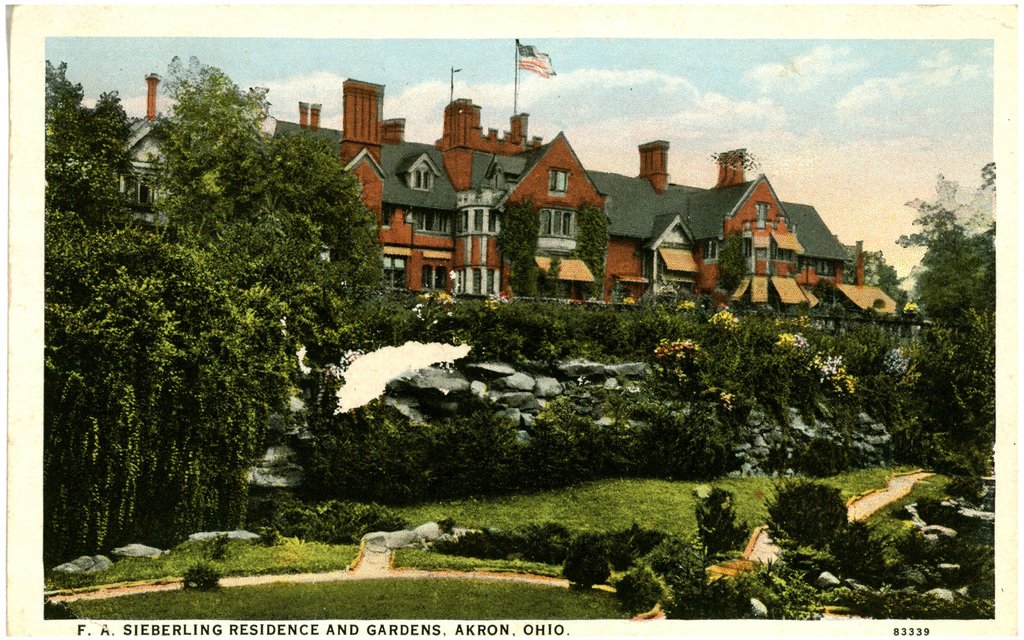
A color postcard of a large Tudor-style mansion with formal gardens.
Stan Hywet Hall, the Seiberling estate, on a 1926 postcard. Henrietta lived in its gate lodge.Columbus Metropolitan Library Digital Collections

A Vassar graduate with three teenage children, she was the daughter-in-law of Frank A. Seiberling, founder of Goodyear Tire and Rubber, and lived in the gate lodge of the family estate. She was not an alcoholic. “I’m no alcoholic, but I’ve had my difficulties,” she told Bill W. when he called.

Of Dr. Bob she said, “He was absolutely honest and never gossiped.” And in his AA years: “He never spoke as a ‘founder.’ He always said, ‘I just work here.’” That line gave this story its name.

Sources
  • Alcoholics Anonymous. Works Publishing, 1939. Dr. Bob’s story, “Doctor Bob’s Nightmare.”
  • Alcoholics Anonymous Comes of Age. AA World Services, 1957.
  • Dr. Bob and the Good Oldtimers. AA World Services, 1980. Chapter V.
  • Pass It On. AA World Services, 1984. Chapter 7.
  • Frank Buchman and others, Washington, November 7, 1935, Harris & Ewing Collection, Library of Congress. No known restrictions on publication.
  • F. A. Sieberling Residence and Gardens, Akron, Ohio (postcard), 1926, Columbus Metropolitan Library. No known copyright.