Watch The Kitchen Table
Illustration · A summer house at dusk after rain, half painted, with a ladder against the wall and pigeons on the ridge. Not drawn from a photograph.

Manchester, Vermont · 1932–1934

Exile

Sent away from Albany, he stayed sober for six months on a mountain, then drank alone in his family’s empty house.

“It was all right on the first three or four rungs of the ladder, but from then on up, I couldn’t do a thing.”

Ebby, on trying to paint the family house in 1934, in recordings made in 1954 · quoted in Pass It On, 1984

The empty house

In the fall of 1932 Ebby left Albany for Manchester, Vermont. “My brother was a prominent man in town and I wasn’t doing him any good,” he said. That year his brother, the mayor, came close to being nominated for governor of New York. Ebby took a room at the Battenkill Inn, and “the drinking went on up there just the same.”

Just before Christmas, the innkeeper sent him up the mountain with his own son, to an empty lumber-company cabin on the ridge, to work around the place and cut trail. “I had two pints of gin which I consumed the first night, and that was all I had.” They hunted rabbits with the hounds and cut trail, and friends came up on weekends. Ebby stayed about six months, sober the whole time. Back in town he stayed sober two or three months more, “when I again fell off the wagon.”

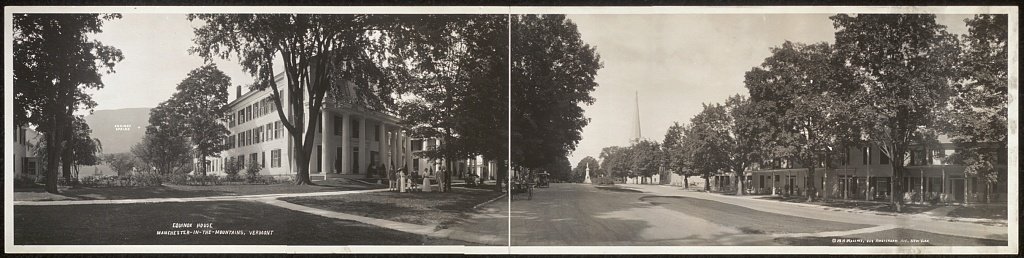
A panoramic view of a large white resort hotel with long columned porches.
The Equinox House, Manchester’s grand hotel, in 1911. Summer people like Ebby’s family had made Manchester a resort.Photo: W. H. Wallace, Panoramic Photographs Collection, Library of Congress

His friend the innkeeper died of a heart attack. Ebby drank on and off through the summer and the winter. In the spring of 1934 he moved up into the village and opened the family’s summer house on Taconic Avenue. Most of the furniture was gone. He lived in the one room that still had some, his old bedroom, “doing a lot of drinking, living alone and moodily brooding, thinking of things all the time.”

He decided to paint the house, and wrote his brother to say so. There was a good-sized ladder, but he was shaking too badly to climb it. He had been arrested twice for drunkenness by then and fined five dollars each time, and he had been told that a third arrest “might go hard on me.”

That summer, two old friends came to see him.

Listen Exile About 1 minute

Before and after

The mountain and the house

Two winters in Manchester, a year apart.

Dates follow Ebby’s own recollections, as Pass It On and Mel B. quote them. He wasn’t sure of all of them himself: “the first winter, I think it was.”

Winter 1932–33

The mountain

An empty lumber-company cabin on the ridge, the innkeeper’s son for company, trail to cut, rabbit hunting with the hounds, and friends up on weekends. No liquor after the first night.

About six months sober, and two or three months more back in town.

Pass It On, ch. 5; Mel B., Ebby: The Man Who Sponsored Bill W., ch. 5

1933–34

The house

One furnished room in the family’s empty summer house, a ladder he couldn’t climb, two arrests, and “doing a lot of drinking, living alone and moodily brooding.”

By the summer of 1934, one more arrest could mean six months in prison.

Continue to 3 · The ale in the cellar

Pass It On, ch. 5; Mel B., Ebby: The Man Who Sponsored Bill W., ch. 5

What was missing

He could stop; six months on the mountain proved it. Staying stopped once he came down was another matter. That summer, two old friends came up the walk with an idea.

For a closer look

Go deeper

A story still told about him, the rules of the trail, and the year he and Bill went to school together.

The car and the cup of coffee

One story about Ebby has been told for years. Drunk, he drove his father’s car into a house where an older couple lived, stepped out, and asked them for a cup of coffee “with just a little cream and only one sugar.”

Mel B. found that there was such an incident, according to one of Ebby’s friends, but it happened much earlier than 1934, and the car may have been one of his brothers’, since their father had died in 1929. By 1934, Ebby had no car to drive.

He told the story himself. At the farm where he spent his last years, he still liked to talk about the airplane ride with Bill and the time he drove into a house and asked for coffee.
The law of the camp
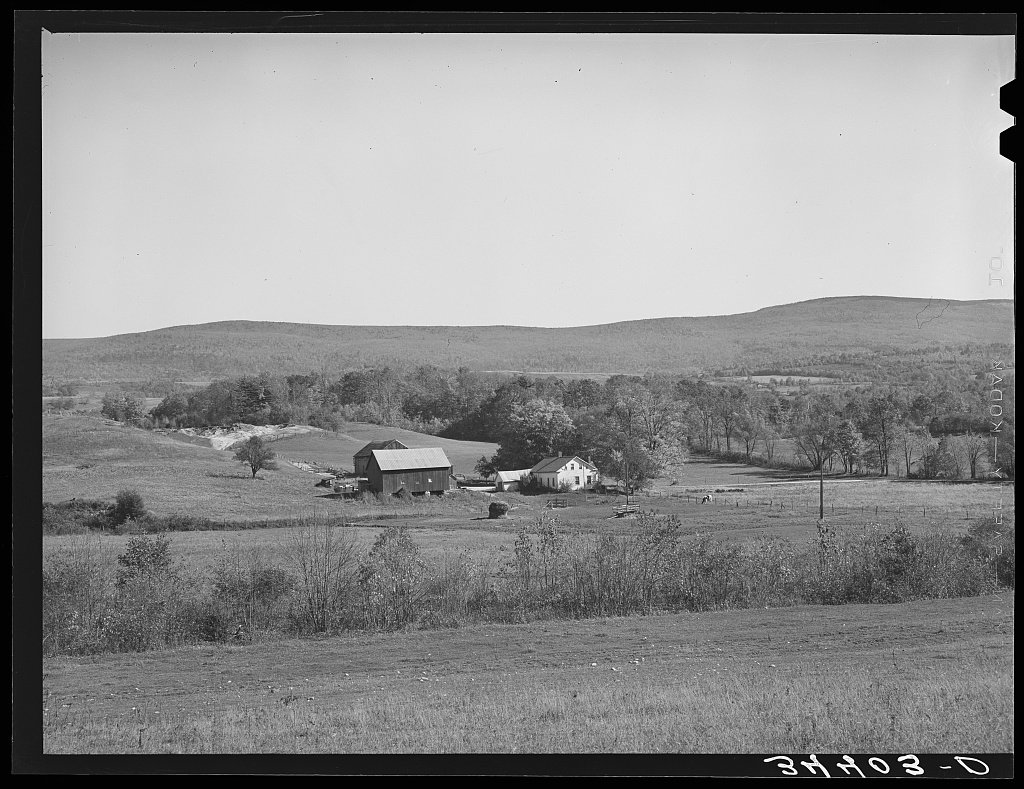
A Vermont farm in a valley below wooded hills.
Farm country near Arlington, in the Battenkill valley just south of Manchester, October 1939.Photo: Russell Lee, FSA/OWI Collection, Library of Congress

Bill and Lois had hiked the same trail after the First World War. Lois remembered it as steep and rugged, with rough log cabins five or ten miles apart for anyone who needed one, and a code among the people who used them:

“The law of the camp required occupants to leave enough cut wood for the next traveler and to replace with something similar any food found or eaten in the cabin.”

Mel B. thought the work suited Ebby. When he was sober, he did well at hard outdoor work, and cutting trail must have given him a sense of doing something worthwhile.

A year at school with Bill

Ebby spent one school year in Manchester, at Burr and Burton, boarding with a minister’s family, in the same class as Bill. He remembered the minister’s son as “a splendid chap” who gave him “many fine ideas about life.”

Fifty years later, in 1962, sick and just back from Texas, he and Bill drove around Manchester together looking up old spots. “It was 50 yrs. ago this coming Fall we were in school together there,” Ebby wrote to friends. Some of the people they found “couldn’t care less,” he admitted. “Then again in my case I was a pest at times, plenty of times.”

Sources
  • Pass It On. AA World Services, 1984. Chapter 5, quoting Ebby’s 1954 recollections.
  • Mel B., Ebby: The Man Who Sponsored Bill W. Hazelden, 1998. Chapters 3, 5 and 11, quoting Ebby’s recollections and letters and Lois W.’s memoirs.
  • Equinox House, Manchester-in-the-Mountains, Vt., panorama by W. H. Wallace, 1911. Library of Congress. No known restrictions on publication.
  • Vermont farm near Arlington, photograph by Russell Lee, 1939. FSA/OWI Collection, Library of Congress. No known restrictions.