Watch The Kitchen Table
Illustration · The long brown-ash table at McPike’s Farm in winter light, with a crossword, a pencil and a coffee cup. Drawn from Mel B.’s description, not from a photograph.

Galway, New York · 1962–1966

Peaceable Street

Sick and out of places to go, he spent his last two years in a farmhouse north of Albany, and never drank there.

“It was just a general conversation… one alcoholic to another.”

Eddie D., on visiting Ebby at McPike’s Farm a few days before he died · quoted in Mel B., Ebby: The Man Who Sponsored Bill W., 1998

The last farm

Ebby came back from Texas at the end of 1961, sick and thin. “When I left your ranch I weighed about 170,” he wrote to Ralph and Mary Lee J. the next summer, “today about 122.” He had emphysema, and Camels had been his cigarette. He stayed with his brother Ken in Delmar, near Albany, then for almost a year with Bill and Lois, then at Chit Chat Farms in Pennsylvania and at High Watch. For two years he had trouble with drinking.

In October 1963 he was Bill’s guest at the annual dinner in Bill’s honor at the Hotel Commodore in New York. He didn’t look happy, and his health was failing. That fall he stopped drinking for the last time.

On May 30, 1964, Bill drove him to McPike’s Farm, a rest home for alcoholics on a country road called Peaceable Street, in Galway, twenty-five miles north of Albany. It was run by Margaret McPike, a licensed practical nurse, and her husband, Mickey. Ebby arrived “very, very sick,” Margaret remembered, and wouldn’t take his medicine or do anything for himself. For a week she gave him bed baths. After that he agreed to bathe himself rather than have the boys do it.
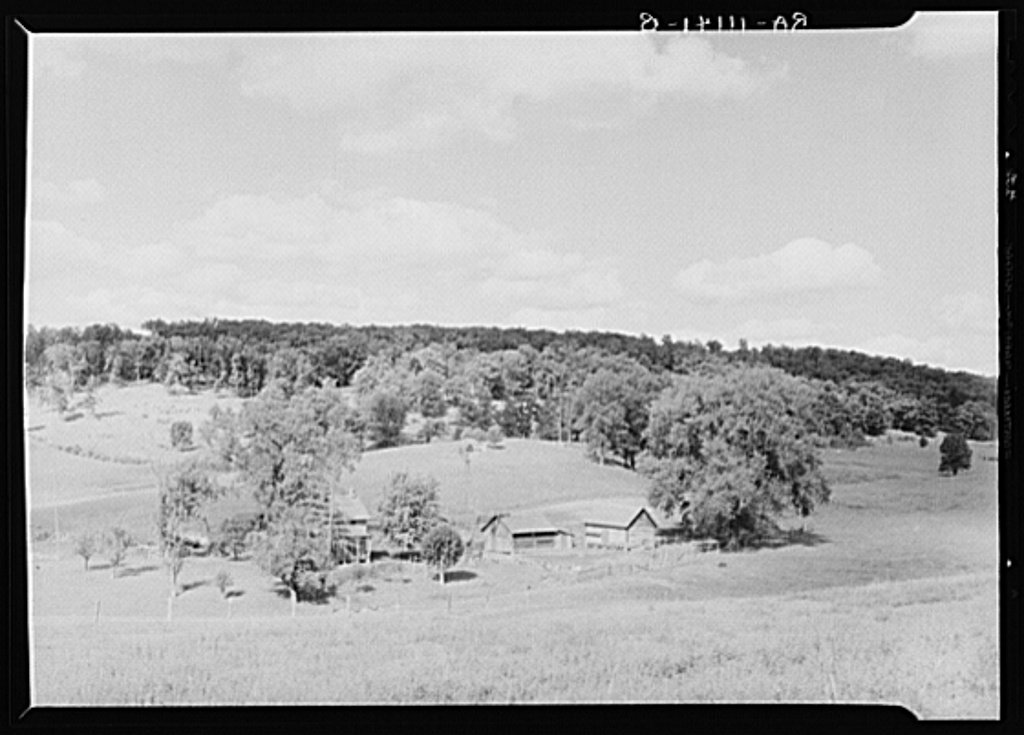
A farmhouse and fields with a woodlot behind, in upstate New York.
A stand-in: a farm and woodlot about thirty miles west of Albany, June 1936. No cleared photograph of McPike’s Farm has been found.Photo: Paul Carter, FSA/OWI Collection, Library of Congress

Slowly he came around. He came down for lunch and did the New York Times crossword, which he could finish quickly, at a long table of brown ash built like a picnic table. He talked about celebrities he had met, the plane ride with Bill, the car he drove into a house, and said little about the kitchen table. “Even though he’d be out of sorts and lose his temper,” Margaret said, “towards the end of the day he’d always say he was sorry.” She also said, “I think he was disappointed in his life.”

He never drank at the farm, and never tried to get a bottle. By August 1964, Bill wrote, he could scarcely walk twenty feet on level ground without losing his breath. In January 1966 his brother Ken died, and Ebby was too sick to go to the funeral. Margaret thought he gave up after that.

In March, Eddie D., who worked at Beech Hill, came by and talked with him for an hour. The next day Ebby felt ill, and the doctor didn’t like the sound of his heart. He began to talk as if he knew. “Well, we all have to go sometime,” he said. He died at one in the morning on March 21, 1966, in the hospital at Ballston Spa. He had been sober about two and a half years.
Listen Peaceable Street About 1 minute

Sober and not

Thirty-two years

From the ale in the cellar in 1934 to his death in 1966: the stretches when he was sober, as far as they can be dated.

Dates are approximate, from Mel B. and Ebby’s own recollections. The hatched years held shorter sober stretches that can’t all be dated.

  • Late summer 1934 to April 1937

    About two years and seven months, from the ale in the cellar to a dinner in New York.

  • April 1937 to late 1954

    On and off: a few months sober at a time, a year or more with the Navy in Philadelphia, and his first year in Texas, then one more drink.

  • Late 1954 to September 1961

    About seven years in Dallas, until Chloe died.

  • September 1961 to the fall of 1963

    Two years of trouble with drinking, in Texas and New York.

  • Fall 1963 to March 21, 1966

    About two and a half years, the last two at McPike’s Farm.

Mel B.’s count

Adding the long stretches to the short ones, Mel B. estimates that “he may have had fifteen years’ sobriety during the thirty-two years.” Through all of them, sober or not, Bill introduced him the same way: “my sponsor, Ebby.”

For a closer look

Go deeper

Who paid for his care, a dinner in 1963, and the nurse who took him in.

The monthly check

In 1961, worried about what would happen when Ebby could no longer work, Bill asked AA to provide for him. At Bill’s request, Ebby began getting a regular monthly check for the rest of his life. Bill also raised a private fund from friends.

The sources differ on the amount. Mel B. says the trustees agreed to one hundred dollars a month to begin with, and more if he fell ill. Pass It On says, “Ebby received $200 a month until his death in 1966.”

Bill’s own letter of August 1964 gives the arithmetic: the farm charged $75 a week for his nursing care, “a sum which he can make good out of his Social Security and financing of $200 a month that comes out of the AA book money at headquarters.”

October 1963
Postcard view of the Hotel Commodore, a large hotel on Park Avenue at 42nd Street.
The Hotel Commodore on Park Avenue at 42nd Street, on a postcard from the 1960s.Tichnor Brothers Collection, Boston Public Library

Every fall a dinner was held for Bill in New York. Margaret McPike had first met Bill and Lois at one of them, in 1951. In October 1963 the dinner was at the Hotel Commodore, and Ebby was Bill’s guest. As always, Bill introduced him as his sponsor.

“At the dinner, Ebby did not appear to be a happy man,” Mel B. writes, “and his health was declining.” He had been drinking on and off for two years.

In May 1964 he went to McPike’s Farm with more than seven months sober, and he stayed sober.

Margaret McPike
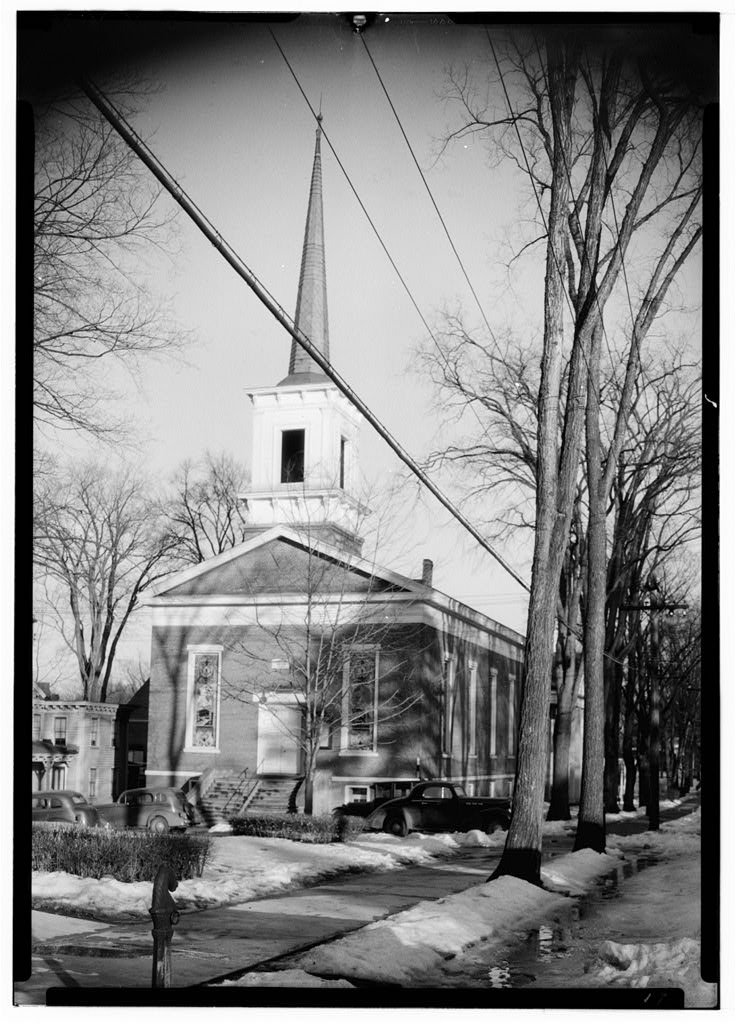
A white church with a tall steeple in a village.
First Presbyterian Church, Ballston Spa, photographed for the Historic American Buildings Survey. The farm’s mail came through Ballston Spa, and Ebby died in the village’s hospital.Photo: Nelson E. Baldwin, Historic American Buildings Survey, Library of Congress

Margaret and Mickey McPike opened their rest home in the winter of 1958, in an eleven-room farmhouse more than a hundred years old, with a slate roof and an old red barn. When Bill wanted her to take Ebby, she was at a nursing convention in New York. She went to see him at the AA office and said yes.

Mickey died in 1971. Margaret ran the farm until 1979 and died in 1982. In 1986 the State of New York named a new alcoholism treatment center in Utica for the two of them. The state’s announcement said their farm had helped more than four thousand people recover, Ebby among them.

Fourteen years after Ebby’s death, Mel B. writes, she “still had a catch in her voice” when she talked about him.

Sources