Illustration · A room at a Dallas clinic in 1953, with venetian blinds, a window air conditioner and an old airline tote bag on the bed. Not drawn from a photograph.
Dallas · 1953–1961
Who wants to go to Texas?
Bill asked a Dallas clinic for one favor, and Ebby’s Texas friends gave him the longest sobriety of his life.
“Old Ebby acts like a man who wants to get well.”
The favor
Early in 1953 Bill and Lois went to Dallas, and Searcy W. showed Bill around the Texas Clinic, the hospital for alcoholics he had opened in 1950. Then Searcy asked what Bill would most like to see happen in AA. Bill answered, “I would like for Ebby to have a chance to sober up in your clinic.” Searcy made a reservation, though nobody knew where Ebby was.
The chain that found him ran through Paris. There Charlie M., a sober Texan who had moved to New York, met Cebra G., one of the three men who had come to see Ebby in Manchester in 1934. “Let’s see if we can’t do something for him,” Cebra said. Back in New York, Hazel R. at the Intergroup office phoned Charlie the next time Ebby came in looking for a handout.
Charlie took him to his favorite bar, bought him a drink and asked, “Ebby, how would you like to go to Texas?” “My God, who wants to go to Texas?” Ebby said. “They’ve got no water down there, the cattle are dying all over the place.” Charlie gave him five dollars and told him to think it over. By Saturday he had said yes. Charlie got him a clean shirt and a hot shower, and phoned Dallas.
On Sunday, September 6, 1953, he landed at Love Field carrying an old Pan Am bag with everything he owned in it, and a pint of whiskey. For weeks at the clinic he was in a fog; once he thought he heard opera coming from the air conditioner. After six weeks Searcy was ready to send him back to New York, but the head nurse said she could see some improvement. By November he was talking and laughing, and Bill called it “the best damn news I’ve heard in years.”
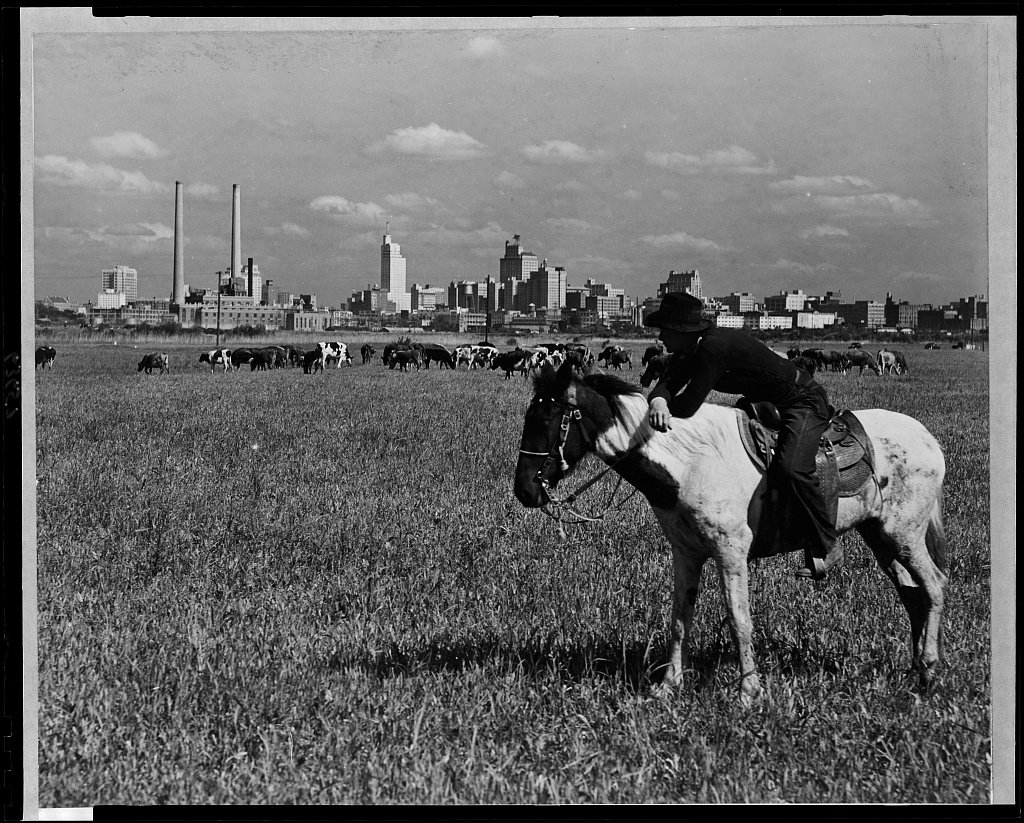
Image to comeA cowboy and cattle before the Dallas skyline, about 1945
In June 1954 Bill broke his own rule against speaking engagements and came to the Texas state AA conference in Fort Worth, to thank Texas for what it had done for Ebby. While he was there he recorded Ebby’s memories. That summer Ebby spent two months on Ralph and Mary Lee J.’s ranch near Ozona. He still believed he could become a controlled drinker, and late in 1954 he tried. It was his last drink for about seven years.
Then he went to work. A print shop paid him thirty-seven dollars a week, and he stayed sober there; it was reportedly the first job he ever quit sober. He flagged traffic for Icky S.’s construction crew and reclaimed old bricks for Ben T. Then Tom B. hired him to keep the books and the parts bins at his surplus-aircraft business at Love Field. He stayed for years, longer than at any job since the family firm. He was Bill’s guest at AA’s conventions in St. Louis in 1955 and Long Beach in 1960.
Around 1957 he fell in love with Chloe K., a former actress who had been a nurse at the clinic. Chloe was often ill, and Ebby looked after her. In 1961, at Bill’s request, AA began sending Ebby a monthly check for the rest of his life. That September Chloe died, and Ebby drank again. Tom B. had to let him go. In December Icky bought him a ticket back to New York.
ListenWho wants to go to Texas?About 1 minute
New York, September 1953. Ebby T. is broke, drinking, and walking the streets at night. An AA member named Charlie buys him a drink and asks how he’d like to go to Texas.
My God, Ebby says. Who wants to go to Texas?
But by Saturday he has said yes. On Sunday he lands in Dallas with everything he owns in an old Pan Am bag, and a pint of whiskey.
For weeks at the clinic he is lost in a fog. Then the fog lifts. He starts to talk, and laugh, and go to meetings. Texas takes him in: a ranch near Ozona, a job at Love Field, friends who stake him and drive him and listen to him.
Late in 1954 he takes one more drink. Then he stays sober for seven years, the longest stretch of his life, until the woman he loves dies in the fall of 1961.
Side by side
What Texas saw, what Ebby said
His Texas friends on four subjects, beside Ebby’s own words about the same things.
Most of the Texans’ memories were set down around 1981, in letters and interviews. Ebby’s words are from 1954, except the last, which Mary Lee J. remembered.
Texas
Arriving
“…with all his earthly possessions in an old Pan Am tote bag, with a pint of whiskey.”Searcy W., who met his plane at Love Field
Getting well
“…he blossomed into a friendly, talkative, grateful, productive citizen of our town and group.”Marty P., a Dallas member, in a 1981 letter
Work
“He stayed sober though, there with me, and did a very good job.”Tom B., who hired him at Love Field, in 1981
Chloe
“I think he really was in love with Chloe.”Mary Lee J., remembering their visit to the ranch in 1958
Ebby
Arriving
“I was met by Searcy W. and Olie L., two men who proved to be great friends.”Remembering his arrival, in 1954
Getting well
“How I will ever be able to repay all of you is a tough question…”In a letter to Olie L. from the ranch, September 1954
Work
“I couldn’t stand the physical exertion of hitting those pavements every day.”On trying to sell securities, in his 1954 recordings
Chloe
“I had to live this long to fall in love.”To Ralph J., as Mary Lee J. remembered it
The longest stretch
From late 1954 to the fall of 1961, about seven years, the longest he was ever sober. Not everyone saw a happy man: Jean C. remembered “slender, lost, soulful eyes.” But Tom B., who called him “always a taker,” watched him look after Chloe and decided, “He became a giver.”
For a closer look
Go deeper
Why so many of his words survive, a summer on a ranch, and two conventions.
The 1954 recordings
“…scarcely leaves my mind for a day.”
Bill W., to the conference chairman in Fort Worth, May 1954.
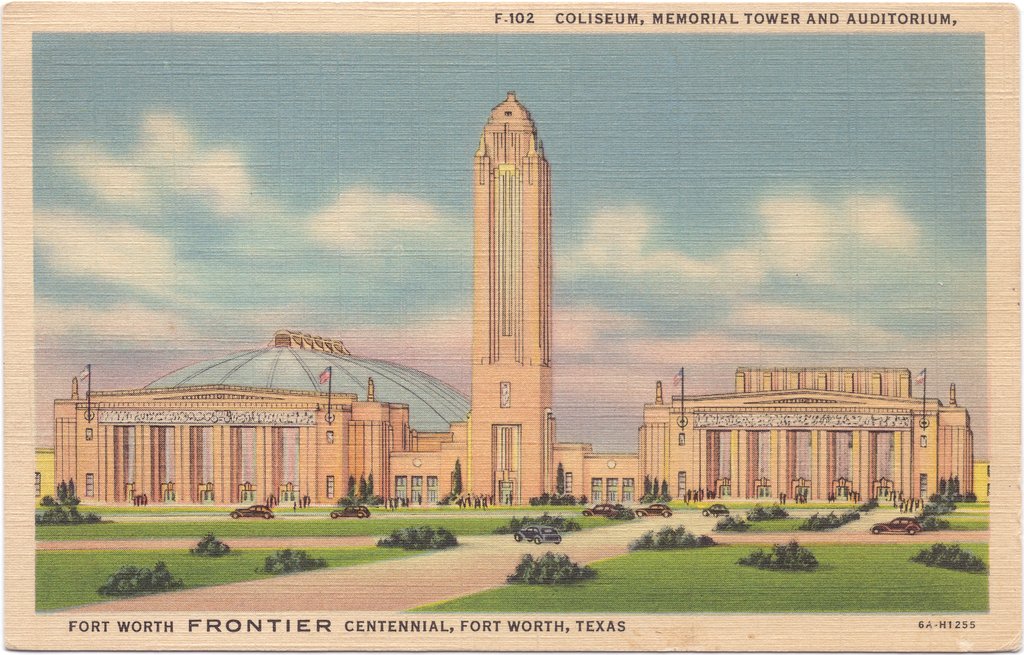
Image to comeWill Rogers Coliseum, Fort Worth, on a postcard
By 1954 Bill was turning down almost every invitation to speak. That April he made an exception for the Texas state conference in Fort Worth, and told the chairman why: “The thought of what you have done for Ebby scarcely leaves my mind for a day.”
At Fort Worth Bill set out to record Ebby’s memories: his drinking, and the events that led to the kitchen table. Bill recorded his own memories that year too. Those recordings are where Mel B. and Pass It On found most of Ebby’s words, and so do these pages.
Ebby gave a short talk at the conference. He thanked Texas, and made it plain he wanted to stay for good.
The ranch near Ozona
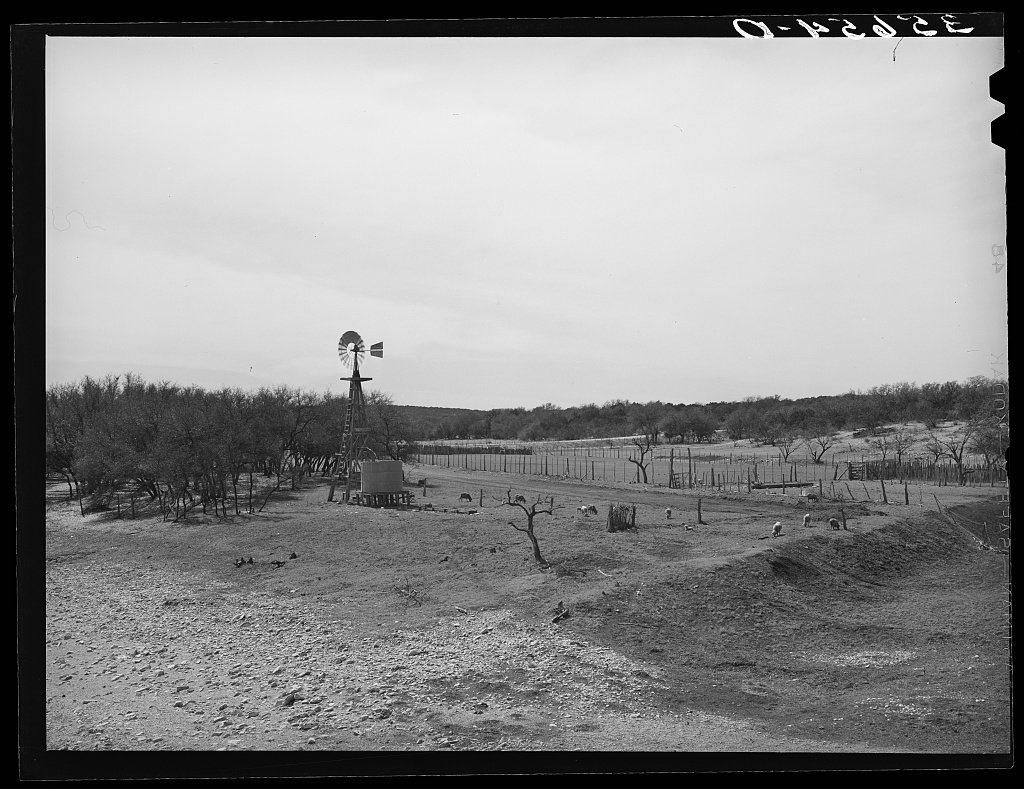
Image to comeA windmill and stock tank on a Texas ranch, 1940
In the summer of 1954 Ralph J., a Texas AA pioneer, and his wife, Mary Lee, invited Ebby to their ranch between Ozona and Sonora: seven thousand acres of cattle, sheep and goats. He stayed almost two months. At first they kidded him for holding the reins too tight. Before long he was helping with the roundups and even the shearing. There was steak for breakfast, and he worried about being spoiled.
He hunted doves and got one with his first shot, “beginner’s luck I guess for I haven’t fired a gun in twenty years.” The family swam in the stock tank, and there he argued with the ranchers’ sixteen-year-old daughter, who had lived through her father’s drinking. Ebby said he could learn to drink like other people. She was sure he couldn’t.
Eight years later, sick and back in New York, he wrote to them about his riding: “believe me I am no caballero!”
Bill’s guest
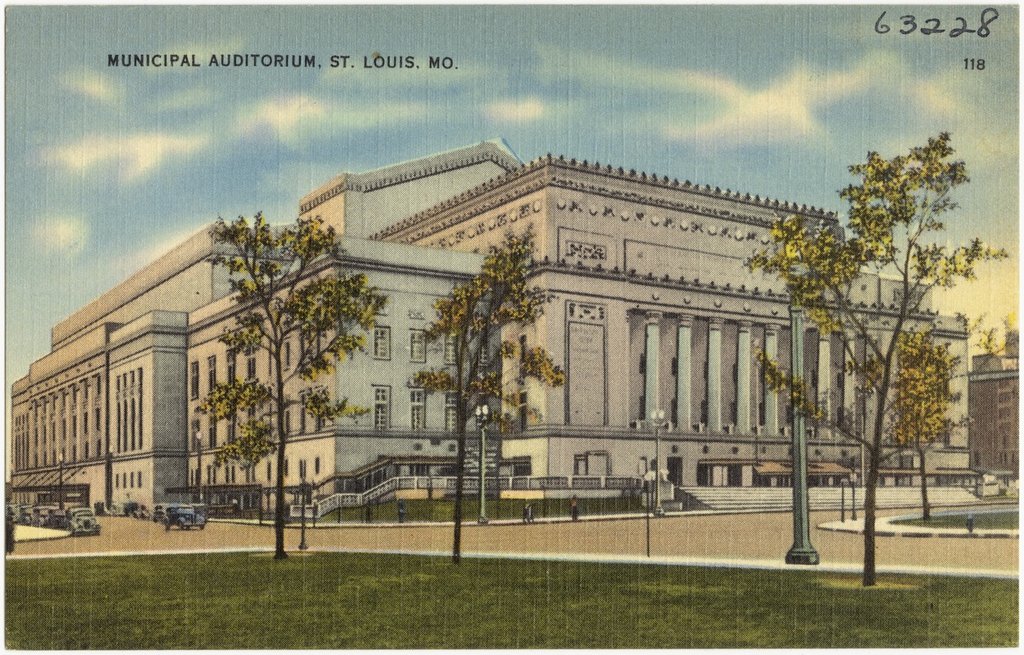
Image to comeMunicipal Auditorium, St. Louis, on a postcard
In July 1955 Ebby was Bill’s special guest at AA’s twentieth-anniversary convention in St. Louis, where the founders handed AA’s Three Legacies of Recovery, Unity and Service to the fellowship. In his account of the convention, Bill named the people he was gladdest to see: his mother and Lois on the stage, and Ebby in the hall. “With the whole convention I rejoiced that he could be with us.”
In 1960 Ebby was Bill’s guest again, at the convention in Long Beach, California, with about six years sober.
Bill kept thanking him in private too. With a check in 1959 he wrote of “my terrific gratitude for that historic call you made upon me in Clinton Street twenty-five years ago.”
Sources
Mel B., Ebby: The Man Who Sponsored Bill W. Hazelden, 1998. Chapters 10 and 11, quoting Ebby’s 1954 recordings and letters, letters of Bill W., Olie L. and Icky S., and 1981 recollections of Searcy W., Mary Lee J., Tom B., Marty P. and Jean C.
Pass It On. AA World Services, 1984. Chapters 22 and 25.
Alcoholics Anonymous Comes of Age. AA World Services, 1957. “When A.A. Came of Age.”
Skyline, Dallas, Texas, photograph by William Langley, about 1945. Library of Congress. No known restrictions on publication.