Link 1
1931 · New York
A clinic on the Hudson
Jim Newton, Harvey Firestone’s assistant, takes Firestone’s son Bud, who drinks too much, to a drying-out clinic.
Lean, Frank Buchman: A Life, ch. 14
Grateful that the Oxford Group had sobered up his son, Harvey Firestone brought it to Akron for ten days, and it left behind the meetings where AA would begin.
“Out of the act of gratitude of this one father, this whole chain started.”
Harvey S. Firestone, the tire maker, ran one of Akron’s big rubber companies. His second son, Russell, called Bud, was “a serious alcoholic,” in the words of Garth Lean’s biography of Frank Buchman, the Oxford Group’s founder, and hospitals hadn’t helped. In 1931 Jim Newton, the elder Firestone’s personal assistant and an Oxford Group man, took Bud to a drying-out clinic on the Hudson River. Then he took him to Denver, where the Episcopal Church held its convention that September and Sam Shoemaker, the rector of Calvary Church in New York, had brought a team of Groupers.
Bud gave his life to God; one AA history puts the moment on the train home, alone with Shoemaker in a private car. He stopped drinking. The family doctor, Lean writes, called it a “medical miracle.”
His father wanted to say thank you. In January 1933, with Bud still sober, he invited Buchman, then touring North America, to bring his team to Akron: about sixty people, by most counts, for ten days. The Akron Beacon Journal photographed Mrs. Firestone and the Rev. Walter Tunks, the rector of St. Paul’s Episcopal Church and the Firestones’ minister, greeting Buchman at the station.
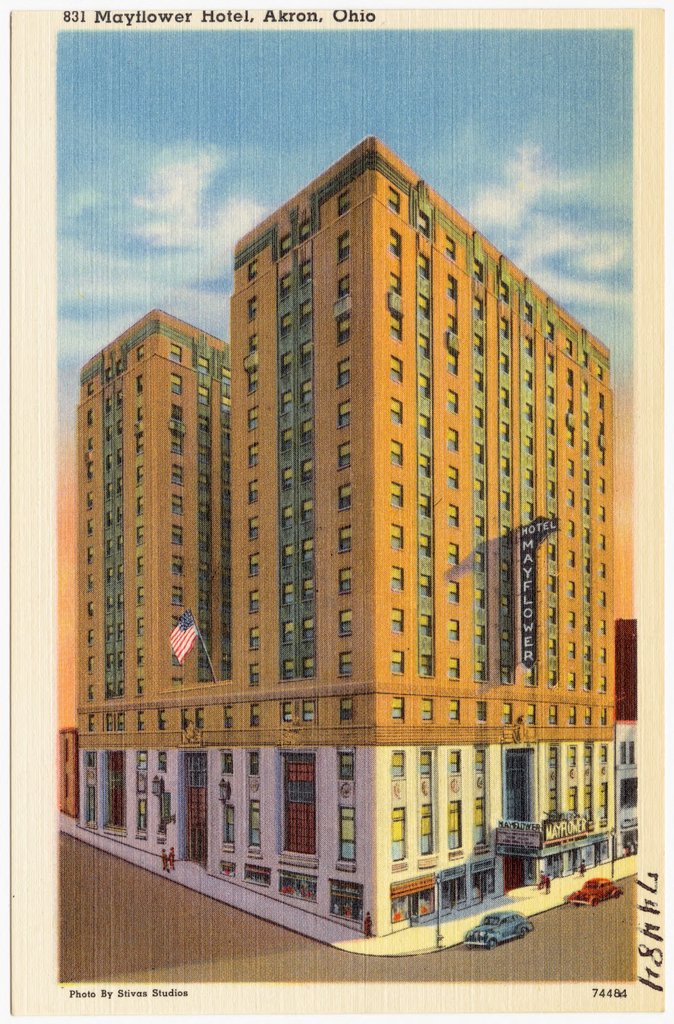
The Group’s way was to “change” the people a town looked up to, Dr. Bob and the Good Oldtimers explains, so that others would follow, and to make sure the town heard about it. The team made the new Mayflower Hotel its headquarters and spoke there and in Akron’s churches. At the last meeting, Bud stood up and told how he had stopped drinking. By Good Oldtimers’ account, it all ended with a dinner for four hundred of the city’s leading citizens.
When the team moved on, it left small groups behind, meeting every week in homes and at the Mayflower, never in a church. Among those it drew in, Arthur S.’s timeline says, were Henrietta Seiberling, T. Henry and Clarace Williams, and Anne S., who soon talked her husband, Dr. Bob, into coming. (Secret drinker, in I Just Work Here, tells his two and a half years there.)
Bud didn’t stay sober, and Good Oldtimers counts his drinking again among the reasons the Group’s influence in Akron faded. The groups in the living rooms went on, though. And when a stranded New Yorker went looking for another alcoholic in the Mayflower’s lobby in May 1935, the minister who had met the Group’s train was in the church directory.
It’s January 1933, at the railroad station in Akron, Ohio. A train pulls in carrying Frank Buchman, the founder of a Christian movement called the Oxford Group, and some sixty of its people. On the platform to meet them are Mrs. Firestone and the family’s minister, the Reverend Walter Tunks. The invitation came from her husband, Harvey Firestone, the tire maker.
Their son Bud had been through hospital after hospital for his drinking. Then, in 1931, his father’s assistant took him to an Oxford Group gathering in Denver. He gave his life to God, and he stopped.
For ten days the visitors talk of honesty and surrender at the Mayflower Hotel and in the churches. When they leave, small groups go on meeting in living rooms around the city. Two years later, a stranded New Yorker will pick that same minister’s name out of a church directory in the Mayflower’s lobby.
Follow the chain
Henrietta Seiberling traced AA’s start back to one father’s gratitude. These are the links she meant, from 1931 to the gate lodge in 1935.
Each link names its sources. Where the accounts disagree on a number, Go deeper has them side by side.
Link 1
1931 · New York
Jim Newton, Harvey Firestone’s assistant, takes Firestone’s son Bud, who drinks too much, to a drying-out clinic.
Lean, Frank Buchman: A Life, ch. 14
Link 2
September 1931 · Denver
Newton takes him on to Denver, where Sam Shoemaker has brought a team of Groupers to the Episcopal Church’s convention. Bud gives his life to God, by one telling on the train home.
Lean, ch. 14; The Witness, October 1, 1931; Ray R.
Link 3
January 1933 · Akron’s station
With Bud still sober, his father brings Frank Buchman and his team to town. Mrs. Firestone and the Rev. Walter Tunks, the family’s minister, meet them.
Lean, ch. 14; the Akron Beacon Journal’s photograph, at Dr. Bob’s Home
Link 4
January 1933 · The Mayflower Hotel
Meetings at the hotel and in the churches. At the last one, Bud tells how he stopped drinking. It ends with a dinner for four hundred.
Good Oldtimers, ch. V; Dr. Bob’s Home
Link 5
1933 · Akron’s living rooms
The team moves on and leaves weekly groups behind. Henrietta Seiberling, T. Henry and Clarace Williams, and Anne S. come in.
Good Oldtimers, ch. V; Lean, ch. 14; Arthur S.
Link 6
1933–1935 · West Hill
Anne brings Dr. Bob. For two and a half years he goes every week, reads and prays, and gets drunk every night.
Secret drinker, in I Just Work HereGood Oldtimers, ch. V
Link 7
May 11, 1935 · The Mayflower’s lobby
Bill W., stranded in Akron and afraid he’ll drink, picks a minister’s name from the directory: Walter Tunks. “And that was no coincidence,” Henrietta said.
AA Comes of Age; Henrietta Seiberling, 1971, in Darrah
Link 8
May 12, 1935 · The gate lodge
Tunks’s list of names leads to Henrietta, and Henrietta to Dr. Bob. He says he can stay about fifteen minutes. They talk for hours.
The gate lodge, in I Just Work HereAA Comes of Age
No coincidence
Every link from the clinic to the gate lodge ran through the Oxford Group in Akron, and the Group was in Akron because a father wanted to say thank you.
For a closer look
How many came, and for how long; what became of the son; and the Group’s habit of famous names.
The accounts agree that Harvey Firestone brought the Group to Akron in January 1933, out of thanks for his son. They don’t agree on how many came or how long they stayed. In the order they were set down:
The larger number has a witness from the time: TIME counted 59 workers with Buchman for his American tour that month, though it didn’t mention Akron.
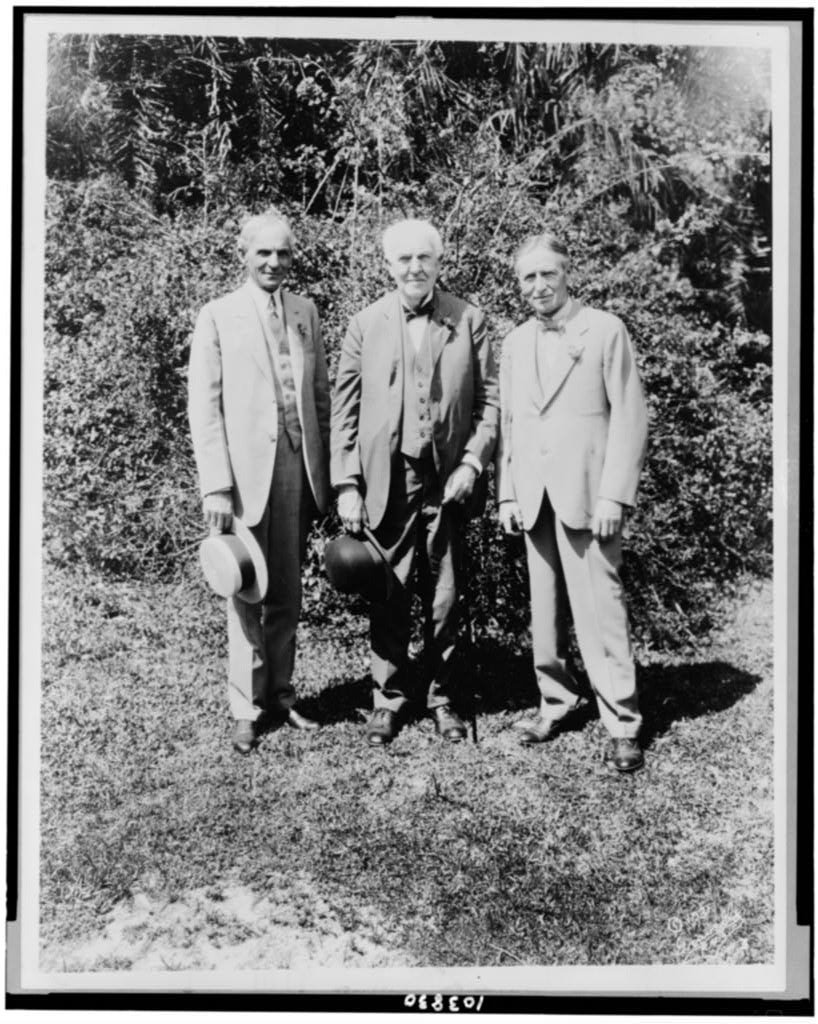
Russell Firestone was Harvey Firestone’s second son, born in 1901, and a Princeton graduate. Jim Newton, who took him to Denver, had come to work for his father in the late 1920s.
The Episcopal Church’s convention met in Denver in the second half of September 1931, and The Witness, an Episcopal weekly, reported that a team it called the Buchmanites had arrived there under Shoemaker’s leadership. That puts Bud’s change in the autumn of 1931. One AA timeline dates it to December.
Henry Ford, Lean writes, ran across Firestone’s son on business, noticed the change in him and kept him talking in his office for two hours. Henrietta remembered that he had quit “for a year and a half or so.” He drank again; none of the accounts says when.
Changing a town’s leaders first, and letting the town hear about it, was how the Group worked. In Akron it had one of the city’s biggest employers behind it, and his son told his story at the last meeting.
In 1957 Bill W. listed what AA had dropped from the Oxford Group. One item was its use of prominent names. Most alcoholics wanted to be anonymous, he wrote, and a member who broke his anonymity and then got drunk in public could “destroy confidence in us.”
First names only, in Keep Coming Back, tells how AA’s anonymity grew.