When
The family’s papers
In a hospital for alcoholism in February and March 1932.
New York and Vermont · 1932–1934
A hospital, a farm in Vermont, a company in trouble, and a lay therapist from Boston.
“You will never take a drink again.”
In February 1932, less than a year after his second wedding to Helen, Rowland H. went into a hospital for alcoholism. He was there into March. Richard Dubiel, who went through the family’s papers at the Rhode Island Historical Society, found it in the letters his mother and his brother Pierre wrote each other. Almost none of Rowland’s own letters survive.
He was dividing his time then between the ranch in New Mexico and a farm in Vermont, Sugarbush, at Glastenbury northeast of Bennington, with another house, Ladyhill, at Shaftsbury nearby. Early in 1933 he gave up running his businesses. His brother-in-law Wallace Campbell took them over, the ventures in New Mexico among them. Rowland’s canceled checks show only routine bills after that, still signed by him, and late in the year he stopped writing checks at all. Dubiel calls the months from January 1933 to October 1934 the deepest slump of his life.
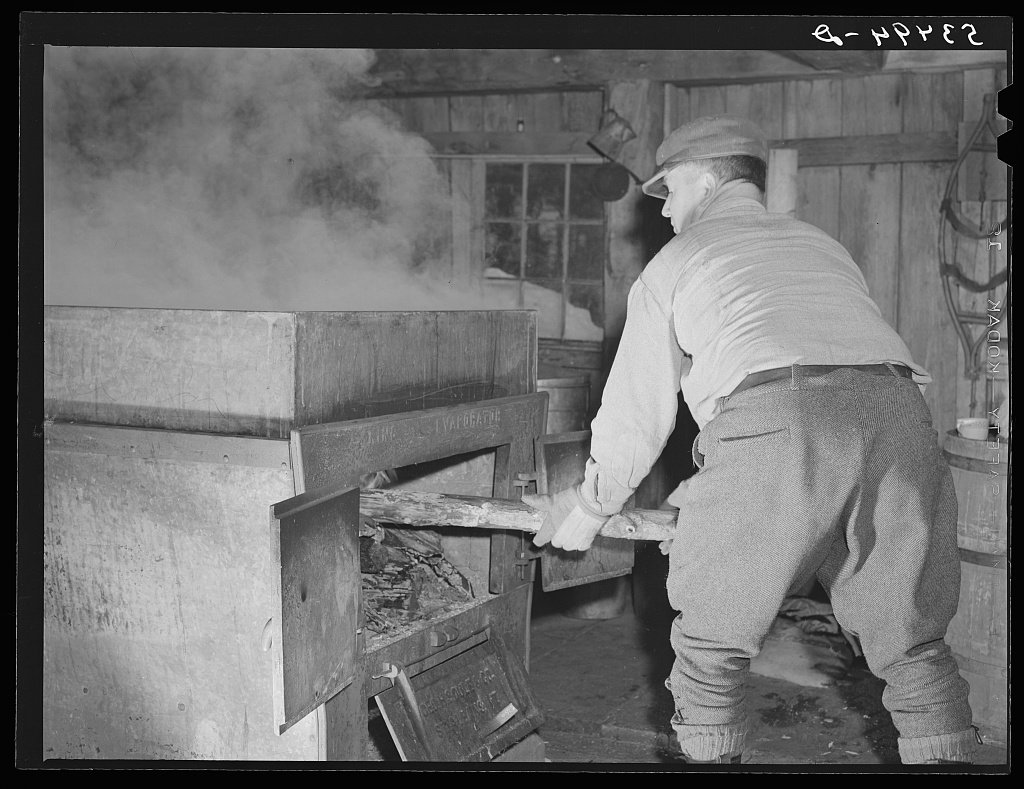
In April 1933 Rowland drew up a list of people who might buy maple syrup from the farm. One name on it was C. Baylor. Baylor answered, Dubiel writes, but didn’t order any syrup.
That spring there was trouble at a board table too. Rowland had been one of the nine founding directors of the Allied Chemical and Dye Corporation in 1920. For years the company had told its shareholders next to nothing, and in May 1933 the New York Stock Exchange announced that it would take the stock off its list in August, a step, the New York Times said, that the Exchange had never taken over a company’s accounting. A truce came on July 7.
About two weeks later his mother wrote from Vermont, “Mr. Baylor just arrived.” Courtenay Baylor was a lay therapist from Boston, trained at Emmanuel Church, where since 1906 the Emmanuel Movement had run classes and counseling for people with nervous troubles, drink among them. The family paid him from at least December 1933 to October 1934, and he worked, Pierre wrote afterwards, “with Helen, Carol and Rowley as well as Roy.”
Somewhere in these years Rowland found the Oxford Group, the evangelical fellowship his cousin Susan had hoped he would try in 1927. The first mention of it in the family’s papers is a letter of Pierre’s in February 1934. Years later Cebra G. remembered a story Rowland told him. Driving from South Williamstown to Pittsfield, in Massachusetts, with his pint bottle beside him, he heard a voice say he would never take a drink again, and he threw the bottle into the bushes. Nobody wrote down when.
By the summer of 1934 he was well enough to carry the Group’s message himself, and by October, Dubiel found, he was back at his old pace.
It’s the spring of 1933, on a farm in Vermont.
Rowland H. spent February and March of last year in a hospital for alcoholism. Now he has handed his businesses to his brother-in-law. His checks show only routine bills, and before the year is out he’ll stop writing them at all.
In July a lay therapist from Boston arrives. Courtenay Baylor works in the Emmanuel Movement, and the family will pay him into the fall of 1934, to work with Rowland, his wife and two of their children.
Somewhere in these years Rowland finds the Oxford Group. Long afterward a friend remembered the story Rowland told of it. Driving to Pittsfield with his pint bottle beside him, he heard a voice say, “You will never take a drink again.” He threw the bottle into the bushes.
Nobody wrote down when.
Two records
In February 1935 Rowland told his story at an Oxford Group meeting in Frederick, Maryland, and the local paper took it down. Here it is beside the family’s papers, as Richard Dubiel and Cora Finch read them.
From “Testimonials At Services Heard,” the Daily News, Frederick, Maryland, February 23, 1935, as Cora Finch quotes it, and the Hazard family papers as Dubiel and Finch describe them. Quotations are short excerpts.
The family’s papers
In a hospital for alcoholism in February and March 1932.
The family’s papers
The Group is first mentioned in his brother’s letter of February 1934. His cousin Susan Keith had followed Frank Buchman since the 1920s.
The family’s papers
A relapse in 1933, and a lay therapist, Courtenay Baylor, paid by the family from at least December 1933 to October 1934.
The family’s papers
From January 1933 his businesses in his brother-in-law’s hands, and in May the Stock Exchange’s threat to Allied Chemical, on whose board he sat. Cora Finch thinks that was the situation he meant.
What he told, 1935
Not mentioned.
The family’s papers
Jung in 1926. Dr. Cowles’s spinal taps in 1928. The awakening in a hospital in East Africa the same year, and the books his cousin sent him there.
For a closer look
Courtenay Baylor’s method, a friend’s book with a foreword by Jung, and patients of Rowland’s own.
Courtenay Baylor had worked under Dr. Elwood Worcester of the Emmanuel Movement since about 1912, and by 1919 he counted some thousand cases. In his book Remaking a Man he called alcoholism “a secondary and false philosophy,” set going by a tenseness in the brain, and he began every session by getting the patient to relax.
He also believed a drinker’s home had to change with him. The surroundings that had helped make the drinker, he wrote, “must in its turn be ‘cured,’” which may be why the family paid him to work with Helen and the children too.
In February 1934 he wrote to Pierre about buying into a gold and silver mine in Nevada, as “clean a proposition as could be found in mining.” Pierre asked his business friends and said no. In 1949 a committee raised money for lanterns at the door of Emmanuel Church’s parish house in Baylor’s memory, and wrote to Pierre for a gift.
At Yale, Rowland’s closest friend was an older classmate, Charles Roberts Aldrich, called Kid. In 1931 Aldrich published The Primitive Mind and Modern Civilization, with a foreword by Jung. Its preface thanks a short list of people who had helped, Jung, Toni Wolff and George French Porter among them, and last of all Rowland H., who, the historian Jared Lobdell writes, paid at least part of the costs.
Aldrich died of a heart attack at Carmel, California, in the spring of 1933. Lobdell thinks his death set off Rowland’s long binge of 1933 and 1934, though he gives no evidence for it.
In February 1933, in the depths of his own trouble, his mother wrote three times of Roy’s “successes” with a patient, and then of other patients, apparently in Vermont. Nobody knows who they were. Dubiel wonders whether Rowland was copying his own therapist and taking on patients of his own.
Bill W. heard it much the same way. Writing to Jung in 1961, he said that in 1932–34 Rowland, “feeling that he could especially identify with these sufferers, addressed himself to the help of still others.” One of them was Ebby T. Part 6 tells it.