Watch The Kitchen Table
Illustration · A bedroom in a Minnesota farmhouse in the spring of 1949, the bed made. Imagined from Hazelden’s accounts of its first year in the farmhouse at Center City; not drawn from a photograph.

Minnesota and after · 1948–1997

Make your bed

Treatment centers in Minnesota built the Steps into a stay of weeks, with lectures, sober counselors and a short list of what was expected of patients.

“…talk with the other patients, make your bed, and stay sober.”

Hazelden’s expectations of its first patients, 1949 · Hazelden Betty Ford Foundation, 2016

Few and simple

AA kept out of the hospital business. “Years ago we used to think AA should have its own hospitals, rest homes, and farms,” Bill W. wrote in the Grapevine in June 1946. “Nowadays we are equally convinced we should have nothing of the sort.” Hospitalization was “most definitely the job of the doctor.” A month earlier he had written that he doubted “many AAs ever go into the field of alcohol therapy,” but that “none ought to feel excluded.”

In Minnesota, three programs began within three years, all built on AA. In 1948 the Minneapolis relief department opened Pioneer House at Medicine Lake, run by Pat C. of Minneapolis, a leader of AA in the region, with “lectures on AA’s Twelve Steps, small group sessions, and individual counseling.” In the spring of 1949 a new foundation opened Hazelden in a farmhouse at Center City. In its first year it averaged seven patients a day and a staff of three, and its founding director, Lynn C., sober since 1942, “wanted the men to stay three weeks.” The first week cost $100. Hazelden’s own history sums the program up as a short list of expectations: good conduct, the lectures on the Steps, talking with the other men, a made bed, and staying sober.

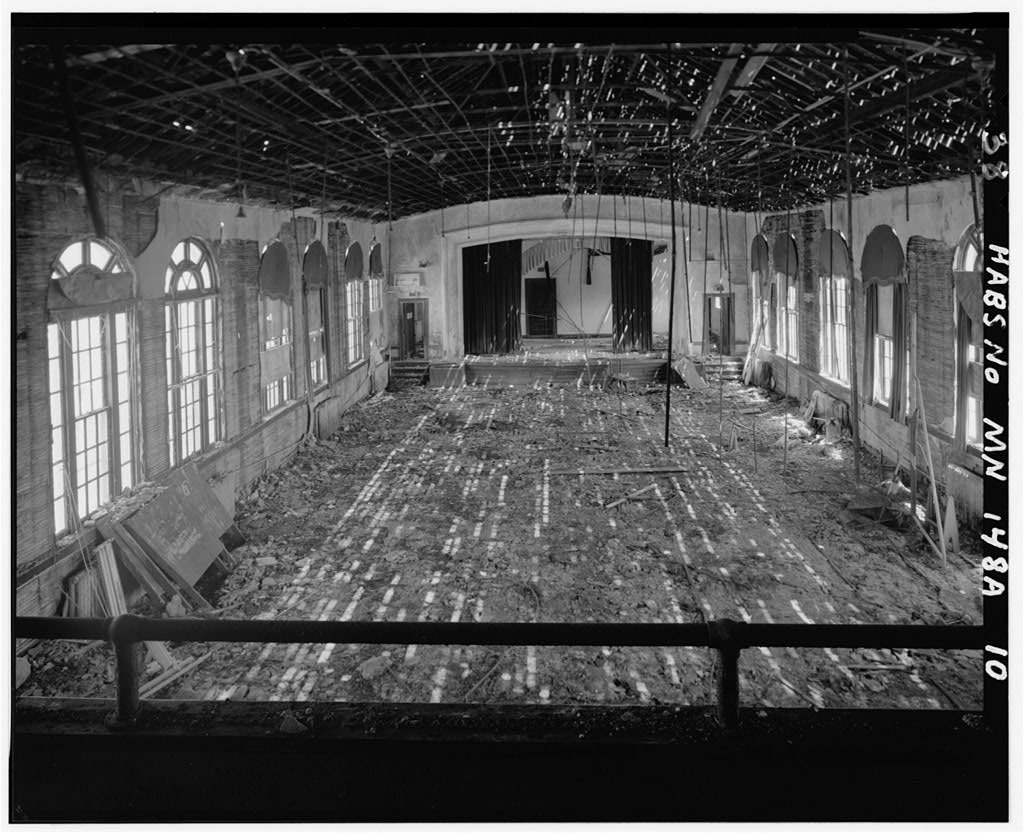
The inside of a large auditorium seen from its balcony, with rows of seats facing a stage.
The auditorium at the Willmar State Hospital, built in 1923 and photographed in 1994. Its seats set the limit on the alcoholism program: 240 patients.Historic American Buildings Survey, Library of Congress

The third was at a state hospital. From 1917 to 1950, when Willmar served mostly as a backup hospital for the mentally ill, “Restraints and locked doors were the standard practice,” its own history says. In July 1950 a new program began: “60 days in treatment (Minnesota model starting to be born).” In August 1951 the staff set out to “open up” the alcoholics’ wards. Its superintendent, Dr. Nelson Bradley, built a team of “psychologists, a Lutheran Chaplain and a recovering alcoholic.” In 1954 Minnesota made “Counselor on Alcoholism” a civil-service job for sober alcoholics (Go deeper). Through the 1950s Hazelden took up Willmar’s ideas, and its timeline dates to 1961 the start of what it calls the multidisciplinary “Minnesota Model.” In time the name covered the whole mix (The Little Doctor’s Legacy weighs the evidence for it).

By 1980, Dr. Bob and the Good Oldtimers noted, a number of AA-oriented treatment centers were encouraging patients to go through “the first five Steps of the A.A. program before they were released,” not much different, it said, from what Akron’s first members did in 1935 (855 Ardmore). In 1965 Bill had written: “No alcoholic should go mad or die merely because he did not come straight to AA at the beginning.”

Listen Make your bed About 1 minute

Minnesota, 1948 to 1951

Three houses

Three programs that opened within three years of each other and together became the Minnesota Model. Where the sources say nothing, the card says so.

From the National Register nomination for Minneapolis’s Alano clubhouse (2021), Hazelden’s own histories (2016–2024), the International Directory of Company Histories (1999), Willmar’s seventy-fifth-anniversary history (1987), the Historic American Buildings Survey (1994) and MNopedia (2023).

Run by the city

Pioneer House, Medicine Lake, from 1948

Who ran it
The Minneapolis Department of Public Relief, with Pat C. of Minneapolis, a leader of AA in the region, in charge.
How long
The sources found here don’t say.
The Steps
“…lectures on AA’s Twelve Steps, small group sessions, and individual counseling.”
Later
Hazelden bought it in 1981, and calls it the state’s first treatment center built on the Twelve Steps.

A private foundation

Hazelden, Center City, from 1949

Who ran it
A nonprofit foundation, incorporated on January 10, 1949. The patients lived in the seventeen-room farmhouse of a farm bought for $50,000. Lynn C. was its director and, for three years, its only full-time counselor.
How long
Lynn C. wanted three weeks: $100 the first week, $85 after that.
The Steps
Lectures on the Twelve Steps, and a few expectations of the men, ending “make your bed, and stay sober.”
Later
It took up Willmar’s ideas in the 1950s. Daniel Anderson, Willmar’s psychologist, later worked there too.

A state hospital

Willmar State Hospital, from 1950

Who ran it
The state of Minnesota, in a hospital opened in 1912 as an inebriate farm, under Dr. Nelson Bradley, with Daniel Anderson.
How long
“60 days in treatment.”
The Steps
Patients had started their own AA group in 1947. From 1951 the hospital held two-day seminars with AA groups.
Later
From August 1951 the staff set out to “open up” the alcoholics’ wards. By 1959 it was “the first Minnesota state hospital to be an ‘open hospital.’” The program was capped at 240 patients, the auditorium’s capacity.

Project MATCH, 1997

From 1989 the National Institute on Alcohol Abuse and Alcoholism tried three treatments on 1,726 patients. One of them, Twelve Step Facilitation, encouraged AA meetings and set out “to introduce the first 5 of the 12 steps.” Among outpatients, the share who stayed completely sober through the year after treatment:

Twelve Step Facilitation12 weekly sessions

24%

Cognitive-behavioral therapy12 weekly sessions

15%

Motivational enhancement therapy4 sessions over 12 weeks

14%

On most other measures the three did about equally, and the study found that matching patients to treatments made little difference. NIAAA, Alcohol Alert No. 36, April 1997. For the evidence since, see The Little Doctor’s Legacy.

From a farmhouse to a model

A city ran lectures on the Steps, a farmhouse asked its men to make their beds, and a state hospital opened its wards and put sober alcoholics on the team. In time the mix had a name, the Minnesota Model.

For a closer look

Go deeper

Hazelden’s list as three histories give it; who could counsel; and the first five Steps, from 1935 to 1997.

Few and simple

Three later histories give Hazelden’s list three ways, and none of the passages seen here quotes a document from 1949.

Hazelden’s own historian, Damian McElrath, in 1987, as an online timeline quotes him: four expectations, ending “and make their beds,” with nothing about staying sober.

The historian William L. White, in 2003: four, beginning “make your bed,” then conduct befitting a gentleman, the daily lectures on the Steps, and talk with one another.

Hazelden, in 2016: five, from “behave responsibly” to “stay sober.” McElrath and White call them expectations; Hazelden calls them both expectations and “simple rules.” All three keep the bed.

Years sober

In 1946 Bill W. wrote that a sign reading “Bill W.—Alcoholics Anonymous Therapist. Charges $10.00 per hour” would be professionalizing AA. Members who took up the work should simply not advertise their AA connection.

In 1953 the Twelve and Twelve listed the jobs members were being offered and said such careers “do not professionalize A.A.’s Twelfth Step.”

In Minnesota the recovering counselor became a job title. The 1954 civil-service post “Counselor on Alcoholism” required “two years of sobriety and a high school education,” William L. White wrote in 2007. Willmar’s own history, in 1987, says “3 years sobriety and a quality AA affiliation.” In 1966 Hazelden’s founding director left after clashes with Daniel Anderson, among them over psychological testing; to the new leaders, Hazelden says, his approach had come to seem rigid.

In 1978 AA’s Conference recommended that members working at a treatment center not run the AA groups there. In 1992 Project MATCH’s manual said its Twelve Step therapists “need not be personally in recovery.”
The first five Steps

In Akron in 1935–37, newcomers surrendered in the hospital and began their inventory and amends within days (855 Ardmore tells it).

In 1977 AA’s newsletter Box 4-5-9 reported requests to reprint the Steps in study guides. “Some come from treatment centers that try to give instruction in the A.A. program to their patients.” (Legacy tells what AA World Services decided.)

In 1980 Dr. Bob and the Good Oldtimers found treatment centers encouraging patients to go through “the first five Steps.” Project MATCH’s Twelve Step Facilitation, as NIAAA described it in 1997, was to “introduce the first 5 of the 12 steps,” though its 1992 manual made only the first three required and Four and Five an elective.

Sources