Before 1888
A young doctor’s room
Dr. Clark Burnham boards here. The front room is his bedroom and office, and a pile of medical books holds up one corner of his sofa bed. Later he rents the back room to examine patients.
Lois Remembers, ch. 1
Brooklyn and Vermont · 1891–1913
The eldest child in a doctor’s house in Brooklyn Heights, a tomboy in Vermont, and every bit as sure of herself as her father was of himself.
“They taught us never to be afraid to tell of our love, never to go to sleep angry with anyone … and never to be ashamed to say, ‘I’m sorry. I was wrong.’”
Lois W. was born in 1891, the first of six children of Dr. Clark Burnham, a gynecologist and surgeon from Lancaster, Pennsylvania, and Matilda Hoyt Spelman, whose parents lived on Willow Street in Brooklyn Heights. Her father had come to Brooklyn as a young doctor and boarded at 182 Clinton Street, a red brick house built in 1848. He made his rounds on horseback. The front room was his bedroom and office, and a pile of medical books held up one corner of his sofa bed. In 1888 he leased the whole house and brought his bride there. Five of their six children were born in it.
Her childhood, she wrote, was an extremely happy one. Her parents loved each other and showed it. Lois grew up in the Swedenborgian church, also called the New Church; her grandfather in Lancaster had been one of its ministers. After Sunday service, guests often came to dinner. The family held hands for the blessing and kissed the hands they held, and the wine came from the stock her father’s grateful patients had given him. Everyone told the children their mother was the loveliest person they knew.
Her father was quick, energetic and generous, and treated many families he never billed. Once, when the buckboard broke an axle at sunset on a lonely Vermont mountain road, he cut down a birch with his penknife and tied it under the axle, and the family limped home after midnight. But he “never could admit to us children that he was wrong.” One evening she told him he could be. They kept it up for hours, in good humor. “I, you see, was just as obstinate as he.”
The family spent nearly half the year in Vermont, first in her grandmother’s old house in Manchester, which her father bought, and later at two bungalows he bought on Dorset Pond, afterward named Emerald Lake. Her mother tutored the children so they could stay from May to November. Among the other summer families were the T.’s of Albany; their youngest, Ebby, was her brother Rogers’s pal. Lois rode a bicycle at five and climbed trees, and was called a tomboy. Once, jumping down from an apple tree, she tore her dress and lost her hair ribbon, and walked past the very proper Equinox House like that to see a friend. Years later she heard that a social worker had seen her that day, and had said the only person in Manchester who seemed to need help was that little girl.
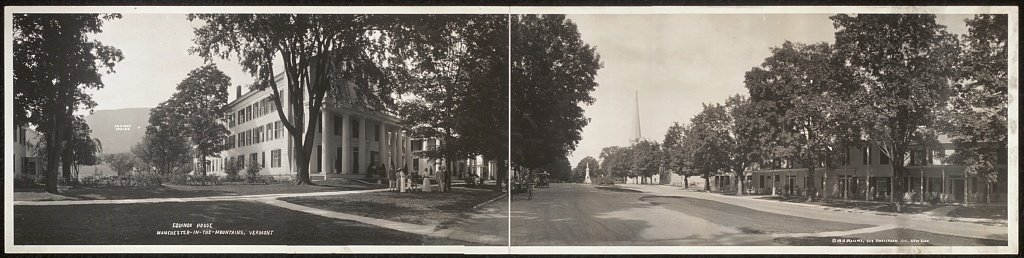
In Brooklyn she went to Friends School and then to Packer Collegiate Institute. She played guard on the basketball team, and a gym test found she had the strongest back in the school. She and her friend Elise Valentine loved to dance at coming-out parties but wanted none of their own; they felt only “social butterflies” came out. Young men called on her in the front parlor, and if one hadn’t left by eleven, her mother called down from the top of the stairs. After Packer she studied charcoal drawing in New York for two terms, then went to work at the YWCA in Brooklyn, in its employment bureau.
Much later she traced something else to her girlhood: daydreams of changing bad people into good ones by the power of her personality. In her memoir she called it “frightening egotism,” and told how she came to see it (4 · Damn your old meetings).
It’s the 1890s, in Brooklyn Heights. Lois is the eldest child of a doctor, in a red brick house on Clinton Street.
Her parents love each other openly. They teach their children never to go to sleep angry, and never to be ashamed to say they were wrong.
Her father can’t say it himself. He is generous, and quick, and always right. One evening she tells him he could be wrong. They argue for hours, in good humor. She is just as obstinate as he is.
In the summers, in Vermont, she rides a bicycle at five and climbs trees. One day she walks right past the grand hotel with her dress torn and her braid flying, and doesn’t mind in the least.
Years later she hears that a visiting social worker saw her that day, and decided she was the only person in Manchester who needed help.
182 Clinton Street
The house Lois W. grew up in was the house where she lived through Bill’s worst years, and where AA’s first New York meetings were held. Here it is across fifty years.
From Lois Remembers (1979), with Pass It On (1984) for 1935–1938. Pass It On has the mortgage company taking the house after her father died in 1936; Lois says she and Bill were already paying it rent from 1933. Quotations are short excerpts.
Before 1888
Dr. Clark Burnham boards here. The front room is his bedroom and office, and a pile of medical books holds up one corner of his sofa bed. Later he rents the back room to examine patients.
Lois Remembers, ch. 1
1888
He leases the whole house and brings his bride, Matilda, there. Five of their six children are born in it. Years later they buy it, with a mortgage.
“In the end, the mortgage company got the house.”
Lois Remembers, ch. 1
May 1919
Bill and Lois live here with her parents after he comes home from France. To celebrate, Bill and her brother Rogers raid the cellar’s store of liquor from grateful patients and make a shambles of it.
2 · Emerald LakeLois Remembers, ch. 3
1930
After the crash and Montreal they come back with no money and live with her parents. Her mother, ill with cancer, dies on Christmas Day. Bill is drunk for days before and after.
3 · Everlastingly tryingLois Remembers, ch. 7
1933
Her father remarries and moves to a suburb. Bill and Lois move into the second-floor apartment fixed up for her mother in her illness, and pay the mortgage company a tiny rent to stay on.
Lois Remembers, ch. 7 and 12
November 1934
Lois comes home from work to find Ebby T., sober, talking with Bill in the kitchen. She passes off Bill’s excitement as “just another false hope.”
The kitchen table, in the filmLois Remembers, ch. 7
1935–1938
Bill brings alcoholics home to live, and the New York group meets at the house every week. Her father dies in September 1936. The mortgage company had given him $200 for the deed.
4 · Damn your old meetingsPass It On, ch. 9; Lois Remembers, ch. 9
1939
In April Bill and Lois have to leave the old house for good. Elias Green, who had driven the family’s horses and then its car and kept the stoves going since she was a girl, holds her hands, and they both cry.
He died several months later.
Lois Remembers, ch. 1 and 12
For a closer look
A fire in Vermont, the gifts of grateful patients, and the night two boys went missing on a mountain.
When Lois was about eight, playing in the orchard in Vermont, she heard screams from the house. Her sister Barbara, who was two, had hidden under a table to strike a match, and her starched white dress caught fire. Annie, the cook, the only grown-up in the house, pulled her out and smothered the flames with rugs, and was burned herself.
Barbara needed many skin grafts on her face and hands. Once, Lois wrote, her father cut skin from his own leg without an anesthetic to graft onto her face. “He called her his child after that, because part of her had literally been part of him.” She recovered remarkably well, and the scar, Lois wrote, hardly shows.
Fire had marked him before. As a boy he had tried to put out the flames when phosphorus caught fire in his youngest brother Charley’s pocket, and Charley died of the burns. Lois thought his interest in medicine may have begun there.
Grateful patients gave Dr. Burnham more than money. The wine at Sunday dinner came from the stock his grateful patients had given him; the family called them GPs. Many followed him to Manchester for the summer, which was how he could afford to stay so long. Jerry, the children’s Shetland pony, had performed in circuses; her father found him in the kitchen of a patient’s house in Coney Island.
About 1908 a patient who was an executive of an early movie company talked the whole family into acting out four short farces at the Biograph studio in Long Island City. At the time they felt too silly to show them even to friends. Lois still had the viewing box when she wrote her memoir.
Many families got no bill at all. When her mother, making out the bills, asked him what to charge, he would put it off.
The two families were close friends in Manchester. Interviewed in 1980, Lois remembered the evening Ebby’s mother came over at suppertime: Ebby hadn’t come home, and neither had her brother Rogers. Ebby’s older brothers had gone camping at the top of the mountain, and the younger boys hadn’t been allowed to go.
Lois had a feeling, she said, that it was she who guessed the boys had followed them. After dark her father and Ebby’s father climbed all the way up to the camp and found them sound asleep. Ebby’s own story is in My Sponsor, Ebby.