Watch The Kitchen Table
Illustration · An imagined Sunday at 182 Clinton Street in Brooklyn, where Bill and Lois lived: one shoe beside a chair, the other on its side out on the rug, and a man’s hat on the table by the door. Not drawn from a photograph.

Brooklyn · 1935–1937

Damn your old meetings

Her husband was sober at last, and someone else had done it; one Sunday, when he said they’d be late for his meeting, she threw a shoe at him.

“I had a shoe in my hand, and before I knew what was happening, I had thrown it at him and said, ‘Damn your old meetings!’”

Lois W., remembering a Sunday in the mid-1930s · Lois Remembers, 1979

Seventeen years

Bill W. came home from Towns Hospital in December 1934 sober, and full of plans to help other alcoholics, perhaps all the drunks in the world. Lois W. went along with the idea, she wrote, “enthusiastically.” On Sunday afternoons they went to the Oxford Group’s meetings at Calvary Church on Fourth Avenue in Manhattan. The Oxford Group was a Christian movement whose members tried to live by absolute honesty, purity, unselfishness and love. Lois was grateful to it, but she felt no need of its teachings herself. Her only problem had been Bill’s drinking, and that was being solved.

Bill brought his drunks home to 182 Clinton Street in Brooklyn Heights, the house where she had grown up. Some of them stayed for as long as a year, rent-free. She went on working at Loeser’s, a Brooklyn department store, where she had started at $19 a week plus commission, and she did most of the cooking. In the spring of 1935 Bill went to Akron on a business deal and stayed most of the summer. There he met Dr. Bob S., and AA began. “I nagged and nagged him to return,” she wrote.

Her dreams of Bill sober had come true, and she wouldn’t let herself see that she was less happy than she ought to be. They were seldom alone together. There was no time for weekends outdoors. “I felt left out and unneeded.” She went to the meetings with him, she wrote, because that was what a devoted wife should do, not because she needed them.

Then one Sunday Bill said they would have to hurry or they’d be late for the Oxford Group meeting. She had a shoe in her hand, and before she knew it she had thrown it at him. “Damn your old meetings!” It surprised her more than it did him. Why now, she wondered on the way to the meeting, when everything was fine? There a friend helped her see that she had never relied wholly on God. She had been trying to do it all by herself.

Looking back, she saw a girl who had daydreamed of reforming a burglar by the power of her personality, and a wife who had believed for seventeen years that she could inspire her husband to stop drinking. Before her operations she used to tell herself, “I am the captain of my soul,” with God as her lieutenant. Now God, through the Oxford Group, had done in a twinkling what she couldn’t. She had lost the roles his drinking gave her, and she was jealous of his new friends.

From that day on, she took a daily inventory of her own. For a while, by her own account, she became “quite pious.” Later, traveling with Bill to start new groups, she told gatherings of wives about her own need for spiritual growth, and Anne S., Dr. Bob’s wife, and other wives did the same. Here and there the families of AA members began to meet in groups of their own, with no clear purpose yet.

Listen Damn your old meetings About 1 minute

Before and after

Four roles

Looking back, Lois W. named four roles that Bill’s drinking had given her and his sobriety took away: “mother, nurse, breadwinner, decision maker.” Here they are side by side.

From Lois Remembers (1979), with details from Pass It On (1984). Words in quotation marks are hers unless the row says otherwise. Quotations are short excerpts.

Mother

The drinking years

“As we had no children, the mother role was very necessary to me.”

Bill sober

Bill didn’t need her the way he had before. Her aim in life, getting him sober, was gone, and she hadn’t found anything to take its place. Meanwhile the house filled with his drunks, and the idea, Pass It On says, was to “love them into sobriety.”

Nurse

The drinking years

She forced a little food down him once in a while. On Armistice Day 1934 he didn’t come home. After a sleepless night she found him at five in the morning, propped against the iron gate of the basement areaway, unconscious, his head bleeding.

Bill sober

Bill did the nursing now. He worked with drunks at Towns Hospital and at the Calvary Mission, and brought some of them home.

Breadwinner

The drinking years

She worked in department stores, Macy’s and then Loeser’s in Brooklyn, where she started at $19 a week plus four percent on sales.

Bill sober

She kept working, and cooked for the men living in the house. “Lois was doing all the work,” one of them remembered. Early in 1936 she gave in to Bill’s wish that she “get out of that damned department store,” and after that she brought in little money.

Decision maker

The drinking years

She made the family decisions, she wrote, that Bill was incapable of making. At the end of 1927 he signed his brokerage accounts over to her.

Bill sober

Bill was making his own decisions again, though she admitted she “continued trying to run things.” In 1935 he stayed in Akron most of the summer and even thought of moving there. When she kept after him to come home, he wrote her a long letter explaining why he had to see the job through.

Promoted to captain

God, she came to see, had been promoted to captain and she demoted to His lieutenant. It took time to accept: “One minute I would get down on my knees and thank God … and the next moment I would throw things about and cuss the Oxford Group.”

For a closer look

Go deeper

The shoe she threw years before, why the Oxford Group cooled toward Bill and Lois, and what the Big Book told wives in 1939.

Two shoes

It wasn’t the first shoe. In the summer of 1927 Bill and Lois spent a month in Cuba, where he was looking into sugar plantations for his work on Wall Street. He drank the whole time. One day, to keep him from going down to the bar, she threw one of his shoes out the window. It landed on a nearby roof, and Bill called the porter to fetch it. “In no time, he was down at the bar wearing both shoes.”

Nor was it the first time she had lost her temper. “He never hit me, but I hit him,” she wrote of the drinking years. Once, near the end, she beat his chest with her fists as he lay drunk on the bed, and she remembered it with shame. That was what puzzled her about the Sunday in Brooklyn. She might have had an excuse for her anger while he was drinking. Why now, when he was sober?

She never gave the shoe a date, and her memoir’s two clues disagree. She wrote that for “nearly a year” it never occurred to her to apply the group’s program to herself, and that by the day of the shoe she had been in the group for “nearly two years.” She and Bill started going late in 1934, so the shoe falls somewhere between late 1935 and late 1936. The chronology at the back of her memoir lists it with no date of its own, under the years 1935 to 1941, just after Ebby moved in with them in November 1935.

Not maximum
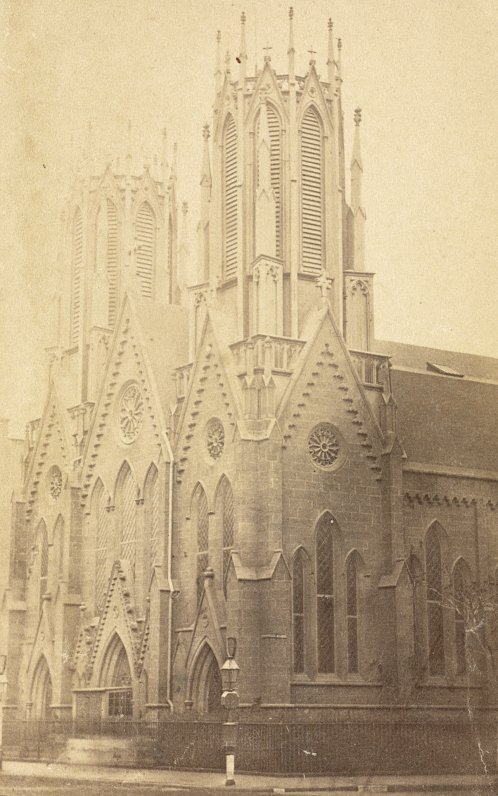
Calvary Church in New York, a Gothic Revival stone church with tall pinnacled towers, in an old photograph.
Calvary Church, at Fourth Avenue and Twenty-First Street, in a photograph published by George Stacy, probably in the 1860s. From December 1934 Bill and Lois went to Oxford Group meetings next door, at Calvary House; the church’s rector, Sam Shoemaker, was one of the group’s leaders.Prints and Photographs Division, Library of Congress

In New York the Oxford Group’s leaders came to mind Bill’s separate meetings for alcoholics at Clinton Street. One of Sam Shoemaker’s assistants at Calvary, Lois remembered, spoke of meetings “held surreptitiously behind Mrs. Jones’s barn.” Near the end of 1935 the alcoholics living at the Calvary Mission were told to stay away from Clinton Street, on the grounds that Bill and Lois were “not maximum.” (I Just Work Here has more on the Groupers and their ways.) “This not only hurt us,” she wrote, “but left us disappointed in the group’s leadership.” Shoemaker later apologized to Bill. In the summer of 1937 Bill and Lois stopped going to the meetings.

A house filled with strangers

A few years after the shoe, the Big Book described the same trouble. Bill wrote its chapter for wives himself, in their voice, after turning down Lois’s offer to write it, as By the Carload tells. It warns a wife that she “may become jealous of the attention he bestows on other people, especially alcoholics,” and tells her that he should work with others to stay sober.

The next chapter, “The Family Afterward,” says a family may be “jealous of a God who has stolen dad’s affections,” and may not like the idea that God has done what they could not. Lois told her side of it forty years later, in Lois Remembers.

Sources
  • Lois Remembers. Al-Anon Family Groups, 1979. Chapter 1, “Childhood Memories” (the house on Clinton Street); chapter 3, “Maine Blueberries and Brook-Jumping” (her temper); chapter 6, “Halfway to Hell” (Cuba, the brokerage accounts); chapter 7, “Ebby and the Mountaintop” (Loeser’s, Armistice Day 1934); chapter 8, “Damn Your Old Meetings”; chapter 9, “The Group Conscience” (the Oxford Group, leaving Loeser’s); and the chronology at the back.
  • Pass It On. AA World Services, 1984. Chapter 4 (Cuba), chapter 6 (the Oxford Group meetings at Calvary House) and chapter 9 (the house on Clinton Street, Russ R.’s recollection, and Lois’s account of the shoe, quoted from her memoir).
  • Alcoholics Anonymous (the Big Book), first edition. Works Publishing, 1939. “To Wives” and “The Family Afterward.”