The name
Before 1951
Groups went by various names: the Wives’ Group in Toronto, AA Auxiliary, Triple A, Non-Alcoholics Anonymous, AA Associates.
Bedford Hills and New York · 1948–1955
Family groups were springing up in many of the places AA went, with nothing to tie them together. Bill thought someone should open an office for them. At first she didn’t want to.
“Bill’s suggestion did not appeal to me at first, because I was still excited about having a home of our own.”
By the late 1940s, in many of the places Bill and Lois visited, the families of AA members were meeting on their own. On a train trip across Canada and down the West Coast in 1948, she spoke to 400 people at a meeting put on by the Wives’ Group in Toronto. A year or so before, a member and his wife had come to Stepping Stones to learn how to start one. At Seattle, where there had been no family group when she spoke there in 1943, forty came; at San Francisco, eighty-five wives. In Los Angeles she spoke with Anne S., Dr. Bob’s wife, at a large meeting for AA families. Anne died the next year.
Some of the groups met to serve refreshments to the AA members or put up curtains in a club; they later called them “coffee-and-cake groups.” But a number met for their own spiritual growth. Around 1949 the wife of an alcoholic on the West Coast began mailing out a little magazine for them (pumpkin-colored pages).
In 1950 Bill went around the groups by himself to sound them out about a General Service Conference, and was surprised to run into so many family groups. He suggested Lois open an office where they could register and get literature. As she put his idea, it would be “a place to which any distracted wife could cry out for help.” She was busy with her garden and the house. But the idea grew on her. In April 1951, at the close of AA’s first Conference, she asked the delegates’ wives to lunch at Stepping Stones with members of the local family groups. All but two or three of the wives belonged to groups at home.
She decided to do it, and asked a close friend, Anne B., who had started a family group in Westchester County, to help her. They worked upstairs at Stepping Stones. AA’s office gave them a list of 87 relatives and family groups who had written in from the States, Canada, Australia, South Africa and Ireland. AA’s office was there for the alcoholic, not the family, and felt it couldn’t list them; it had sent them reprints of the Big Book’s chapter “To Wives” (By the Carload). In May 1951 the two women wrote to all 87, as chairman and secretary. A post office box in New York, Box 1475 at the Grand Central Annex, was to be used “as a clearing house.”
Forty-eight wrote back that their groups would be glad to unite. Chicago’s, going since 1941, preferred not to. “Dreaming big,” they had a thousand copies of a pamphlet printed for $15, and they were surprised when Sam K. in Lynn, Massachusetts, sent $10, since they hadn’t yet asked for donations. By that winter the work had outgrown the house. On January 9, 1952, they moved into the skylighted studio upstairs at the clubhouse on West 24th Street, the room where the wives had played bridge in 1940, with volunteers, shelves a friend put up, and the club’s old mimeograph machine. They called it the Clearing House.
By March 1952 the groups had chosen a name, Al-Anon Family Groups, and, after longer debate, AA’s Twelve Steps with one word changed (before the name). In April AA’s second Conference thanked them with a standing vote. That September the groups accepted the Traditions she had adapted from AA’s, with Bill’s help (Rule 62). By January 1953, 441 groups had registered.
In January 1954, the day after she had shoveled snow out of their long driveway for over an hour, she had a heart attack, and was told to keep quiet for a year. To everyone’s surprise, she did. The office went on: a part-time paid worker, an editor for its newsletter, now called the Forum, and before the year was out a corporation, Al-Anon Family Group Headquarters, Inc.
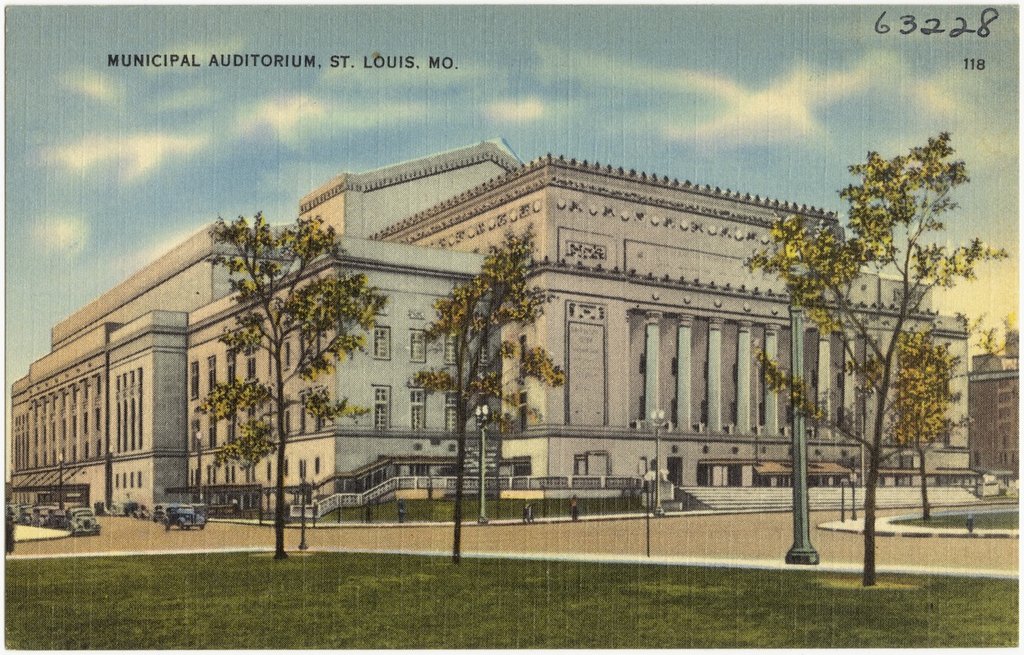
In July 1955, at AA’s twentieth-anniversary convention in St. Louis, Al-Anon held five workshops, one of them for children of alcoholics, and its first book, The Al-Anon Family Groups, went on sale. On the afternoon of July 3, when Bill handed AA’s leadership over to its General Service Conference (Number One Man), Lois spoke to the convention too.
It’s 1950. Bill has come home to Stepping Stones from a trip through the States and Canada with an idea. The families of AA members are meeting everywhere, on their own. Someone should open an office for them.
Lois isn’t keen. She’s still excited about having a home of her own, with a garden to dig and a house to make things for.
But the idea grows on her. With her friend Anne B., she sits down upstairs with a list of eighty-seven names from AA’s office, and writes to them all. Dear Friends.
Forty-eight write back. Within a year there are two hundred groups, and an office in a skylit room over an AA clubhouse in New York. The groups choose a name for themselves: Al-Anon.
Family groups, 1940s and 1950s
Before 1951 the family groups had no name in common, no shared steps and no address of their own. Here is what changed once the Clearing House opened.
From Lois Remembers (1979), with her talk at St. Louis as printed in AA Comes of Age (1957). The counts are from Lois’s talk, where she repeated Bill’s figure for 1950. In his 1957 account Bill wrote that AA members at St. Louis “learned with astonishment” that the groups had “jumped from 70 to 700 in only three years.”
Before 1951
Groups went by various names: the Wives’ Group in Toronto, AA Auxiliary, Triple A, Non-Alcoholics Anonymous, AA Associates.
Before 1951
Some served refreshments to the AA members or put up curtains in a club. Others met for their own spiritual growth.
Al-Anon, 1951–1955
Three purposes, set out in the 1951 letter: understanding for the AA member at home, living by the Twelve Steps themselves, and welcoming the families of newcomers.
Before 1951
Some groups wrote their own, a few of them stating “admitted we were powerless over an alcoholic.”
Al-Anon, 1951–1955
AA’s Twelve Steps with one word changed: the Twelfth Step carries the message “to others” instead of “to alcoholics.”
Before 1951
Mostly AA wives. Upstairs at the New York clubhouse in 1940 there were a few mothers and daughters too, and one man, a father.
Al-Anon, 1951–1955
Anyone whose life was affected by someone else’s drinking, whether or not the drinker was in AA.
Before 1951
Reprints of the Big Book’s chapter “To Wives,” sent by AA’s office, and a little magazine, The Family Forum.
Al-Anon, 1951–1955
Ten items on the first price list, the pamphlets at two cents each; by 1955, a book of their own.
Before 1951
AA’s office, which felt it couldn’t list them.
Al-Anon, 1951–1955
Box 1475, Grand Central Annex, New York.
Before 1951
Probably fewer than 100 in 1950, by Bill’s count, which Lois repeated at St. Louis.
Al-Anon, 1951–1955
Nearly 700 on the American continent by July 1955, and groups in ten countries abroad.
For a closer look
The room where Al-Anon’s office began, the magazine that came before it, and Anne B.
The skylighted studio at the top of AA’s first clubhouse, at 334½ West 24th Street, had three lives. In 1940 the wives met there while the members met downstairs. After the Saturday Evening Post article in 1941 it became AA’s emergency headquarters, where volunteers answered the flood of mail. And from January 1952 to 1957 it was the Clearing House, rented from the club for $30 and then $40 a month.
It was heated by pipes from a nearby apartment building. When the artist who ran the club was there, he could call the janitor; when he wasn’t, they froze. In summer the volunteers called it “Lois’s sweatshop.” The long passage from the street, which the members called “The Last Mile,” was spooky to walk alone when the bell rang. Since AA met there at night, every paper and typewriter had to be put away each evening. The club’s old mimeograph splashed ink all over one volunteer’s clothes until they spent $50 to have it fixed. Their first card file, Lois thought, was a shoebox.
In 1957 the office moved to 125 East 23rd Street. Two years later the clubhouse was torn down for a housing project. Its downstairs room is in Rule 62.
Ruth G., the wife of an alcoholic on the West Coast, started a monthly magazine for the families, The Family Forum: twelve pages on pumpkin-colored paper. Lois’s chapter on Al-Anon’s beginnings dates it from 1949; her chronology puts it in San Francisco, from 1950 to 1952. It carried editorials, letters from families, cartoons, and quotations from the Bible, Marcus Aurelius, St. Francis of Assisi, Nietzsche, ancient Chinese philosophers and even Machiavelli. There was no subscription price. She sent it to the groups, to anyone she thought needed it, and to AA members to pass on to their wives and husbands.
Once the office opened, she stopped publishing it. In 1954, with her permission, the office’s own newsletter took her title, as the Al-Anon Family Group Forum, and Margaret D., who took it on at home, edited it for 20 years. Probably few of today’s members, Lois wrote in 1979, had ever heard of Ruth G., but without her early Al-Anon could never have gained the impetus it did.
Anne B. lived near Stepping Stones and had started a family group in Westchester County. Pass It On makes her a regular at the Saturday séances there, writing down the messages Bill would “receive” (Number One Man). When Lois decided to open the office, Anne was the friend she asked. The film on this site has the two of them gathering the delegates’ wives in 1951; in Lois’s telling, she invited the wives herself, and asked Anne afterward.
They signed the 1951 letter as chairman and secretary. Anne did most of the bookkeeping and typing, at first carrying her typewriter every week from Chappaqua to New York. The two of them drove the 40 miles in together, picking up another volunteer and her typewriter on the way.
By the late 1970s, Lois wrote, Anne preferred to live quietly on the West Coast, near one of her two daughters. Members who went to AA’s convention in Denver in 1975 met her there.